 Vietnamnet.vn

 Podcast



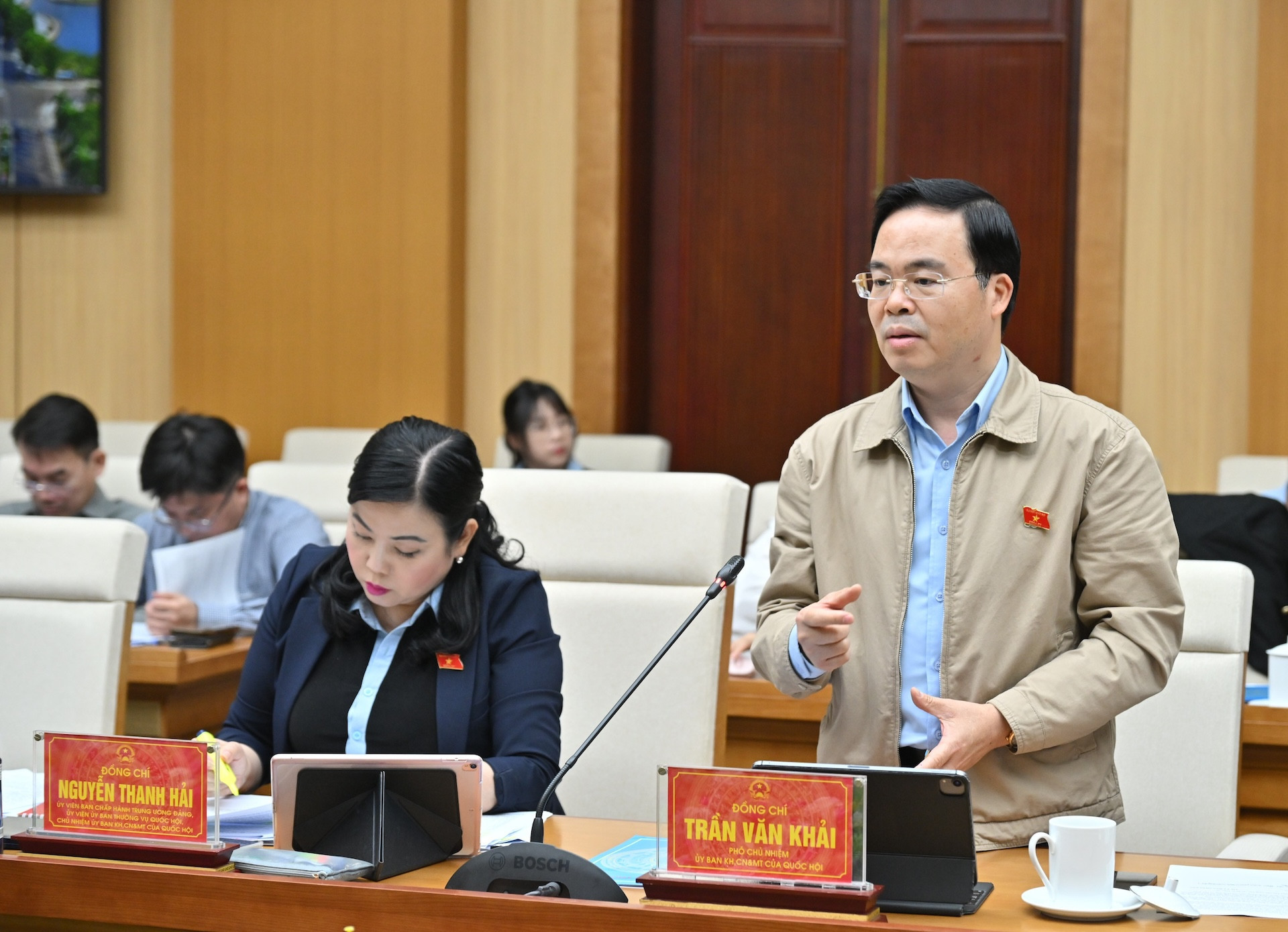
On the afternoon of November 9, a delegation from the National Assembly’s Committee on Science, Technology, and Environment conducted an on-site inspection of the deteriorating pillars of Song Lo Bridge in Phu Tho Province.
The field survey aimed to gather insights for the appraisal report on the draft Construction Law 2025 and other related laws being discussed and reviewed at the ongoing 10th session of the National Assembly.
Nguyen Thanh Hai, Chair of the Committee on Science, Technology, and Environment, said the Song Lo Bridge incident has drawn significant attention from NA deputies during the discussion of the draft Construction Law 2025.
Phu Tho Vice Chair Quach Tat Liem said Song Lo Bridge has a total investment of VND231 billion, with construction beginning in 2010 and ending in 2015.
In 2024, the provincial Department of Construction instructed inspections of all 47 bridges in the area. Song Lo Bridge was rated as degraded and added to the list of structures requiring repair.
The province hired leading experts in bridge and road construction to assess the situation and propose solutions. Local authorities coordinated with central agencies to complete the inspection, determine load capacity, and reroute certain vehicle types.
Liem said the contractor executing Song Lo Bridge project has claimed responsibility and issued a written commitment to cover repair costs and provide a lifetime warranty for the project.
Once the inspection results determine the extent of degradation, the province will propose specific remedies and aim to complete them within this month.
The former Department of Agriculture and Rural Development had acted as both the project investor and management unit, meaning that one entity was simultaneously responsible for appraisal, supervision, and construction oversight, which undermines objectivity.
Based on that reality, he suggested that the draft Construction Law should amend this issue by separating state management responsibilities to ensure transparency and impartiality.
Hai expressed her concern about Song Lo bridge’s situation, saying, “I am deeply worried when hearing that if Song Lo Bridge becomes unusable, students will have to take a 30 km detour to reach school.”
She urged agencies to propose mechanisms for post-construction inspection as per the spirit of the draft law.
It is not enough to simply pay for repairs when damage occurs.
Vice Chair of the Committee on Science, Technology and Environment Tran Van Khai mentioned project monitoring as a solution to detect risks earlier. However, the current Construction Law does not specify which authority level conducts monitoring for bridge projects.
He proposed that the draft law should focus on mandatory periodic monitoring for critical bridge projects.
Regarding the draft Construction Law's shift from pre-inspection to post-inspection, Khai expressed concern that without pre-inspection and with contractors of weak capacity, handling incidents when they occur would be extremely difficult.
He suggested the draft law should consider mandatory inspection requirements for large projects while increasing sanctions and responsibilities for all involved parties.
Nguyen Ngoc Son, full-time NA deputy of the Committee on Science, Technology and Environment, highlighted lessons from the Phong Chau bridge collapse and Song Lo bridge incident, revealing gaps in investment management, construction, acceptance, and post-inspection of projects.
The current draft law regulates the responsibilities of people's committees at all levels to coordinate, support implementation, monitor, inspect, and supervise construction investment projects in their managed areas, and they are accountable for project quality management and supervision within their scope.
The draft also defines the rights, obligations, and responsibilities of investors. However, it does not clearly specify investor capacity criteria.
Son proposed including investor capacity standards directly in the draft Construction Law. He called for mechanisms to conduct actual appraisals and independent evaluations of contractor capacity to enforce accountability.
"Currently, the contractor says they are ready to pay to repair Song Lo bridge, but what is the regulation allowing companies to simply pay for fixes? It is not enough to just spend money when damage occurs. The law must clearly regulate this," the deputy emphasized.
He also urged the drafting committee to establish mandatory inspection cycles and sanctions for non-compliance by enterprises or investors.
Director of Phu Tho Department of Construction Nguyen Xuan Quang, Song Lo bridge is a permanent structure designed for 100 years of use. He confirmed that inspections are conducted regularly, and the first inspection 10 years after commissioning already identified problems.
Thu Hang
.svg)
