 Vietnamnet.vn

 Podcast



These delays have significantly increased investment costs, especially in the form of land use fees, land rentals, and interest accrued from late payments.
Many enterprises have proposed that regulators waive or reduce the 5.4% annual retroactive land use fee, arguing that the primary cause of the delays lies with the authorities, not the investors.
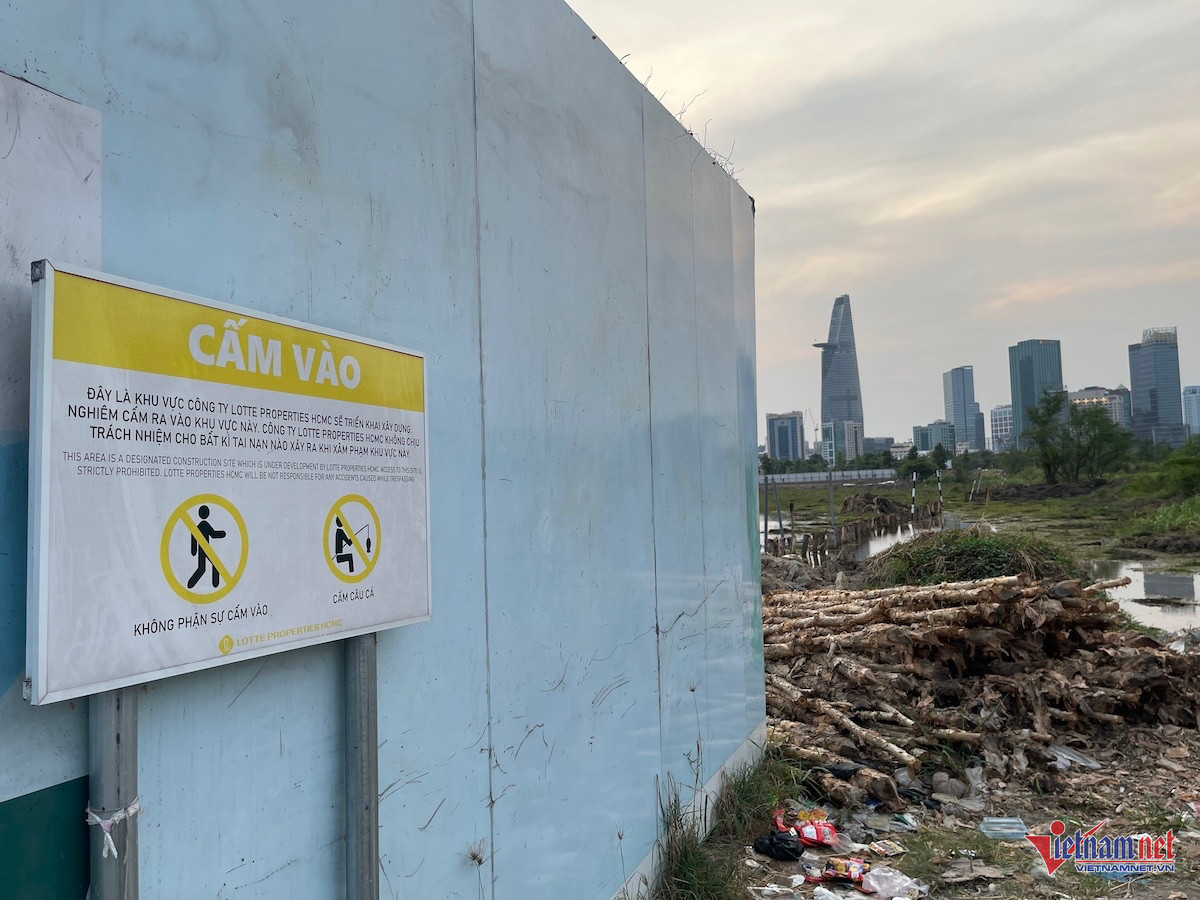
According to the Ho Chi Minh City Real Estate Association, in many instances, the State's delayed issuance of decisions on land use fees or rental charges has led to new financial obligations for businesses.
Point d, Clause 2, Article 257 of the 2024 Land Law and Clause 1, Article 50, and Clause 9, Article 51 of Decree 103/2024/ND-CP state: “The retroactive land use fee during periods not previously calculated shall be charged at 5.4% per year on the payable land use and rental amounts.”
This regulation makes the retroactive payment considerably large, putting substantial financial pressure on developers and slowing project implementation.
For example, a project granted land in 2015 only received the State’s land use fee notice this year, with a total fee of 100 billion VND (approximately 4 million USD). Under current law, the investor must also pay an additional 54 billion VND (approximately 2.16 million USD), equivalent to 54% of the original land use fee, calculated as 5.4% per year over 10 years.
Speaking to VietNamNet, Do Thi Thu Giang, National Director of Valuation and Advisory Services at Savills Vietnam, stated that the legal provisions must be revised to ensure fairness, transparency, and predictability for investors.
The regulations should clearly distinguish between delays caused by objective circumstances and those caused by investor misconduct.
For instance, if the delay results from objective issues such as incorrect land price data, changes in planning, or unclear legal guidelines, the responsibility should lie with the State agencies, and businesses should not be held liable for retroactive payments.
On the other hand, if an investor intentionally delays, misdeclares, or violates financial obligations, only then should retroactive charges be enforced.
"Legal frameworks must strengthen the accountability of State authorities. Agencies approving land pricing plans should be responsible for any errors that result in retroactive charges instead of shifting all risks to enterprises," Giang emphasized.
Dr. Bui Duy Tung, Economics Lecturer at RMIT University Vietnam, noted that the 5.4% annual retroactive charge on projects with unresolved land-related financial obligations essentially reflects the opportunity cost of land use. However, this rule causes three serious economic issues.
First, there is information asymmetry in determining historical land prices. A lack of historical data prevents investors from accurately assessing financial risks when entering a project.
Second, the current law violates the principle of reasonable expectations in economics. Investors base decisions on the legal framework at the time of investment, but large retroactive fees alter project financial structures retroactively, damaging investor trust in legal consistency.
Third, this rule creates a bottleneck effect. Nearly 100 projects in Ho Chi Minh City, with total capital worth tens of trillions of dong (billions of USD), remain frozen. This leads to land wastage, housing shortages, and a negative impression on foreign investors.
Creating a fair risk-sharing mechanism and “locking” financial obligations
Regarding the proposed amendment to point d, Clause 2, Article 257 of the 2024 Land Law, Dr. Tung suggested a three-phase adjustment:
In phase one, for projects approved before 2014, the land price at the time of initial approval should apply, with no retroactive charges.
In phase two, for projects from 2014 to 2024, an adjusted coefficient based on the Consumer Price Index (CPI) should replace the fixed 5.4% rate.
In phase three, projects from 2025 onward would be subject to the new full regulations.
Furthermore, Tung proposed a risk-sharing mechanism between the State and investors, which would cap retroactive charges at no more than 30% of the project's initial capital. He also recommended allowing businesses to pay land use obligations in installments over 3 to 5 years with preferential interest rates.
Importantly, regulatory agencies should consider exemptions or reductions for portions of projects involving social housing or public infrastructure. This approach would help ensure budget revenue while maintaining a stable, transparent investment environment and avoiding punishing past actions that hinder development.
Do Thi Thu Giang also proposed a “financial obligation lock” mechanism, whereby once the land pricing plan and financial responsibilities are approved, they cannot be increased later, except in cases of prior fraud.
She added that the statute of limitations for retroactive collection must be clearly defined. For example, 12 to 24 months after a business fulfills its payment obligations, the State should not be allowed to demand additional payments unless fraud is detected.
Tran Chung
.svg)
