 Vietnamnet.vn

 Podcast



During the COVID-19 period (2020–2022), housing prices in countries like the U.S., Canada, Australia, and New Zealand surged, fueled by ultra-low interest rates that made mortgages historically affordable.
According to the U.S. Federal Reserve and the Case-Shiller Home Price Index, housing prices in the U.S. soared more than 45% from 2020 to 2022 - far above the historical average of 5-6% per year. This marked one of the steepest increases in American housing history.
However, post-pandemic, the real estate market has shifted.
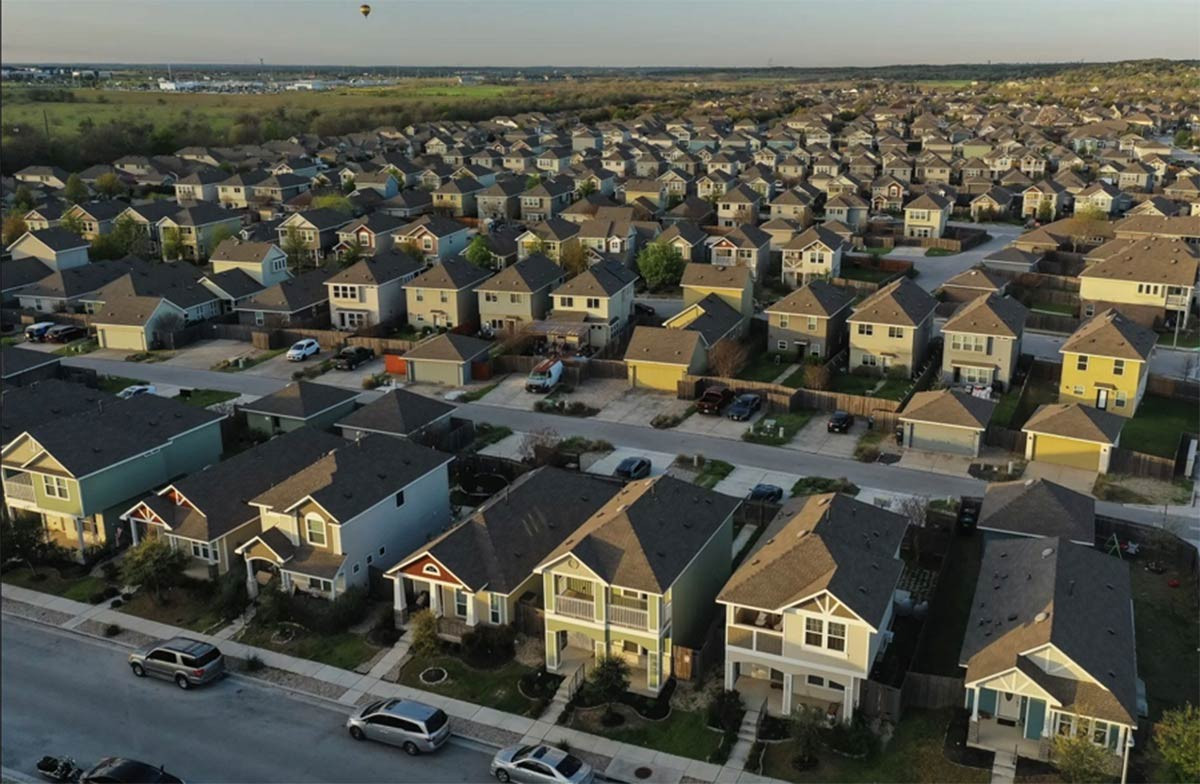
Investment returns in U.S. real estate are falling due to high interest rates and weak demand.
From late 2022 to 2024, U.S. home prices began leveling off or falling in states such as California, Washington, and Texas, as mortgage rates rose from 3% to over 7%, doubling the cost of home ownership.
According to data from the U.S. Bureau of Labor Statistics and the Case-Shiller Index in 2024, home prices in major states like California, Washington, and Texas fell 5–10% from their 2022 peak. Cities like San Francisco, Seattle, and Austin saw even deeper drops, with transactions plummeting due to high borrowing costs.
A July 2025 report from S&P Dow Jones Indices showed that U.S. home prices were nearly flat, clearly signaling a cooling market after the pandemic boom.
Nationally, home prices increased just 1.7% year-on-year - below June’s 1.9% and far lower than the double-digit spikes during COVID-19. This marked the weakest growth in nearly a decade.
There’s also a clear regional divergence.
Previously hot markets like Tampa (down 2.8%), Phoenix (down 0.9%), Miami (down 1.3%), and San Francisco (down 1.9%) saw price declines, while more stable economies like Chicago and Cleveland recorded only slight increases.
Surge in Viet Kieu capital inflows into Vietnam
Tín Nguyen, a global real estate investor, shared: “Previously, rental property in the U.S. could yield 5–6% annually, while buying and reselling brought 15–20% returns. Now, that’s dropped to just a third due to high interest rates and weak demand.”
He noted a strong capital shift toward emerging Asian markets such as Vietnam, the Philippines, and Indonesia - regions with plenty of growth potential.
In fact, foreign direct investment (FDI) in Vietnam’s real estate sector is rising sharply, signaling renewed international interest.
According to the Ministry of Finance’s Foreign Investment Agency, Vietnam attracted USD 5.1 billion in real estate FDI in the first half of 2025 - double the same period last year.
Alongside this, overseas Vietnamese are increasingly active in the domestic housing market.
It’s estimated that about 25% of remittances are now being funneled into real estate.

For example, of the USD 16 billion in remittances to Vietnam in 2024, roughly USD 4 billion was invested in property.
Do Anh Viet, a real estate broker in Ho Chi Minh City, observed a clear trend: more overseas Vietnamese are joining the market, boosting demand for premium residential projects in major urban centers like Ho Chi Minh City, Hanoi, and Da Nang.
He explained that while central Ho Chi Minh City boasts high-priced projects, they’re limited by land scarcity and lack of space and amenities. In contrast, newer areas like Thu Thiem offer better planning, low-density layouts, and spacious living - more in line with Viet Kieu preferences.
According to Viet, projects that meet standards in planning, amenities, and construction quality tend to sell well and maintain value on the secondary market.
For instance, The Privé, a high-end project developed by Dat Xanh Group in Thu Thiem, is attracting strong interest from this buyer group.
Phạm Thi Mien, Deputy Director of the Institute for Real Estate Market Research and Evaluation, said the flow of remittances into real estate remains stable and is increasing quarter by quarter.
She identified several reasons why overseas Vietnamese continue to invest in the sector.
First, owning real estate in Vietnam has become more straightforward thanks to clearer and more open regulations.
Under current law, overseas Vietnamese enjoy the same property ownership and transaction rights as citizens, giving them confidence to invest directly.
Second, while many major global economies are slowing down, Vietnam maintains stable growth and shows strong recovery capability.
“This builds confidence in the long-term profitability and resilience of Vietnam’s market,” Mien said.
Lastly, Vietnam’s political stability remains a key factor.
Despite global turmoil and conflict, Vietnam is viewed as a safe and stable country - an essential condition for real estate investment, which requires long-term vision and trust.
Many Viet Kieu also view investing in Vietnam as a way to diversify portfolios in emerging markets, seek higher yields, or simply fulfill emotional ties to their homeland - a desire to “return to one’s roots” and secure a home to come back to after years abroad.
According to Mien, overseas Vietnamese from developed countries like the U.S., Europe, or Canada typically invest in high-end segments - both to live in and for long-term rental income.
Hanh Nguyen
.svg)
