 Vietnamnet.vn

 Podcast



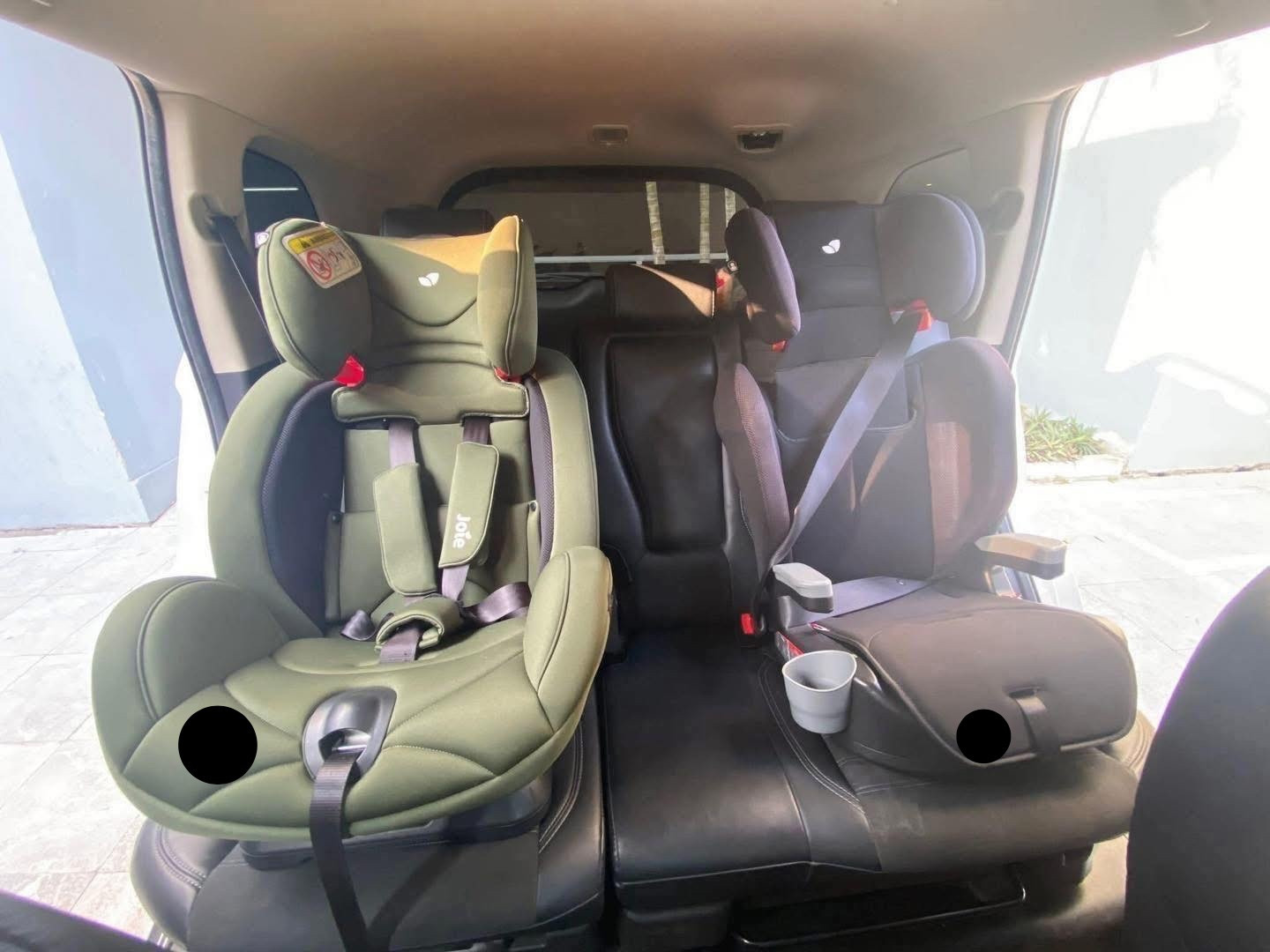
The mandatory use of child safety seats on cars is considered a step forward in protecting young passengers, as proper restraint significantly reduces the risk of injuries and fatalities in collisions.
The Traffic Police Department emphasized that authorities always prioritize public safety. Using child safety devices is just as essential and important as the requirement to wear helmets.
Many parents support the policy, calling it a “living shield” for their children. However, there are concerns rooted in how most families actually use their vehicles.
One of the biggest questions involves families with three young children in a 5-seat car. Installing three dedicated child seats is often impossible due to limited space.
Can a 5-seat car fit three child safety seats?
Nguyen Quoc Dung in Dong Anh, Hanoi, a father of three and owner of a Toyota Raize, shares the same concern as many others. Dung said: “Under the new rule, children under 10 (or below required height/weight) must sit in the back and be secured in dedicated child seats.”
However, on many 5-seat models such as Toyota Raize, Honda CRV (5-seat version), Peugeot 3008, Hyundai Tucson, Mazda CX5, KIA Seltos, and Toyota Camry, the second row is designed to fit a maximum of two child seats. Even with slim seats or compact boosters, fitting three seats with proper installation, ISOFIX locks, seatbelts and anchor points is nearly impossible.
According to Dung, this puts families like his in a difficult position.
“We have to choose between two unreasonable options: either violate the rule by letting one child sit without a child seat (or in the front seat, which is unsafe and against the rule), or sell the 5-seat car and switch to a 7-seater only to accommodate three seats. For many families, especially in cities where small cars dominate, this is unrealistic.
“To make the rule practical, I hope authorities add specific guidance for 5-seat cars. For example, require child seats only for the maximum number the rear row realistically allows (usually two), and provide an approved alternative for the third child, such as proper seatbelt use or a technical support cushion.
“Authorities should also publish a list of common car models indicating whether they can fit one, two, or three child seats, helping families plan and comply. Clear guidance is essential so the policy protects children while matching real-life conditions of most Vietnamese families,” Dung said.
Vinh Nam, an experienced car business professional in HCMC, confirmed that installing three child seats in a 5-seat car is not feasible, as only two rear positions are equipped with proper anchorage points.
Autonotive expert Nguyen Minh Dong said that for families with many children and small cars, the issue should not be addressed by “forcing everything to fit”, but by applying technical and regulatory flexibility.
First, the market should encourage the use of slim or narrow child seats, with thinner bases, making it possible to place three seats side by side while ensuring safety standards. A flexible combination of seat types by age, such as two rigid seats for younger children at the sides and a compact booster in the middle, should also be accepted rather than requiring all three children to use the same type of seat.
Additionally, allowing the middle seat to be secured using the seatbelt when no anchor point is available is a technically sound solution, as it makes positioning easier in tight spaces.
However, parents should never modify, pad, or alter seat structures for extra room, as even a small change can eliminate protection in a collision. Retailers and service centers should assist families by testing installations directly on their cars before purchase.
“In terms of regulations, many believe the upcoming rules should be more flexible, allowing parents to choose seat types based on a child’s weight and height rather than requiring a single standard type. Equally important is strong communication from authorities to ensure people clearly understand the benefits, obligations, and how to properly apply the rule in daily life, avoiding confusion or unintentional violations,” Dong said.
Hoang Hiep
.svg)
