 Vietnamnet.vn

 Podcast



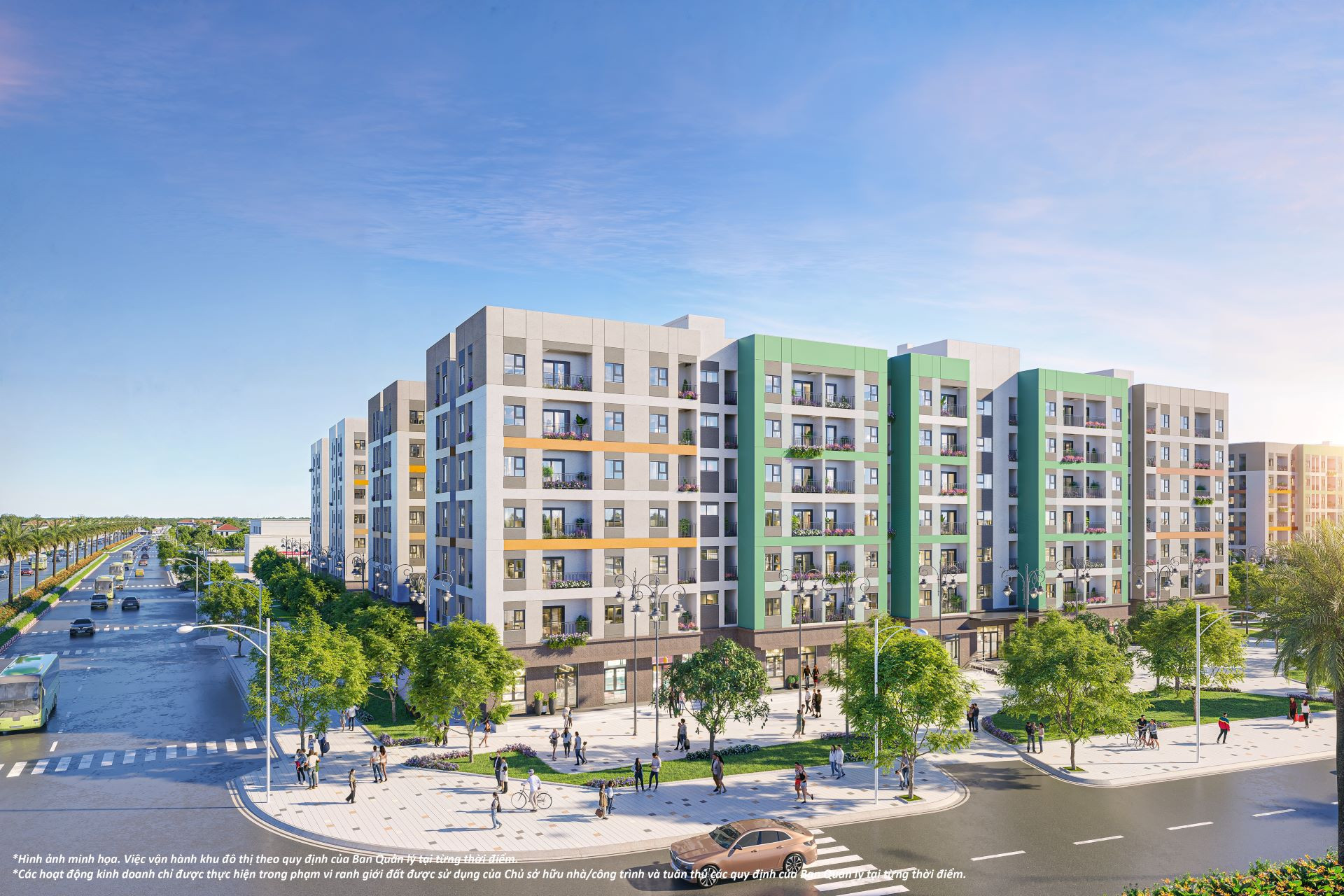
At the seminar on “Solving the affordable housing shortage and attracting residents to new urban areas” held on October 17, Le Hoang Chau, chair of the HCMC Real Estate Association, explained that affordable housing can be divided into two types.
The first is social housing, or the segment with the lowest prices. However, a recently announced social housing project in Hanoi was priced as high as VND29.5 million/sqm. At this rate, a 70 sqm apartment would cost nearly VND2.1 billion. With a 4.8 percent interest rate loan over 25 years, buyers could still afford it.
The second is commercial housing at a price suitable for income levels. Chau emphasized the need for policies to support this segment.
"In the upcoming revision of the Housing Law in 2026, we will propose mechanisms to support buyers of affordable commercial housing," Chau said.
So, what price level is considered suitable? According to Chau, in 2013, when the government issued Resolution 02 and launched a VND30,000 billion credit package, commercial housing priced VND1.05 billion or below qualified for loans. Now, suitable commercial housing prices can be set under VND3 billion.
“For commercial housing, developers don't need special mechanisms on land or tax. They just need credit incentives, similar to the VND145,000 billion package the State Bank is currently deploying for social housing and renovation of old apartment buildings. This package should be expanded to include affordable commercial housing, with an interest rate of around 5.9–6.1 percent, which banks are currently offering and is considered reasonable,” Chau added.
However, Chau believes that the most important issue is the credit policy for buyers, with reasonable interest rates over 20-25 years. Then, young people with some savings, especially first-time buyers, can establish housing. Only then can Vietnam truly solve the demand for income-suitable housing.
From enterprises’ perspective, Nguyen Thanh Quyen, CEO of Thang Loi Group, said prospects for developing low-cost or affordable housing segments are very optimistic.
“In the next 10 years (by around 2035), the market will see two segments - affordable housing and ultra-luxury housing - both booming,” Quyen said.
For affordable housing, there are two main categories: affordable commercial housing and social housing. Quyen believes that more companies will enter this segment in the near future, as three major barriers to social housing have largely been removed.
“First, input costs are now better defined and more transparent. Second, the profit cap, previously 10 percent, which posed a significant risk to businesses, has been raised to 13 percent and may become even more flexible. Third, the eligibility criteria for purchasing, renting, and rent-to-own social housing have been significantly expanded, allowing more genuine beneficiaries to access housing,” Quyen explained.
Solutions for affordable housing
To develop the affordable housing segment, Nguyen Trung Vu, chair of Cen Land, said the state must reduce land use fees, especially for developments located far from central areas.
“If land use fees are viewed as short-term revenue, property prices will skyrocket, making it difficult for developers to sell and hindering long-term growth. Land use fees should be treated as long-term revenue to allow businesses to grow,” Vu said.
Additionally, policies should support real buyers and limit speculative investors.
Emphasizing that “homes are for living, not speculation,” Cen Land’s leaders proposed that the principle of “build to live” must be enforced—if residents cannot be relocated to the new development, then construction should not proceed.
When it comes to affordable housing, Vu argued that the price should be around VND2 billion so that young buyers can purchase and pay in installments over many years.
Le Hoang Chau stressed that to increase the supply of affordable housing, bottlenecks must be removed for nearly 2,900 stalled projects.
At the same time, supply can be boosted through National Assembly Resolution 171, which allows the use of residential and non-residential land (or land with current non-residential use rights) for commercial housing projects. To make this feasible, administrative procedures must be streamlined.
In related news, on October 15, Vingroup announced the implementation of social housing projects in 7 provinces and cities nationwide.
Among them, nearly 50,000 units are planned for Hung Yen, Hai Phong, HCMC, and Tay Ninh; nearly 11,000 units are under construction and entering the market in Hai Phong, Thanh Hoa, Quang Tri, and Khanh Hoa.
Hong Khanh
.svg)
