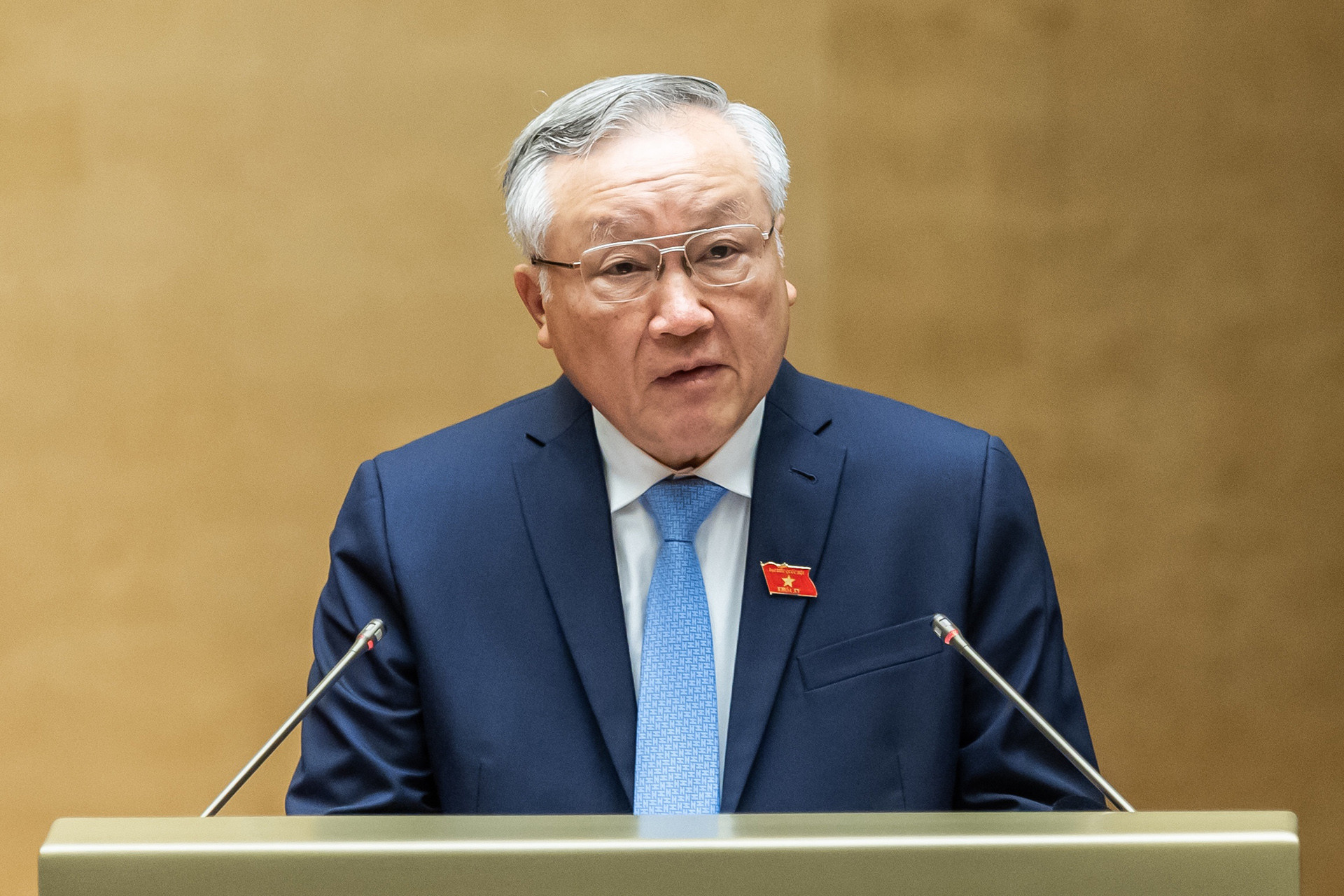
On the afternoon of October 20, during the 10th session of the 15th National Assembly, Permanent Deputy Prime Minister Nguyen Hoa Binh presented a report summarizing the Government’s performance in the 2021–2026 term.

Over 400 field visits to address local concerns

The Deputy Prime Minister stated that the Government and the Prime Minister have shifted their legislative mindset from “management” to “development facilitation,” and from “pre-checks” to “post-checks.”

This has led to the proactive introduction of several law-making projects with open, development-focused mechanisms and policies, contributing to the completion of a socialist rule-of-law state and a socialist-oriented market economy, while addressing systemic bottlenecks.

b0ba91dd7516f848a107.jpg

Permanent Deputy Prime Minister Nguyen Hoa Binh. Photo: Quang Vinh

During the term, the Prime Minister and Deputy Prime Ministers made over 400 field visits to localities and grassroots units to monitor the implementation of the Constitution and laws and resolve pressing issues.

The Government held 45 special legal sessions and submitted 180 laws, ordinances, and resolutions to the National Assembly-its highest legislative output to date.

In total, it issued 1,400 resolutions and 820 decrees, while ministries and other agencies released nearly 3,600 legal documents under their respective mandates.

The Deputy Prime Minister highlighted ten key economic management achievements.

These include stable macroeconomic conditions, strong economic growth, and effective COVID-19 pandemic control.

In addition, social welfare and citizens’ well-being were prioritized.

The Government allocated over 1.1 quadrillion VND (approximately $45 billion), or 17% of the national budget, to social security, and eliminated over 334,000 dilapidated or temporary homes, meeting its housing goal 5 years and 4 months ahead of schedule.

Large-scale funding was directed to national target programs, which were aggressively implemented and met most of the National Assembly’s goals for the 2021–2026 period.

Economic expansion and elevated global standing

The size of Vietnam’s economy has expanded from $346 billion (ranked 37th globally) to $510 billion (32nd globally).

Per capita income grew from $3,552 to around $5,000, elevating Vietnam to the upper-middle-income group-a major bright spot praised internationally.

Under the new rural development program, 79.3% of communes now meet national standards.

The sustainable poverty reduction program brought the multidimensional poverty rate down from 4.4% to 1.3%.

Development initiatives targeting ethnic minorities and mountainous regions exceeded six out of nine goals and significantly improved local living conditions.

Infrastructure development has seen a breakthrough.

By the end of 2025, Vietnam expects to complete 3,245 km of expressways and 1,711 km of coastal roads, surpassing the set targets.

Key national projects in aviation and energy-such as Long Thanh Airport and the 500kV transmission line (third circuit)-are being accelerated.

Digital infrastructure has also advanced rapidly, pushing Vietnam’s mobile internet speed into the world’s top 20.

Social and cultural progress
daibieuQH.jpg
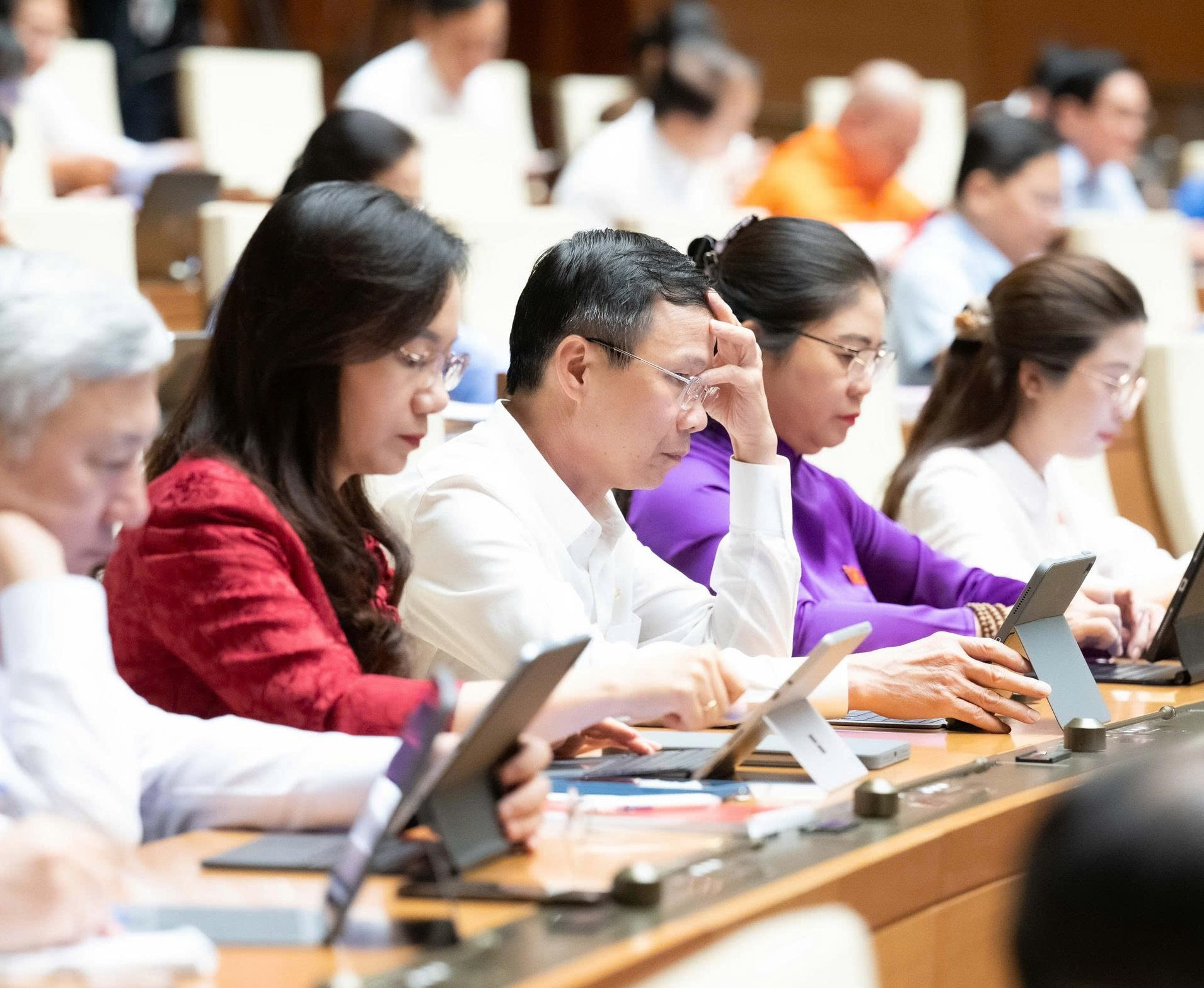
National Assembly delegates during the 10th session. Photo: National Assembly

The country’s Human Development Index (HDI) rose by 18 ranks, reflecting significant national progress.

Tuition fee exemptions and educational support policies will take effect from the 2025-2026 academic year.

The Government has also tackled long-standing financial and industrial issues, developing and executing plans to resolve problems at five struggling banks and 12 delayed or inefficient projects.

These include major ventures such as Song Hau 1 and Thai Binh 2 power plants, Van Phong BOT project, Nghi Son 2, O Mon gas-to-power plant, and Block B gas field.

Many stalled projects and loss-making enterprises have been addressed, freeing up resources for development.

“With a no-avoidance mindset, the Government focused on decisively resolving long-standing issues-weak financial institutions and loss-making projects-that previous administrations failed to tackle,” the Deputy Prime Minister affirmed.

In parallel, the Government also removed legal barriers for thousands of public land and construction projects nationwide and continues to resolve bottlenecks to reintroduce vital assets into socio-economic development.

Outstanding results amid unprecedented challenges

The Deputy Prime Minister asserted that despite unprecedented difficulties and challenges, the 2021–2026 Government remained united and proactive, achieving its objectives and leaving a lasting impact.

The macroeconomy remained stable with high growth; social welfare was secured, and people’s living standards improved.

Institutional reform progressed rapidly.

The Government successfully implemented a “revolution” to restructure its apparatus into a leaner, more efficient system.

Strategic infrastructure developed robustly.

National defense and security remained strong.

Vietnam’s international reputation and global standing were significantly enhanced.

“These comprehensive achievements have solidified public trust and created momentum for Vietnam to move swiftly and sustainably into a new era,” the Deputy Prime Minister emphasized.

Looking ahead, global and regional developments are expected to remain complex and unpredictable.

To realize two strategic goals-becoming a modern, upper-middle-income industrialized country by 2030 and a high-income developed country by 2045-the Government will continue addressing shortcomings and fulfill all targets.

“The Government has successfully fulfilled all eight constitutional mandates during the 2021–2026 term,” he noted.

Twelve priority areas for the next phase:

Continue streamlining administrative structures and local governments.

Improve legal institutions and mobilize resources to drive development, reform administration, and enhance online public services.

Ensure macroeconomic stability while promoting strong growth and controlling inflation.

Accelerate industrialization, technological innovation, digital transformation, and economic restructuring.

Develop modern infrastructure and expand new growth spaces, using urban areas as regional development hubs.

Build a modern national education system with a focus on high-quality human resources.

Advance cultural and social development, safeguard social welfare, and improve the people’s physical and mental well-being.

Manage natural resources efficiently, protect the environment, and adapt to climate change and disasters.

Strengthen national defense and public security to maintain peace and stability.

Enhance foreign affairs and international integration, especially in economic diplomacy, while elevating Vietnam’s global role and image.

Combat corruption and waste, resolve public complaints, and promote accountability.

Strengthen public communication to foster unity and resilience against misinformation and hostile narratives.

Thu Hang