 Vietnamnet.vn

 Podcast



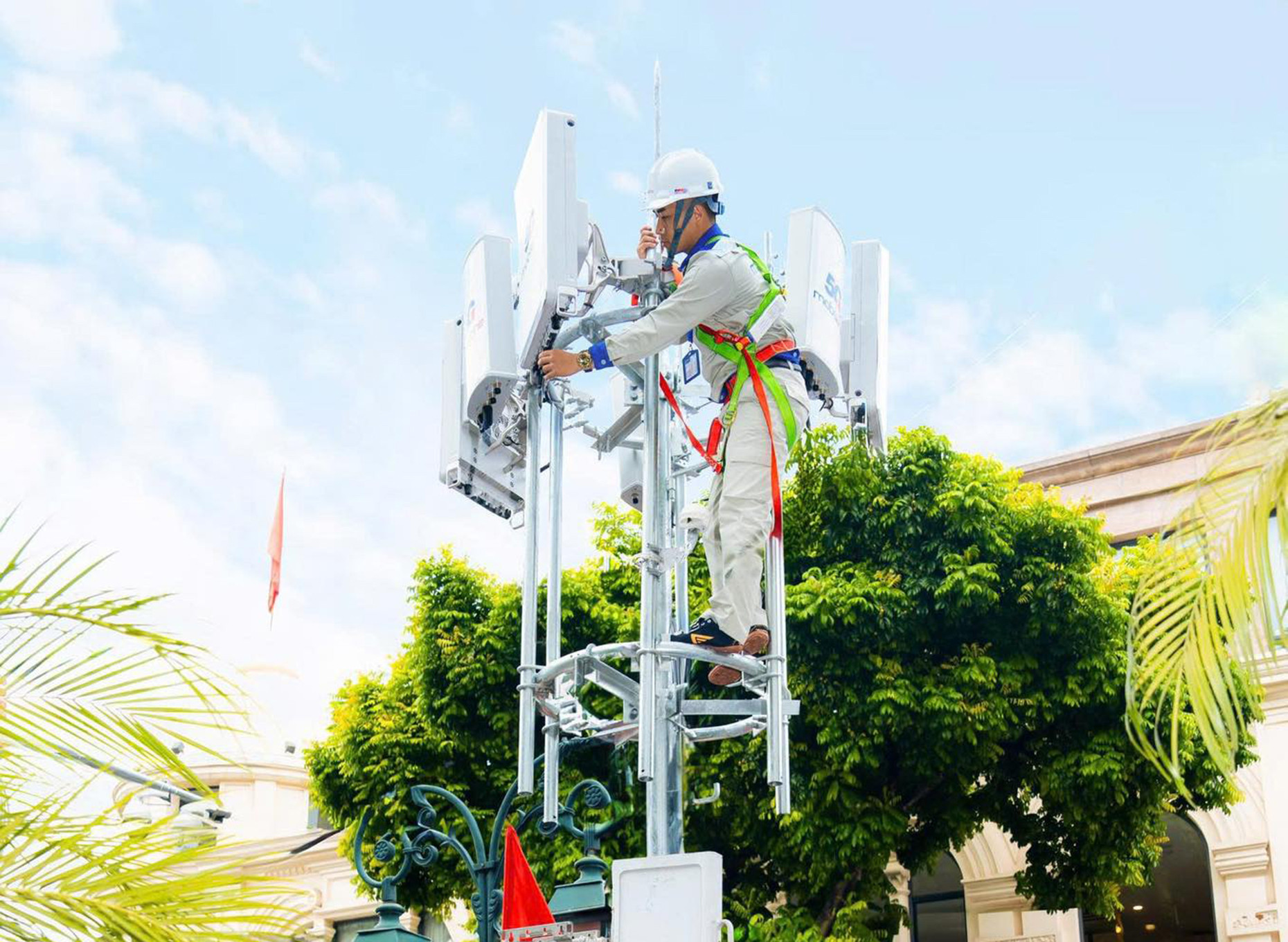
Vietnam’s telecom law permits the sharing of telecom infrastructure to support rapid development, optimize societal and enterprise resources, and enhance efficiency. This legal provision serves as the foundation for facilitating infrastructure collaboration between VNPT, Viettel, and MobiFone.
At a recent working session with the telecom sector, Minister of Science and Technology Nguyen Manh Hung noted that although Vietnam has opened its telecom industry for over 20 years, infrastructure competition continues to hinder progress. "Operators have competed over who has more coverage, more base stations. Now is the time to move beyond infrastructure competition toward infrastructure sharing. Major telecom providers like VNPT and Viettel must share with smaller ones such as MobiFone,” he asserted.
The minister emphasized that the focus must shift toward service competition. Due to the lack of pricing competition, Vietnam has limited telecom services. He called this shift a strategic transformation where the ultimate goal is to provide better services to the people, rather than simply expanding infrastructure.
He also advocated for fully enabling virtual mobile networks. Large carriers should sell capacity to smaller operators so they can innovate and deliver diversified services to the public. This would require a cohesive strategy to promote mobile virtual network operators (MVNOs).
VNPT, Viettel, and MobiFone must enable 5G roaming for A80 event connectivity
Responding to VietNamNet’s inquiry about how VNPT and Viettel will be required to share infrastructure with MobiFone, Deputy Director of the Department of Telecommunications Nguyen Anh Cuong explained that the legal framework already allows shared use of telecom infrastructure to accelerate network deployment and service provision while maintaining urban aesthetics. Decree 163 outlines that infrastructure sharing is a legal obligation and should be implemented via contracts that protect the rights and interests of all parties.
To execute the minister’s directive, Cuong said the next steps include accelerating the planning of passive telecom infrastructure across localities. Local governments now hold responsibility for developing infrastructure plans aligned with provincial, urban, and rural development strategies. These plans must clearly identify key areas, roads, administrative zones, and public service spaces where infrastructure - especially mobile towers and base stations - must be shared among VNPT, Viettel, and MobiFone.
The Ministry of Science and Technology will continue working with local departments to guide telecom operators in incorporating shared passive infrastructure into local planning. It will also promote the annual undergrounding and beautification of peripheral networks, encouraging shared infrastructure across sectors.
Cuong also confirmed that a shared infrastructure cooperation agreement among the three major mobile operators has already been signed. In practice, these companies have been sharing passive infrastructure and, in some cases, even active infrastructure in low-traffic areas. They already co-use cable ducts and poles in several locations.
"VNPT and Viettel must share infrastructure with MobiFone"
Going forward, the Department of Telecommunications will serve as an intermediary agency to ensure that VNPT, Viettel, and MobiFone actively implement their agreement on sharing technical infrastructure. This includes shared use of antenna locations, equipment rooms, auxiliary systems, and operating costs such as generators. The plan also covers active infrastructure sharing - particularly for network expansion in remote and underserved areas.
Cuong added that in emergencies such as natural disasters or epidemics, the Ministry of Science and Technology will direct enterprises to work closely together on disaster response and emergency communication. Telecom operators must be prepared to support one another through roaming agreements, infrastructure sharing, and other cooperative measures to ensure uninterrupted communication in any scenario.
Thai Khang
.svg)
