 Vietnamnet.vn

 Podcast



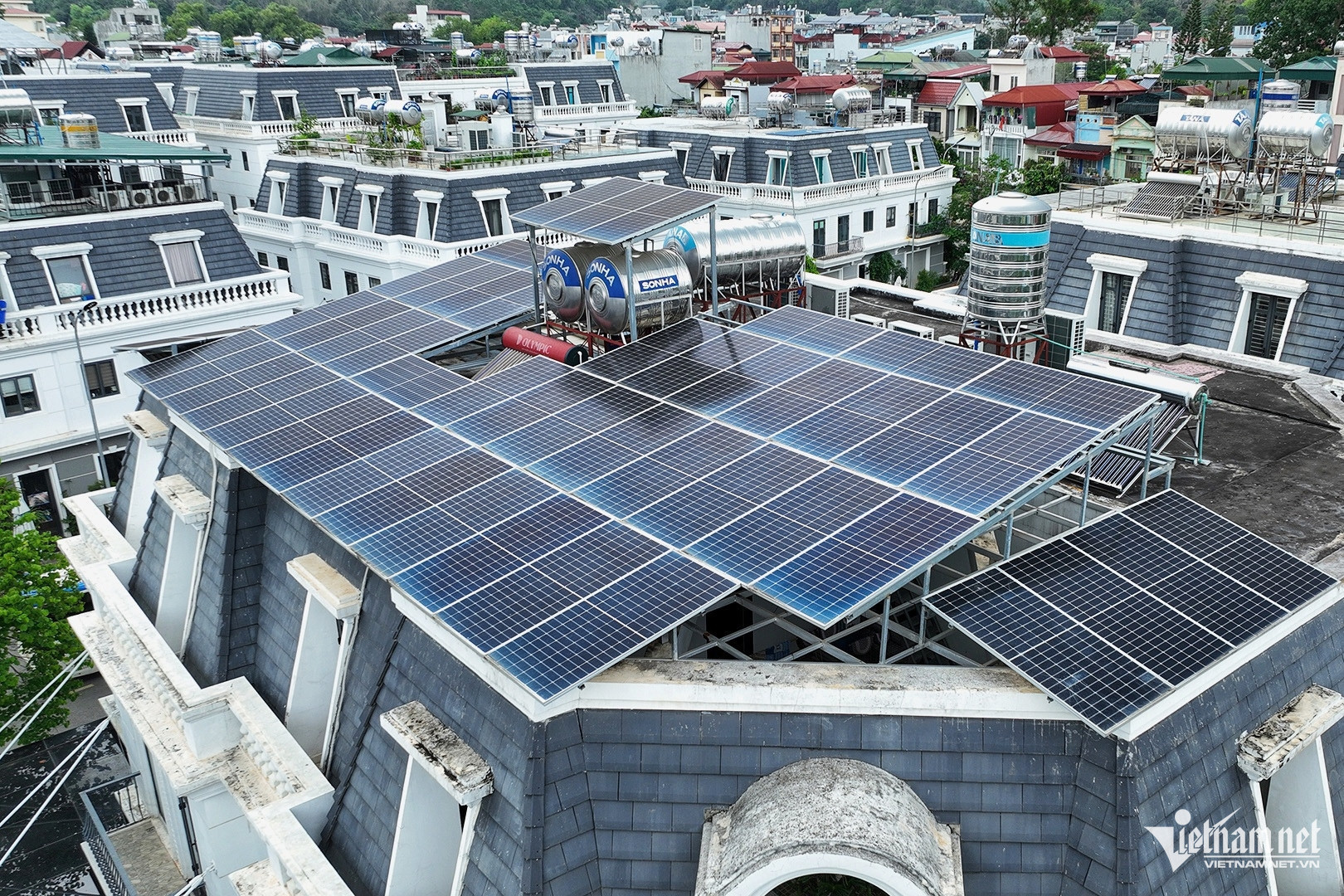
Households installing rooftop solar systems for self-generation and self-consumption, with integrated battery storage, are expected to benefit from multiple support policies, including financial subsidies and preferential loans. The total direct subsidy package may reach 42 trillion VND (approximately 1.65 billion USD).
These proposals were introduced by the Ministry of Industry and Trade (MoIT) in the third draft of the Prime Minister’s Decision outlining policies to support households in installing self-generated, self-consumed rooftop solar systems with energy storage.
In the second draft, MoIT proposed that households receive investment support of up to 500,000 VND (about 20 USD) per kWp of installed capacity, capped at 2.5 million VND (roughly 100 USD) per household. The policy would apply through January 1, 2031. Additionally, households could receive interest support on commercial loans to finance solar installations.
However, feedback from various ministries raised questions about the feasibility of this support level. The Ministry of Finance, referencing data from the proposal, noted that rooftop solar systems cost between 12 to 15 million VND/kWp (480–600 USD), totaling 60–150 million VND (2,400–6,000 USD) for a 5–10 kWp system, with a payback period of approximately five years. Therefore, the initial proposed support was seen as lacking a clear calculation basis.
The Ministry of Justice also cautioned against direct subsidies during system installation, warning that widespread implementation of a 500,000 VND/kWp subsidy would pose budgetary challenges and risks of waste or mismanagement.
Similarly, the Ministry of Science and Technology estimated that if implemented on a large scale - supporting a target of 50 GWp of self-generated solar - the government would need to allocate around 25 trillion VND (nearly 1 billion USD). This raised significant concerns about budget balancing and administrative control.
In response, the third draft includes adjustments: a revised installation subsidy ranging from 1–1.5 million VND (40–60 USD), plus an additional 1–1.5 million VND for installing a Battery Energy Storage System (BESS), subject to minimum capacity conditions. It also proposes loan support of 4 million VND/kWp (160 USD) for up to 5 kWp solar systems, and 2 million VND/kWh (80 USD) for BESS investment of up to 10 kWh.
With around 28 million households nationwide, achieving the goal of 50% rooftop solar adoption by 2030 - under Vietnam’s adjusted Power Development Plan VIII - would require a direct subsidy budget of 42 trillion VND. On average, each province would need to allocate about 250 billion VND (approximately 9.8 million USD) per year. MoIT considers this manageable within local budgets and expects the Ministry of Finance to incorporate the figures into annual provincial budget forecasts.
However, MoIT emphasized that this is a maximum support figure. Actual disbursements will depend on each locality's budget capacity and household demand. The policy will apply uniformly across all households to ensure fairness.
In terms of impact, if each household installs a 3 kWp system on average, the total annual electricity production could exceed 50 billion kWh - equivalent to 16% of the country’s electricity demand in 2024.
Tam An
.svg)
