 Vietnamnet.vn

 Podcast



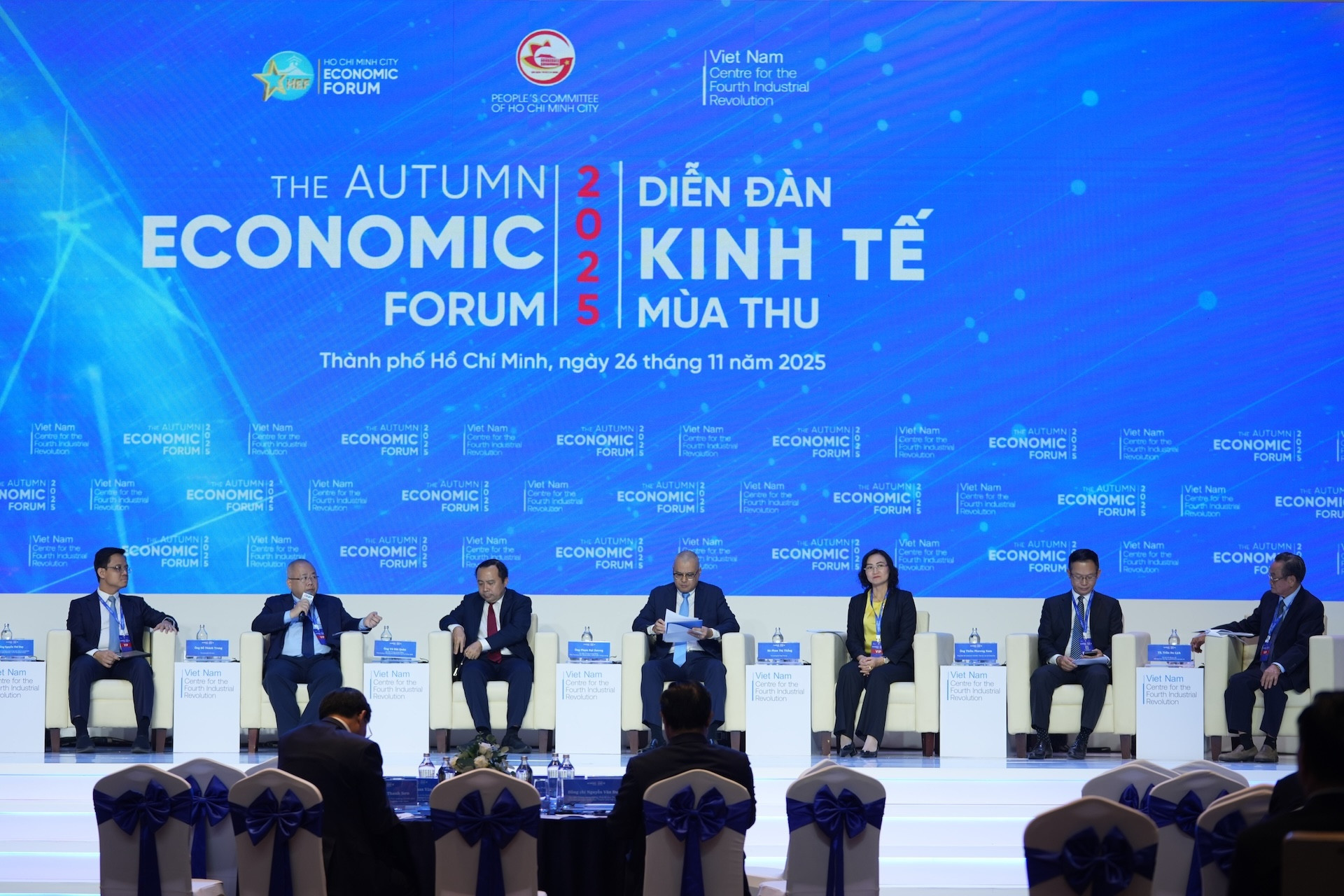
On the afternoon of November 26, a dialogue session with central government leaders took place in Ho Chi Minh City as part of the 2025 Autumn Economic Forum.
At the event, Permanent Deputy Minister of Science and Technology Vu Hai Quan shared that the Ministry of Science and Technology (MOST) is the standing agency assigned to implement Resolution 57.
According to Deputy Minister Quan, the fact that the General Secretary himself heads the steering committee and directly oversees the implementation of this resolution signals the crucial role that science and technology (S&T), innovation, and digital transformation (DT) play. They are seen as key breakthroughs and new growth drivers in Vietnam’s pursuit of prosperity and wealth.
In the past year, MOST has undertaken numerous efforts to institutionalize the directives outlined in Resolution 57.
The ministry has introduced or updated 10 draft laws and completed 17 decrees. By the end of the year, additional decrees and guiding circulars will be submitted.
Among the 10 laws, several are entirely new legislative initiatives currently under consideration by the National Assembly, including the draft Law on Artificial Intelligence and the Law on Digital Transformation. Other amended laws will also provide a critical legal foundation to support S&T development.
Deputy Minister Quan cited the recently passed Law on Science, Technology and Innovation, which institutionalizes several key Party directives.
First, public spending on S&T, innovation, and digital transformation will be allocated 3% of the total state budget.
Second, funding will be distributed based on effectiveness, not evenly across the board.
Third, the law now legalizes a risk-tolerant mechanism for scientific research and technology testing.
In addition, the law introduces the concept of “chief architects” to attract top talent, and MOST has advised the government on six strategic technologies, five of which are expected to begin implementation in 2025.
The amended Law on High Technology also includes new incentives for companies producing strategic tech products. These include tax breaks based on localization ratios - the higher the percentage of local content, the greater the tax benefits. Companies with high R&D spending may enjoy tax deductions of up to 200%.
Deputy Minister Quan also revealed that the ministry has submitted a proposal for a National Startup Strategy to the government.
He emphasized that if Vietnam wants to grow through science, technology, and innovation, it must nurture startups as a priority. Therefore, the legal framework is being designed to actively support startups.
One of the most important policies under discussion is creating a market specifically for startups, with the government playing an enabling role.
He expressed hope that startups from neighboring regions like Southeast Asia, as well as global tech talents, would come to Vietnam to develop their innovative products and businesses.
Deputy Minister of Finance Do Thanh Trung echoed these sentiments, noting that Vietnam is taking a unique approach to supporting startups.
With the backing of leading global corporations, the Ministry of Finance and MOST have jointly built the National Innovation Center (NIC), which now serves as the cornerstone of Vietnam’s startup ecosystem.
Startups can establish their offices at the NIC, use laboratories and certification rooms, and access an extensive network of business partners and support services.
According to Trung, the NIC is expanding beyond Hanoi to other provinces, allowing the NIC system to support startups nationwide.
“NIC doesn’t just help Vietnamese startups grow strong enough to invest abroad. It also welcomes foreign companies wanting to launch in Vietnam. Come here, work with local startups and government agencies, and grow into unicorns,” Deputy Minister Trung urged.
Tran Chung & Dinh Tuyen
.svg)
