 Vietnamnet.vn

 Podcast



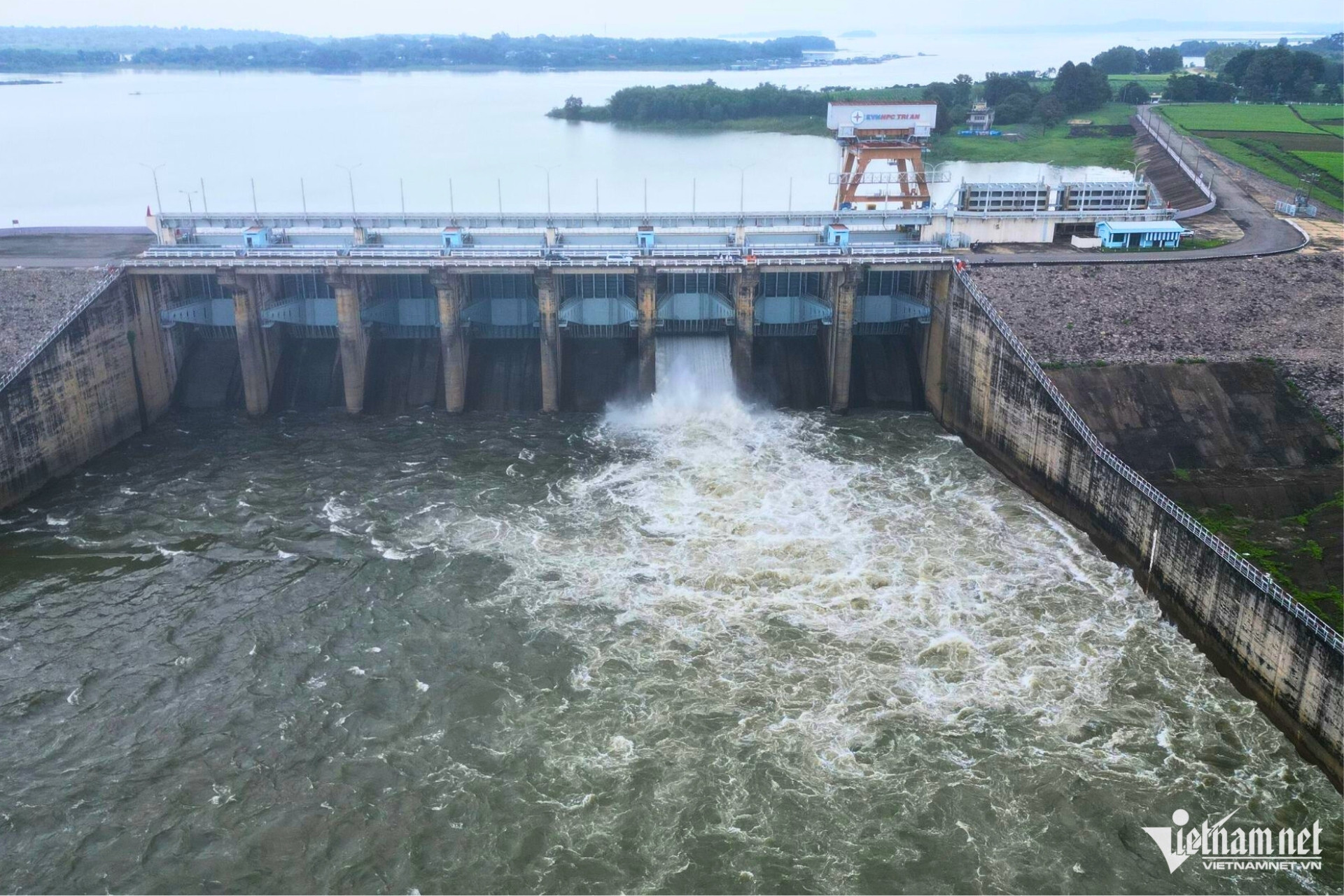
With an investment of nearly VND 4,000 billion (approximately USD 157 million), the Tri An Hydropower Plant will undergo expansion to increase capacity, maximize water flow utilization, and reduce CO2 emissions.
Vietnam Electricity (EVN) has recently received approval from the People's Committee of Dong Nai Province to lease more than 20 hectares of land in Tri An commune for the expansion project, which is scheduled to break ground on August 19.
This project is one of eight key infrastructure developments being launched, inaugurated, or commenced by Dong Nai Province during this period.
As the project investor, EVN has assigned the Power Project Management Board No. 3 (EVNPMB3) to oversee implementation. The facility will consist of two generating units with a combined installed capacity of 200 MW (100 MW each) and a total investment of VND 3,965 billion (around USD 156 million). The first unit is expected to begin operation in Q3 2027, followed by the second unit in Q4 2027.
In late 2024, EVN began construction of the Hieu Liem Bridge, a key infrastructure component for transporting equipment and materials to the project site. Upon completion, the bridge will not only serve the hydropower plant but will also function as a new traffic artery to stimulate socio-economic connectivity in the region.
According to EVN, the expanded facility will enhance power supply capacity for southern Vietnam, particularly during peak hours, and improve operational efficiency of the national grid. The project is expected to reduce production costs, fully leverage water flows, minimize surplus discharge, cut CO2 emissions, and prolong the lifespan of plant equipment.
The Tri An Hydropower Plant was originally constructed in 1984 with assistance from the former Soviet Union. Its first generating unit was connected to the national grid on April 30, 1988, and the plant was officially inaugurated in 1991. Currently, the facility operates four units with a total design capacity of 400 MW, generating an average of 1.7 billion kWh annually.
In addition to power generation, the Tri An Reservoir also provides water for domestic use, supports agriculture, prevents saltwater intrusion, and regulates downstream flooding.
Hoang Anh
.svg)
