 Vietnamnet.vn

 Podcast



The bánh xèo stall owned by a couple sharing the same name in Ho Chi Minh City has long intrigued customers. Each visit begins with waiting patiently as the husband lights the wood stove, stirs the batter, and fries the pancakes to order.

The bánh xèo stall run by Mrs. Diep sits quietly in a small alley.
Tucked into a narrow alley on Han Hai Nguyen Street (Binh Thoi Ward, HCMC), the tiny street stall run by Nguyen Thi Diep, 68, is hardly noticeable to passersby. But when midday approaches and hungry customers begin to trickle in, her loud call signals her husband, Nguyen Van Diep, 72, who promptly rushes out to ignite the fire.
The “stall” consists of a single glass cabinet atop a stainless steel table, with just a few plastic chairs and tables arranged in front. Behind the cabinet is an old-fashioned wood stove surrounded by neatly stacked dry firewood, all shaded under a large umbrella in the alley’s corner.
Only when he’s sure there’s an order does Mr. Diep carefully arrange the firewood and ignite the flames beneath the old stove. While waiting for the fire to heat up, Mrs. Diep prepares the accompanying vegetables and recounts how bánh xèo became the family’s livelihood for decades.
In their youth, lacking capital for a proper business, Mrs. Diep collected recyclable trash throughout the neighborhood - an occupation requiring little investment and offering daily income. Even after having four children, she continued shouldering the burden, while Mr. Diep pedaled a cyclo to earn a living.
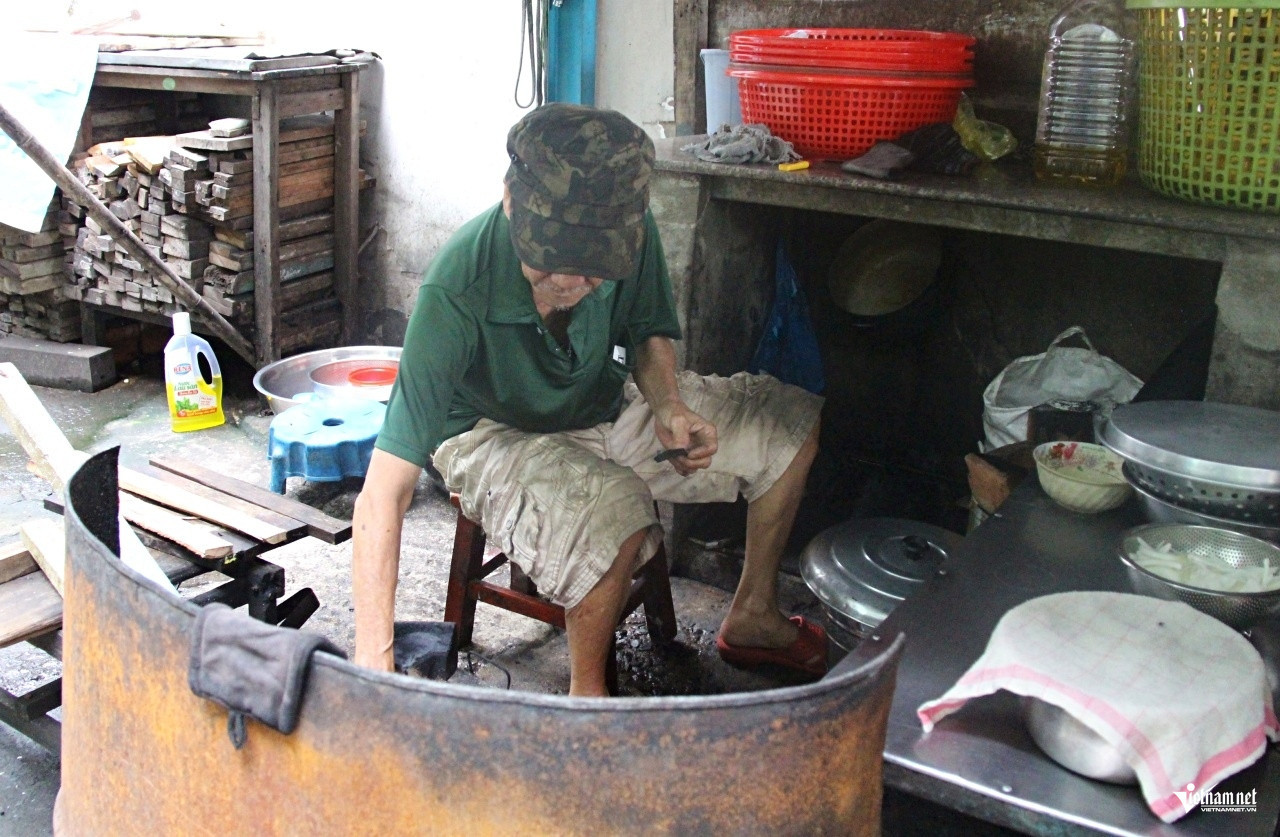
Mr. Diep only fires up the stove and fries pancakes when there’s an order.
As the years passed and she could no longer carry heavy loads, Mrs. Diep decided it was time for a change. Living near a firewood yard sparked an idea: she would buy scrap wood to fuel a traditional stove and fry bánh xèo.
“I chose good-quality rice and ground it into flour for frying,” she recalled. “I mixed the batter and prepared the fillings based on my own thinking, with no recipe or guidance from anyone.”
In the early days, the pancakes would sometimes fall apart, burn, or taste either too bland or too salty. Despite these hiccups, customers kept coming - and with them came valuable feedback.
Taking their suggestions seriously, she gradually refined her batter formula and frying technique. As business picked up, she persuaded her husband to leave his cyclo job and join her at the stall.
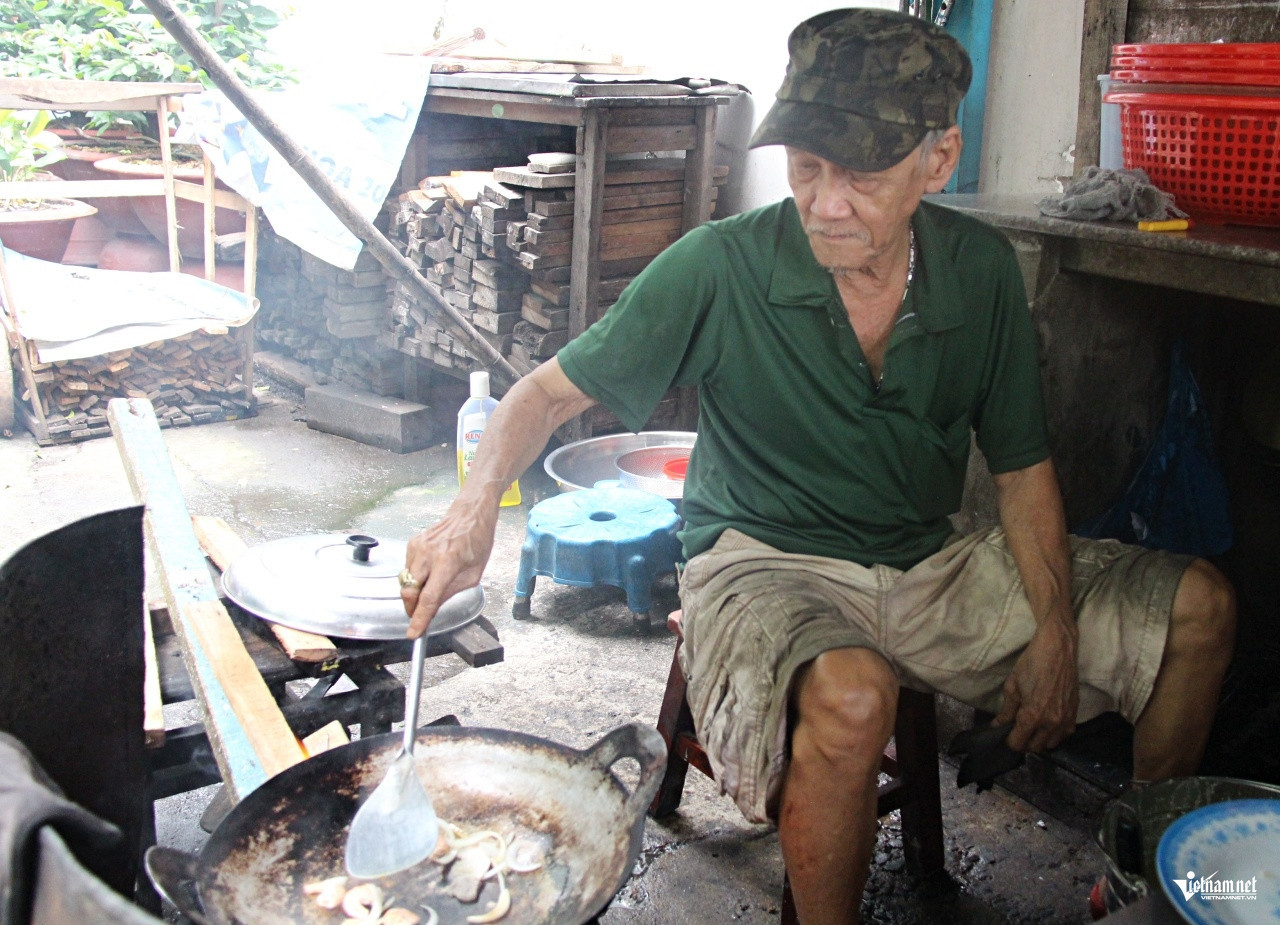
Mr. Diep fries while Mrs. Diep serves customers.
That was more than 30 years ago. Since then, the couple has fried and served bánh xèo together every day. Using only wood-fired stoves, they insist, is the key to preserving the traditional flavor of their Mekong Delta-style pancakes.
The batter is poured into a large sizzling pan over blazing wood fire. The golden, crispy pancakes come filled with shrimp, pork, and bean sprouts. The edges are thin and crunchy. The rich, fragrant pancake mixes with the aroma of turmeric, dipped in sweet-and-sour fish sauce and served with fresh herbs.
Each day, the couple rises at 4 a.m. to set up their modest stall at the alley’s entrance. Mrs. Diep heads to the market for fresh ingredients, while Mr. Diep picks through vegetables at home. She refuses to use store-bought batter.
Instead, she selects high-quality rice based on her personal experience, soaks it for just the right amount of time, then takes it to a mill for grinding into fresh flour. She personally mixes and stirs the batter, guarding her secret recipe.
“We never fry in advance,” Mrs. Diep said. “Pre-cooked pancakes lose their crispness, even spoil if left too long. If a customer eats a spoiled one, it ruins our reputation.”
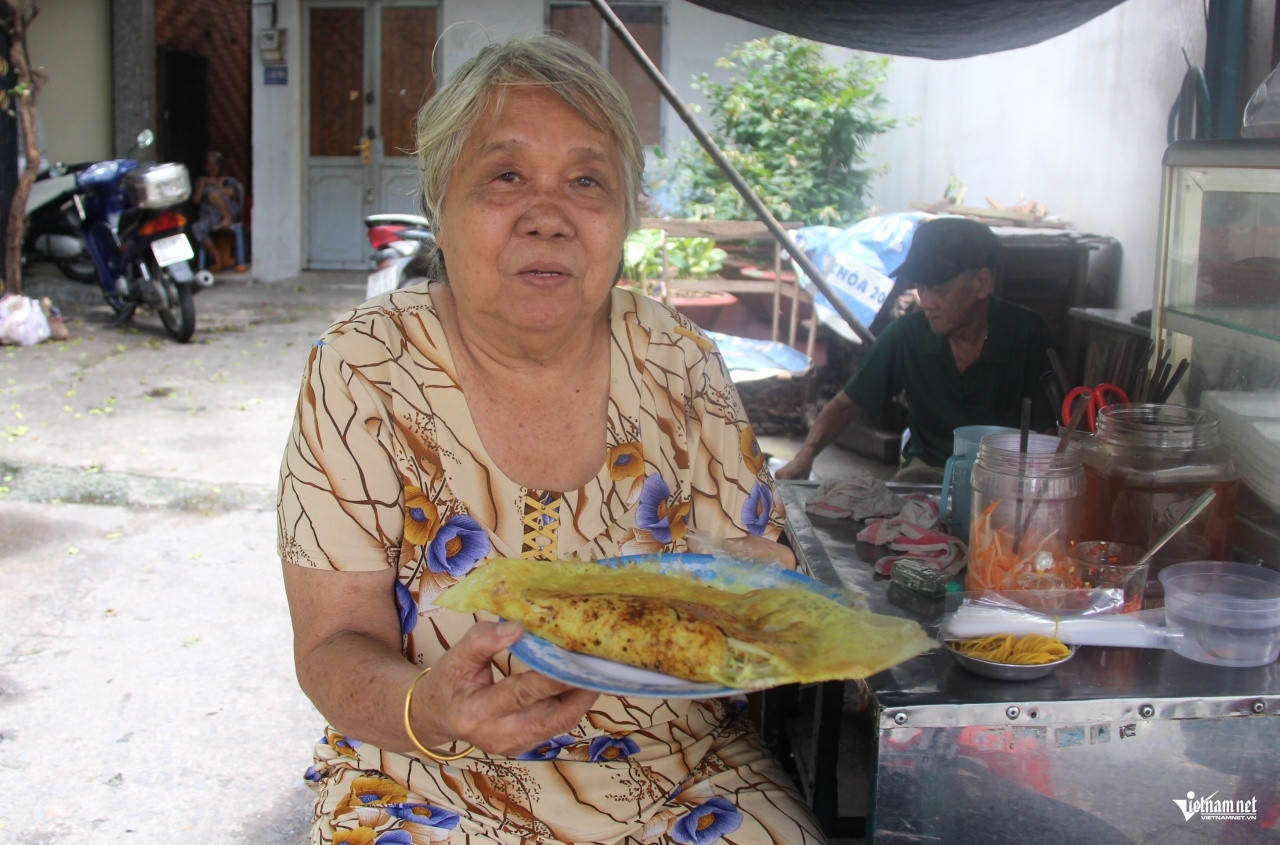
For that reason, they display just one sample pancake inside the glass cabinet. When a customer arrives, Mr. Diep fires up the stove and starts frying, while she prepares the table. The process may take longer, but it ensures hot, freshly made pancakes every time.
The couple now lives in a cramped home nearby. Their four children are grown and have families of their own. Struggling with young children themselves, they can only occasionally visit and give their parents a bit of money, offering limited support otherwise.
Despite advancing age and dwindling crowds, the couple remains committed to their stall, which continues to be their main source of income. Each day, they grind about 2 kilograms (4.4 pounds) of rice. On busy days, they sell up to 40 pancakes. On rainy days, they may sit from morning to dusk and sell barely 30.
“Business is slow these days,” Mrs. Diep admitted. “We sit here all day, hoping for a few customers. I’m used to waiting. Mr. Diep, who suffers from back pain, often lies down inside.”

The couple prepares Mekong Delta-style pancakes using only wood-fired stoves.
When a customer arrives, she calls out to her husband to fry the pancake while she sets the table. They limit their output to 40 pancakes per day - whether they sell out early or late, they never make more. Tiring as it may be, they still love their craft, especially the chance to interact with customers.
“Some people first came here as students and now, in their thirties, they return to eat our pancakes. Some who moved abroad come back and still say our pancakes taste the best. Hearing that brings us so much joy - it wipes away all the fatigue.”
Ha Nguyen
.svg)
