 Vietnamnet.vn

 Podcast



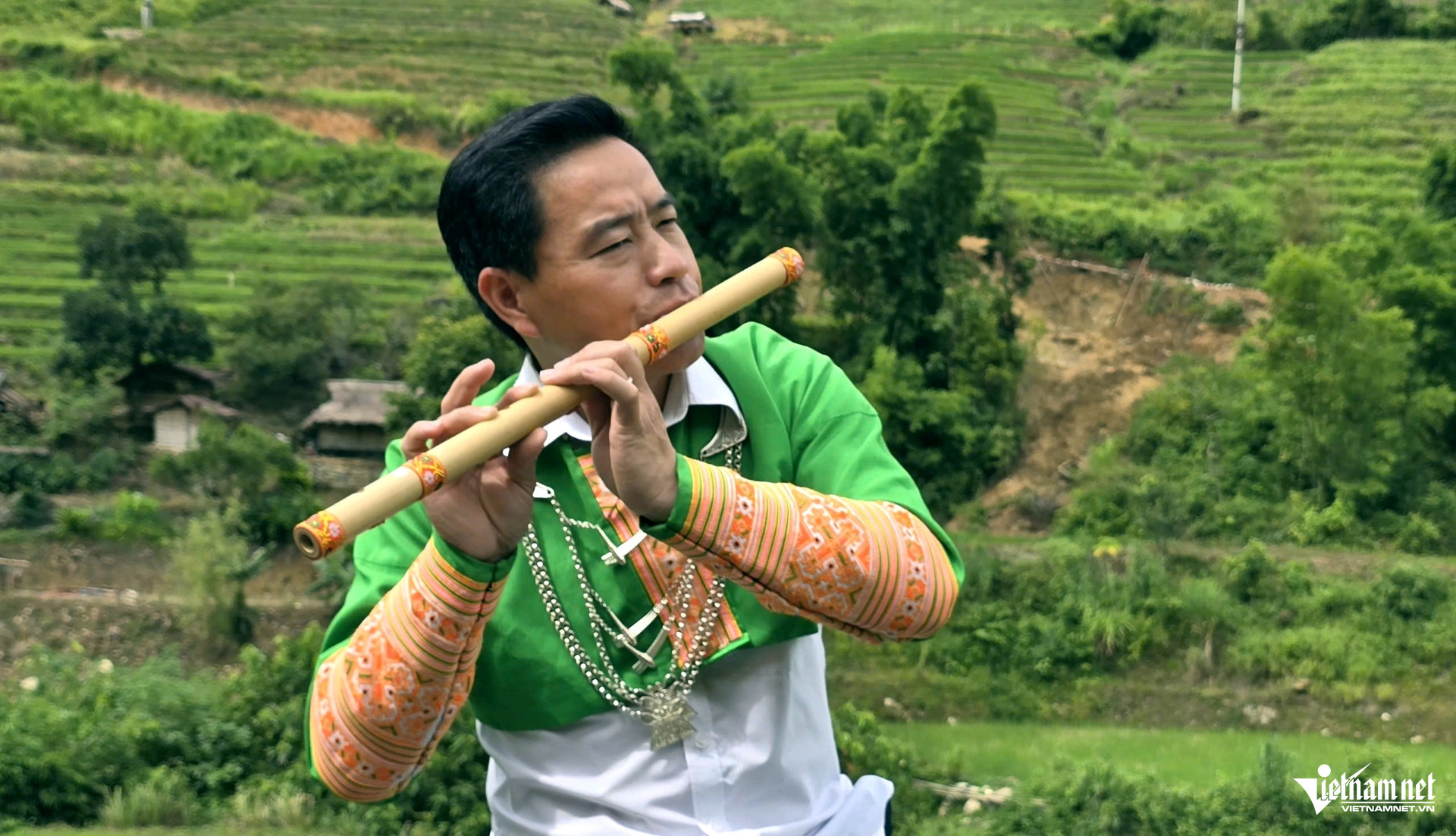
Ly Ly Po (born 1985), an ethnic Mong from Hua Pu village (formerly Muong Lat, now Pu Nhi commune, Thanh Hoa province), is affectionately called Po Ly by locals and students.
In the past, life for the Hmong people in Hua Pu village was extremely difficult. Children often went hungry, and few had the chance to attend school. Yet, even in such circumstances, Po Ly Po Ly showed unique talent.
From a young age, he loved reading books and exploring the melodies of traditional Hmong instruments like the leaf trumpet, flute, and pan-pipe. During every community gathering, he was always present, just to listen to the elders play their instruments and dance.
From a young age, Po Ly was captivated by the flute’s soulful sound. Though he never received formal musical training, he taught himself by cutting bamboo and reed tubes, learning to play purely by ear.
Each evening, after helping his parents with farm work, Po Ly would cradle his handmade flute and immerse himself in practicing its raw, simple notes. It was this love that planted in him the dream that one day, he would play the Hmong flute so beautifully that anyone who heard it would be moved.
From primary school, his parents, seeing his love for learning, supported his education. In secondary school, despite a 3km trek through forests to Pu Nhi’s center, Po Ly never missed a class.
In 2001, he passed the entrance exam to the provincial Ethnic Boarding High School. There, he realized he needed to excel to attend university and bring literacy back to his village.
Po Ly not only achieved academically, earning school commendations, but also collaborated with the provincial Radio-Television Station’s Mong language program to work as a translator and broadcaster.
Beyond the achievements in academics, Po Ly was a cultural leader in school activities. He fulfilled his musical passion, introducing Mong melodies through self-made flutes. In traditional attire, his flute performances became highlights at school events.
Later, studying English at Hong Duc University, Po Ly continued his flute passion, performing at university cultural events and exchanges with Vietnamese and Lao students. His clear, rustic flute melodies won warm admiration.
Preserving Mong culture
After graduating, Po Ly returned to his hometown to teach English at a highlands school. In the classroom, Po was a dedicated educator, encouraging his students to learn foreign languages as a way to broaden their horizons. After school hours, he transformed into the “teacher of the village,” offering free flute lessons to local children.
“The Mong flute is our people’s soul. If kids stop playing it, the flute may only live in memories,” Po Ly said.
Initially, only a few children joined his class. Noticing they didn’t fully grasp their culture, Po Ly played Mong melodies on a high rock in the village after teaching. The echoing flute stirred the children’s hearts, drawing them to learn. Now, many village kids play flutes and leaf trumpet.
"Beyond teaching technique, I also tell the children about the meaning behind each melody. The flute is used to call friends, the tunes are played during spring festivals, or the songs are deeply tied to the spiritual life of the Hmong people," Po Ly shared. "That way, they feel more proud of and connected to their cultural heritage."
Poly participates in ethnic musical instrument competitions at the district, provincial, and national levels. With his masterful skills and emotionally rich performances, he has earned numerous top awards.
At the 2021 National Folk Song and Music Festival, Po Ly’s solo flute piece “Flute to the Market” won a Silver Medal, an award not just for him but for Thanh Hoa’s Mong community.
Po Ly believes preserving and promoting the Mong flute is vital, especially for today’s youth. “What I’ve learned, I must teach the kids. When they grow up, they’ll pass it to their children, so the flute never fades,” he shared.
Thanks to him, shy highland children have grown confident and passionate about cultural arts.
“The Mong flute isn’t just music; it’s a cultural bridge. I hope my students will carry it further, letting the world understand and love Mong culture,” Po Ly said.
Le Duong
.svg)
