 Vietnamnet.vn

 Podcast




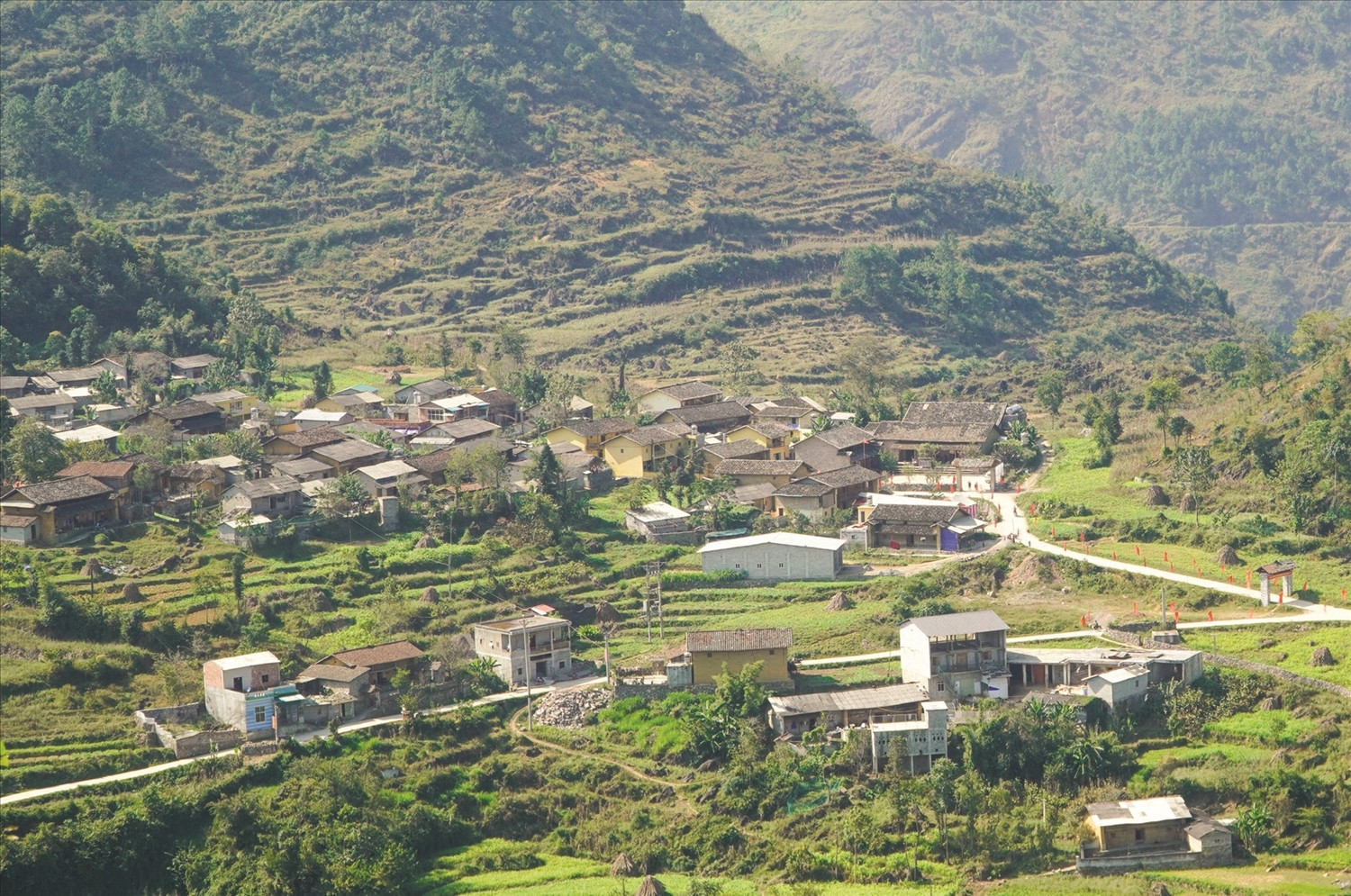
Lo Lo Chai village in Lung Cu commune, Tuyen Quang province, was recently named one of the “Best Tourism Villages in the World 2025” by UN Tourism.
Framing poverty with precision
According to Decision No. 1227/QD-TTg, Vietnam currently recognizes 14 ethnic groups with special hardship status, living in 11 provinces. With the exception of the Brau people (who reside in well-connected areas), the remaining 13 groups live in extremely disadvantaged locations and are eligible for support under Sub-project 1, Project 9 of the National Target Program (NTP) for socio-economic development in ethnic minority and mountainous areas for the 2021–2030 period (Phase I: 2021–2025), known as Program 1719.
However, five years into implementation, poverty reduction among these groups remains uneven. According to the Ministry of Ethnic and Religious Affairs, by the end of 2024, only 4 out of 14 groups saw a decrease in poverty compared to 2019, with the La Ha experiencing the most significant drop (26%). In contrast, poverty increased among 9 groups, with the Lu ethnic group seeing a 12% rise. Even within the same group across different provinces, outcomes varied widely.
For instance, the Lo Lo people, one of the 14 groups with special hardship status, reside mainly in Cao Bang and Ha Giang (now part of Tuyen Quang province). As of late 2024, Ha Giang recorded 94 poor households out of 399 Lo Lo families (23.6%), while Cao Bang had 297 poor households out of 534 (55.6%). On average, 41.9% of Lo Lo households live below the poverty line.
Vietnam defines ethnic groups with special hardship as those with fewer than 10,000 people and either (1) a poverty rate higher than the average across all 53 ethnic minorities or (2) a declining national population compared to the 2019 census.
But this disparity isn’t limited to the Lo Lo. Poverty rates among small ethnic groups vary sharply across provinces. The Si La face a 29.9% poverty rate in Lai Chau, but 58.7% in Dien Bien. The Bo Y have a poverty rate of 16.2% in Tuyen Quang but 28.2% in Lao Cai.
The case of the Chut people further illustrates this point. Despite being one of only two groups to show deep poverty reduction (down 16% from 2019–2024), internal differences persist. In Dak Lak, the poverty rate among the Chut is 12.0%, compared to 46.7% in Ha Tinh and 54.1% in Quang Tri.
Rethinking criteria as populations decline
According to Phí Manh Thang, Director of the Legal Department at the Ministry of Ethnic and Religious Affairs, identifying ethnic groups with special hardship is vital for ensuring the success of the NTP 1719. The guiding principle for 2026–2030 is to prioritize those groups facing the most significant and specific challenges.
Under Decision No. 39/2020/QD-TTg and Decree No. 255/2025/ND-CP, ethnic groups with fewer than 10,000 people are considered to face special hardship. However, this hard threshold may need reevaluation, especially for groups experiencing rapid population decline despite exceeding the numerical cutoff.
For example, in 2019, the second national survey of 53 ethnic minorities recorded 2,952 La Hu households with 12,113 individuals, mostly residing in Lai Chau. But by July 2024, the third survey found only 2,311 households and 10,314 people - an alarming decline.
Alongside this population drop, the La Hu face extreme poverty. As of November 2024, their poverty rate stood at 73.87%, compared to the 12.5% average across all ethnic minorities. Moreover, some La Hu communities continue to struggle with alcohol and drug addiction, further undermining the group's population quality and social well-being.
During a voter meeting in Thu Lum commune, Lai Chau, on September 30, 2025, citizens called on provincial National Assembly deputies to advocate for classifying the La Hu as a group with special hardship in the 2026–2030 period. This proposal highlights the urgent need for ministries, agencies, and localities to thoroughly consider population trends and lived realities when implementing Decree No. 255/2025/ND-CP.
Sy Hao
.svg)
