 Vietnamnet.vn

 Podcast



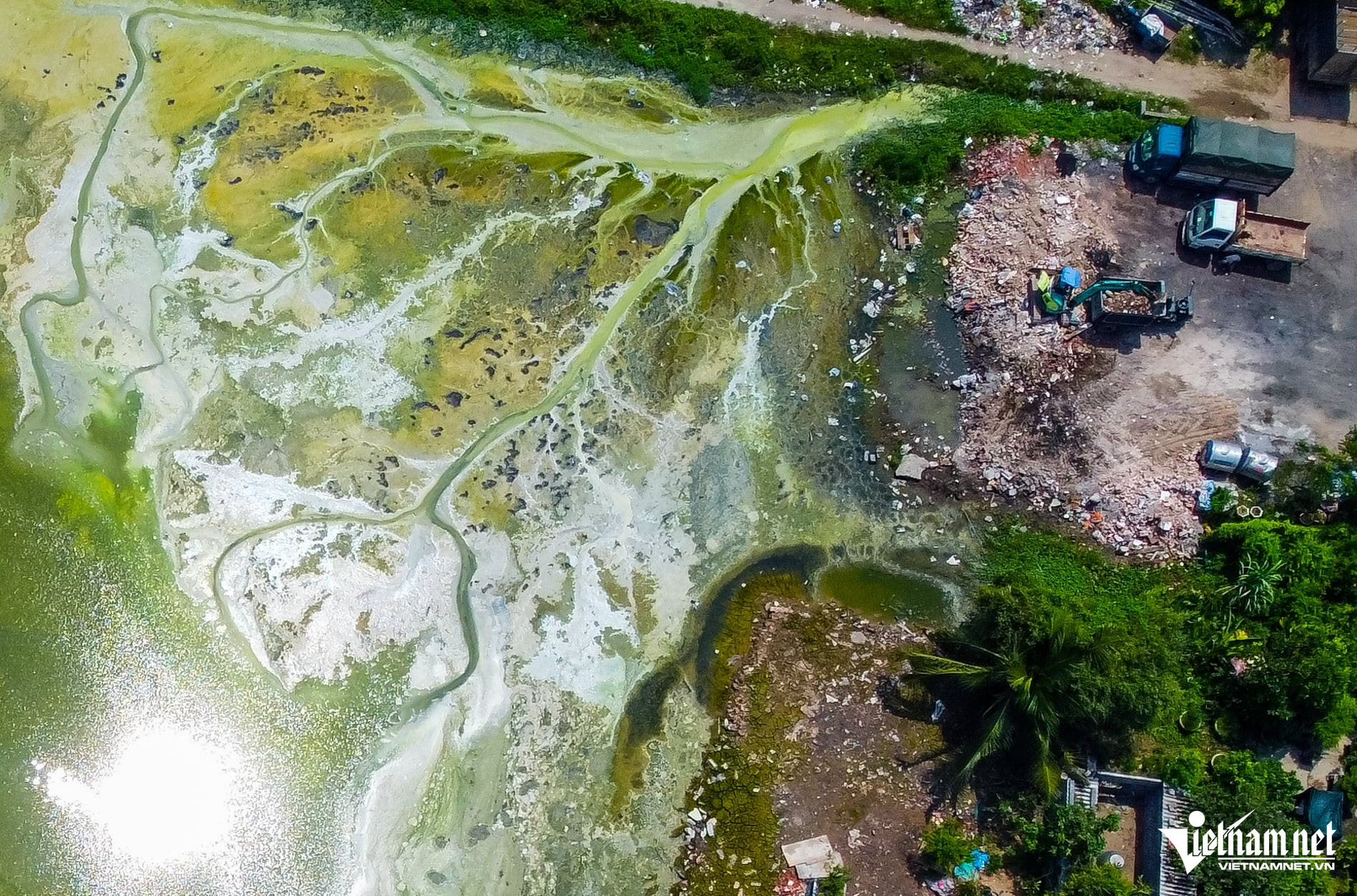
The development of craft villages plays a vital role in generating employment and improving the income and quality of life for rural residents. However, rapid growth has revealed significant environmental pollution issues, prompting the need for sustainable solutions from both local authorities and the community.
According to the Vietnam Association of Craft Villages, the country currently has over 5,411 craft villages. These villages contribute greatly to local economic growth amid rapid urbanization, but they also pose a serious environmental challenge.
Urgent action to "rescue" craft village environments
Since 2000, households from Da Hoi steel recycling craft village in Chau Khe Steel Industrial Cluster, Tu Son City (Bac Ninh province), have been encouraged to centralize their operations within the industrial zone to reduce pollution in residential areas. The project, led by the commune-level People’s Committee, was launched before Vietnam’s 2020 Environmental Protection Law took effect and therefore lacked proper environmental infrastructure.
At its peak, the Chau Khe steel cluster discharged 150 tons of industrial waste, one ton of household waste, and 15,000 cubic meters of untreated wastewater into the environment daily, severely polluting the village's air, water, and soil and affecting tens of thousands of residents.
Tran Thi Huu, owner of Van Huu steel casting workshop, shared that most production facilities in the cluster use outdated equipment, operate on small premises, lack investment, and have limited awareness of environmental regulations.
According to Nguyen Manh Cuong, Vice Chairman of Tu Son City People’s Committee, from late March 2025, the city launched a sweeping inspection and enforcement campaign targeting craft villages and industrial clusters that pose serious environmental risks or fire hazards.
So far, 314 facilities have been inspected; 135 of them have ceased operations or suspended activities until they complete environmental and safety compliance procedures. Long-term, the city has requested the provincial government to support businesses in transitioning to new industries or relocating outside of polluted industrial clusters like Da Hoi.
Since 2024, Bac Ninh has stepped up efforts to address pollution in major craft villages such as Phong Khe paper village, Khac Niem noodle village (Bac Ninh City), Van Mon aluminum casting village (Yen Phong District), Phu Lam paper industrial cluster (Tien Du District), Dai Bai bronze casting village (Gia Binh), and Da Hoi steel recycling village (Tu Son City).
Thanks to decisive political action, environmental conditions in these villages have improved significantly.
In Ha Nam province, 58 out of 65 recognized craft villages are currently active. While environmental protection has improved in recent years, two traditional dyeing villages remain on the urgent pollution watchlist: Nha Xa village (now Moc Hoan commune, Duy Tien town) and Dai Hoang village (Hoa Hau commune, Ly Nhan district).
In Dai Hoang, 1,146 households are involved in textile production, with dyeing operations relocated to centralized areas equipped with a 200m³/day wastewater treatment plant since 2018. A village-wide environmental protection plan has also been approved by local authorities.
In Hanoi, environmental pollution remains a major issue as many craft villages operate within residential areas, discharging untreated wastewater directly into the environment. Villages such as Duong Lieu, La Phu, and Lai Yen (Hoai Duc District) have become “pollution hotspots” during peak production seasons.
To address these issues, Hanoi has launched numerous wastewater treatment projects and issued an official roadmap for craft village pollution control through 2025, with a vision to 2030. The city is also calling for private investment in waste and wastewater treatment.
Notably, under Decision No. 2546/QD-UBND, Hanoi aims to ensure that by 2030, all officially recognized craft villages will meet environmental protection standards and fully eliminate pollution.
Challenges remain
Experts point out several persistent difficulties in environmental management. Relocating production from residential areas to industrial zones is complex, especially when households live and work on the same premises. Although relocation support exists, land lease costs and high infrastructure investments deter many small-scale operators.
Additionally, awareness of legal obligations remains low among producers. Products are often low-margin and cater to budget-conscious consumers, discouraging investment in waste treatment.
Some localities have moved entire villages into adjacent industrial clusters, but outdated technology continues to hamper meaningful improvements. Moreover, limited funding prevents necessary upgrades. While some industrial clusters have centralized wastewater systems, many are outdated or insufficient.
According to Assoc. Prof. Dr. Bui Thi An, President of the Hanoi Association of Female Intellectuals, Hanoi has the most craft villages in Vietnam - about 1,350. Pollution in these villages is one of the capital’s most pressing issues. Despite many policies and programs, addressing this problem is extremely complex, as each village has distinct characteristics and pollution types.
While some areas have created dedicated zones with financial support, such as in Duong Lieu vermicelli village, effectiveness remains limited.
Dr. An emphasized the need for rigorous, synchronized, and effective action. Authorities must enforce centralized production and provide initial financial and policy support. Village classification, combined with education and outreach, is essential to help artisans understand and adopt environmentally responsible practices voluntarily.
PV
.svg)
