 Vietnamnet.vn

 Podcast



Editor's note: In today’s high-pressure world, raising and caring for pets has become a source of emotional healing for many Vietnamese. VietNamNet presents a series on Vietnam’s “healing pet” trend, sharing emotional stories of the bonds between people and their unusual animal companions.
Keeping hundreds of ants as pets

Nguyen Tan Minh Nhut (born in 1991, Ho Chi Minh City) has long been fascinated with the animal kingdom, especially small creatures. In 2019, he stumbled upon an ant nest at the base of a tree and brought it home, placing it in an aquarium to observe their natural reproduction.
Soon after, he found another colony filled with eggs and larvae. Unable to abandon them, he kept the nest and searched online for care methods. To his surprise, he discovered a global community of people raising ants as pets.
From that moment, he became hooked. What started as a hobby quickly became a passion and a lifestyle.
Now 34, Nhut cares for nearly 40 ant species. These include easy-to-raise, adaptable types like carpenter ants (Camponotus Sanctus, Camponotus Haberari, Camponotus Irritans), grain-eating ants like Messor barbarus, and honey ants known for their attractive appearance and high value.
He also tends to more exotic species such as army ants, weaver ants, predatory yellow ants, and Ponerine ants like Harpegnathos venator and Diacama scalpratum, which are prized for their large size, intimidating appearance, and excellent hunting skills.


According to Nhut, ant-keeping isn’t expensive. The primary cost lies in building enclosures. To save money and fuel creativity, he often repurposes containers like old basins and boxes and supplements them with other suitable materials.
A typical ant enclosure consists of two parts: the nest at the bottom made of construction cement, and a foraging space surrounded by transparent mica layers. There are also two side chambers - one for food and the other for waste collection, ensuring the nest remains clean.


The initial setup usually costs between $20–40. Maintenance only runs about $1.20 per month.
“Pet ants are usually fed sugar water (homemade) or meat-based insects like those sold in fish or bird stores. Some species even enjoy boiled seafood like shrimp or squid, but only in tiny amounts, no bigger than a pea,” he said, joking that skipping one breakfast is enough to feed thousands of ants.
Relief from stress and a world of discovery
Nhut explains that ant-keeping is low maintenance, requiring minimal time, space, and money. He uses a simple water-and-sugar feeder, cleaned weekly, and supplements with insects and honey for protein, especially for egg-laying queen ants.
He feeds the ants every three days and removes trash weekly to ensure cleanliness, as ants tend to gather waste in one place rather than scatter it.


Though generally hassle-free, this unusual pet hobby does come with challenges - like accidentally letting a worker ant escape or dealing with a stressed queen.
“At first, I was nervous when ants escaped, but after observing them more closely, I realized they’re actually quite clean creatures. They groom themselves with antibacterial saliva,” he explained.
He also added that most species he keeps don’t sting, and even those that do leave only mild, short-lived marks without health consequences.

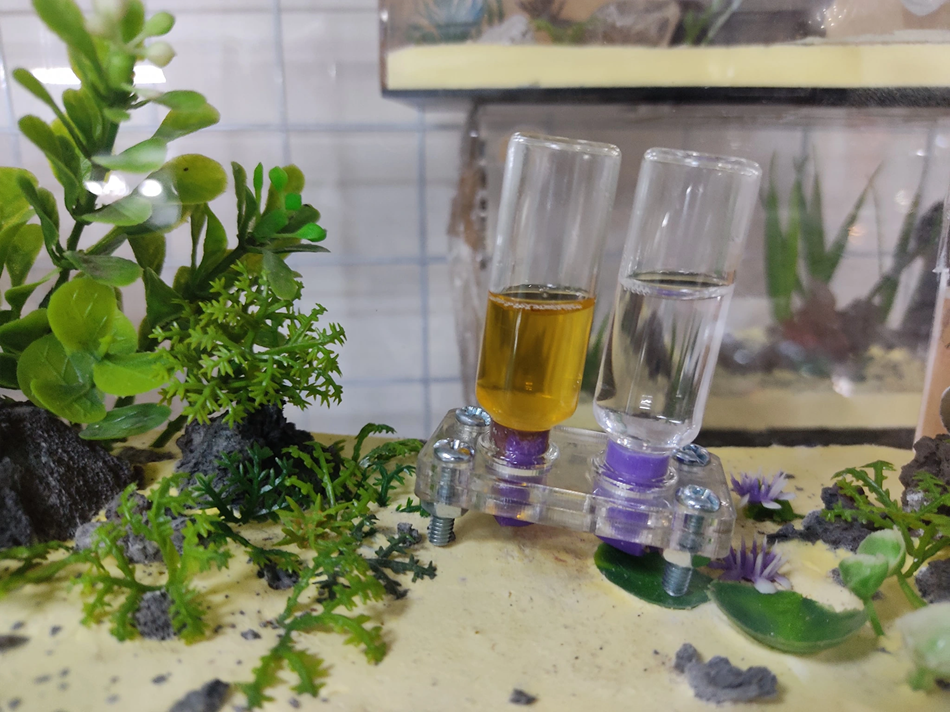
For Nhut, the hobby not only offers stress relief and mental clarity but also deepens his knowledge of insect behavior.
During feeding times, he often marvels at the ants’ communication. “If one ant finds food, it’ll go back and lead others to it. Their social behavior is fascinating,” he said.
“Ant-keeping is a lot like fish-keeping. Some people do it for relaxation, others to study behavior. There are also those drawn to their striking appearance and want to showcase them - decorating their enclosures to rival aquariums or terrariums,” he added.
Thao Trinh
.svg)
