 Vietnamnet.vn

 Podcast



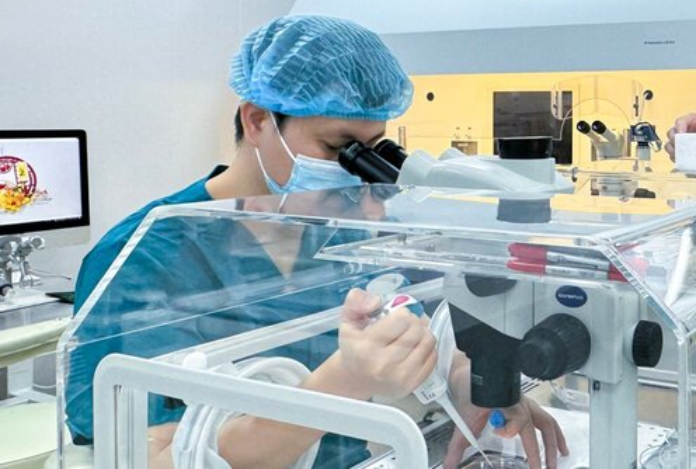
Genetic diseases have long imposed a heavy burden on families, often silently passed down without symptoms until it’s too late. In Vietnam, about 41,000 children are born each year with congenital defects, many of which stem from inherited genetic mutations.
Worryingly, 80% of these cases involve parents who appear perfectly healthy and have no idea they carry faulty genes.
During a recent scientific seminar titled “Sharing insights on IVF and advanced technologies – Hope on the journey to parenthood,” hosted by Dong Do Hospital in Hanoi, Dr. Tang Duc Cuong, a specialist in reproductive medicine, introduced cutting-edge techniques in in-vitro fertilization (IVF) - especially those designed to detect single-gene disorders.
According to Dr. Cuong, these technologies represent a breakthrough in helping families escape the emotional and physical toll of repeating hereditary conditions in their children.
One of the most concerning genetic diseases in Vietnam is Thalassemia. Currently, 14 million Vietnamese - 13% of the population - are estimated to carry the gene. Each year, around 8,000 babies are born with the disease, and at least 2,000 of them have the severe form, requiring lifelong treatment.
Genetic diseases such as Thalassemia drastically reduce life quality and life expectancy. Globally, nearly half of children with inherited conditions die before the age of five, leaving profound pain and lasting trauma for parents.
Other common inherited disorders include cerebral palsy (2 in 1,000 newborns), hemophilia (1 in 5,000), Duchenne muscular dystrophy (1 in 5,000), and phenylketonuria (1 in 10,000). Most gene carriers show no symptoms, making detection particularly difficult without proactive testing.
In clinical practice, Dr. Cuong has seen many couples too afraid to try for another child after repeated tragedies. Some have suffered eight or nine miscarriages. Others gave birth to two children with rare diseases. There are cases where seemingly healthy newborns died just days after birth. These traumas create a deep reluctance to expand their families.
A striking example is a couple from Nghe An, known only as Mr. and Mrs. K.T.H. Their first two children were diagnosed with cerebral palsy. Genetic testing revealed that both parents were carriers. Following medical advice, they opted for IVF combined with genetic profiling of embryos. The result was a healthy baby boy - a joy they once thought impossible.
Gene testing plays a crucial role in helping couples identify inherited risks early and choose the most appropriate reproductive strategies.
To date, scientists have identified more than 6,000 single-gene disorders, including Thalassemia, hemophilia, osteogenesis imperfecta (brittle bone disease), tuberous sclerosis, metabolic disorders, spinal muscular atrophy, Duchenne muscular dystrophy, skeletal dysplasias, phenylketonuria, neurofibromatosis, and primary immunodeficiencies. Many of these can be screened through genetic sequencing.
For couples who both carry a mutated gene, IVF combined with preimplantation genetic testing (PGT) allows for the selection of healthy embryos free from the specific genetic mutation. These screened embryos are then implanted into the mother’s womb.
Thanks to these advances, many families once haunted by genetic illness are now welcoming healthy children into the world.
Phuong Thuy
.svg)
