 Vietnamnet.vn

 Podcast



Ho Chi Minh City has officially launched a project to develop its first-ever citywide land price list, which will be applied from January 1, 2026. The plan involves collecting land value data from 7,505 existing and new roads and segments across the city, totaling more than 27,000 survey forms.
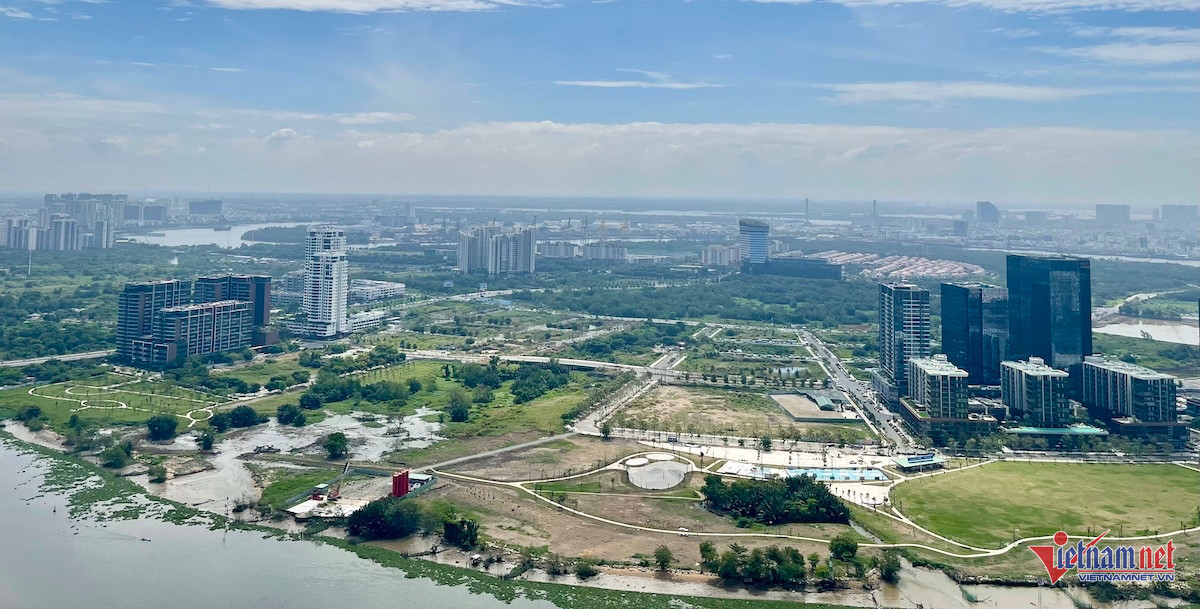
The municipal People’s Committee has approved the investment plan to build a scientifically-grounded, fair, and legally compliant land price framework. This new system aims to align with the real estate market, reflect socio-economic conditions, and enhance transparency in land valuation.
The Department of Natural Resources and Environment will lead the project, in coordination with related departments and local-level authorities. The timeline for implementation runs through December 2025, with an approved total budget of approximately 16.3 billion VND (about 671,000 USD).
According to the People’s Committee, land price investigations will cover the entire city, broken down by land type and administrative units. The basic investigation unit will be at the ward and commune level, with aggregated data forming the citywide index.
Each location on every road will be surveyed using three different data forms to capture accurate market prices. New or expanded roads will also be included to ensure the most comprehensive land price database possible.
The 7,505 surveyed segments include 4,565 roads in Zone 1 and 2,940 in Zone 2. Authorities expect to complete over 27,000 survey forms during this process.
In the interim, the city had instructed all departments and the administrations of 168 wards, communes, and special zones (post-merger) to continue using legacy land pricing decisions from the former Ho Chi Minh City, Binh Duong Province, and Ba Ria - Vung Tau Province. These will remain in effect for tax and financial procedures until new price lists are finalized, replaced, or updated by higher authorities.
Under the 2024 Land Law, land price lists will serve as the legal basis for 12 key scenarios:
Calculating land use fees in resettlement areas for compensated individuals.
Determining land use fees when households and individuals are granted land use rights or change the land’s use purpose.
Calculating land lease fees when land is leased annually by the state.
Assessing land use tax.
Determining personal income tax on land transfer.
Calculating fees related to land management and usage.
Fining administrative violations in land management.
Calculating compensation owed to the state in case of land misuse damage.
Determining one-time land use and lease payments by households and individuals.
Setting reserve prices for land-use rights auctions for pre-zoned, infrastructure-ready plots.
Determining land use fees for direct land allocations to households and individuals without auction.
Pricing land for state-owned housing sales to existing tenants.
This first-time unified land pricing system will serve as a critical reference for land-related financial obligations, investment decisions, and real estate development in post-merger Ho Chi Minh City.
Anh Phuong
.svg)
