 Vietnamnet.vn

 Podcast



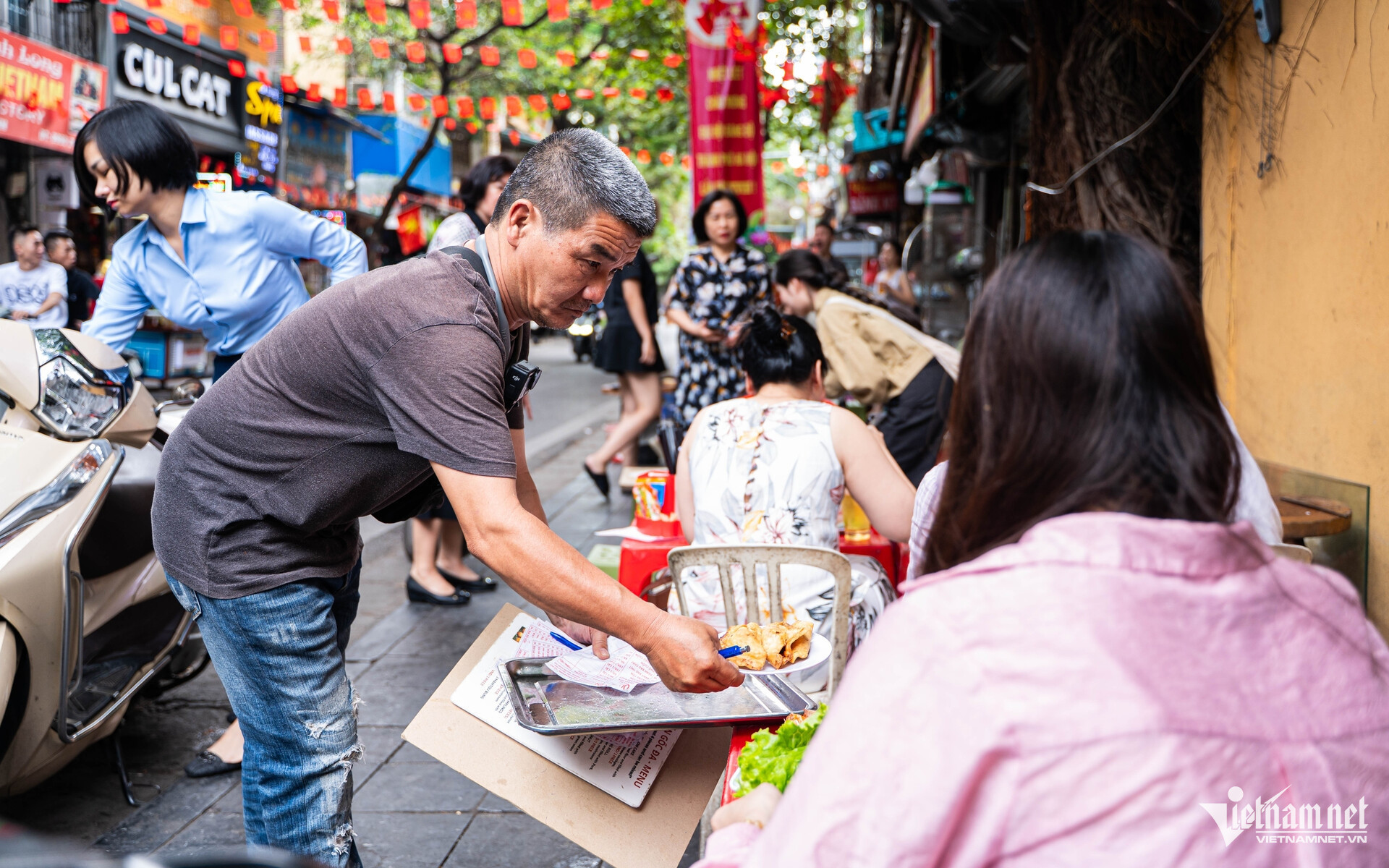
Diners fill every table from the house interior to the sidewalk, with many ordering takeaway. Outside the shop stands an old banyan tree, lending the place its nickname: “bánh gối gốc đa” (banyan tree dumplings).
According to the owner, Mr. Dat, the shop was opened by his parents in 1982 after they learned the trade from a Chinese acquaintance.
In the early years, the eatery offered just three items: savory fried dumplings, sweet glutinous cakes, and savory fried pastries. Over time, the menu expanded to include spring rolls, fermented pork rolls, pan-fried dumplings, fried buns, tapioca dumplings, rolled noodles, and more, catering to the diverse tastes of customers.
Each day, Mr. Dat and his staff begin preparing fillings, dough, and shaping the dumplings as early as 5 a.m. More than four decades later, the bánh gối (fried dumpling) remains the most popular item.
The dumplings are golden-brown, freshly fried, with thin, crispy wrappers and a tantalizing aroma.
“Many longtime customers moved 15 to 20 kilometers away but still return whenever they can to buy our bánh gối,” Mr. Dat shared.
To ensure quality, every ingredient is carefully selected. The family purchases premium flour, mixes and ferments it themselves daily to create the perfect dough.
The filling includes finely minced pork shoulder or butt, wood ear mushrooms, jicama, shiitake mushrooms, carrots, onions, cellophane noodles, and notably, Chinese sausage with a pinch of black pepper.
“Chinese sausage is what gives our dumplings their unique flavor. Without it, the bánh gối just wouldn’t be the same,” Mr. Dat revealed.
The ingredients are seasoned just right. The cellophane noodles are cooked until just tender - never mushy, sticky, or dry.
When an order comes in, the dumplings, which have been fried once already, are refried to ensure crispiness and warmth. The delicious scent quickly awakens any appetite.
They are served with a mildly sweet dipping sauce containing thin slices of green papaya, accompanied by fresh herbs.
Each bánh gối costs 14,000 VND (about 0.55 USD).
The shop’s fried pastries are also a signature item. Mr. Dat explained that the glutinous rice used for the pastry dough must be soaked from 2 p.m. the previous day, ground, and drained overnight.
The next morning, the dough is kneaded thoroughly and carefully molded. The savory filling is similar to that of the bánh gối but without the Chinese sausage. The sweet filling is made from mung beans steamed for two hours, mixed with sugar, and hand-beaten until smooth and elastic.
Both the dough and fillings must be evenly and meticulously shaped.
Each type of pastry is initially fried once and then refried upon order to preserve its crisp texture. The sweet pastries cost 6,000 VND (about 0.24 USD) each, while the savory ones are priced at 9,000 VND (about 0.36 USD).
“Making the dough for the fried pastries is very time-consuming and demanding, so we stop selling once we run out. We don’t make extra,” Mr. Dat said.
The dipping sauce follows a family recipe.
“It’s our dipping sauce that makes the dish truly delicious,” he said.
To meet growing customer demand, the shop has added several new snacks such as crab spring rolls, fried fermented pork rolls, steamed rice cakes, and rolled noodles.
On average, the shop serves hundreds of customers daily, including many international tourist groups. To accommodate them, the business has expanded to the first and second floors of the building. By late afternoon, every space is usually full.
Mr. Dat himself juggles multiple roles from taking orders, delivering food, parking bikes, to processing payments.
Hanh, Tuyet, and Nga, longtime patrons from Hanoi, have frequented the eatery since their student days.
“We’ve eaten here for almost 20 years. The menu has grown, but the bánh gối is still the standout. The filling is generous, the Chinese sausage adds a rare flavor, and the dipping sauce is well-balanced. We come here to enjoy the food and reminisce about the old days,” the group shared.
The shop has nearly 800 reviews on Google and a 4.3 out of 5-star rating. Most reviewers praise the variety of dishes and reasonable prices, with the bánh gối consistently singled out as the favorite.
The only drawback is the limited space, with few seats available. During peak hours, customers often have to wait.
Located near St. Joseph’s Cathedral, the shop is conveniently situated for visitors who want to combine sightseeing with local culinary experiences. It opens at 9 a.m. and closes around 9 to 10 p.m.

The fried dumpling and pastry shop stands next to an old banyan tree.



Linh Trang - Nguyen Huy
.svg)
