 Vietnamnet.vn

 Podcast



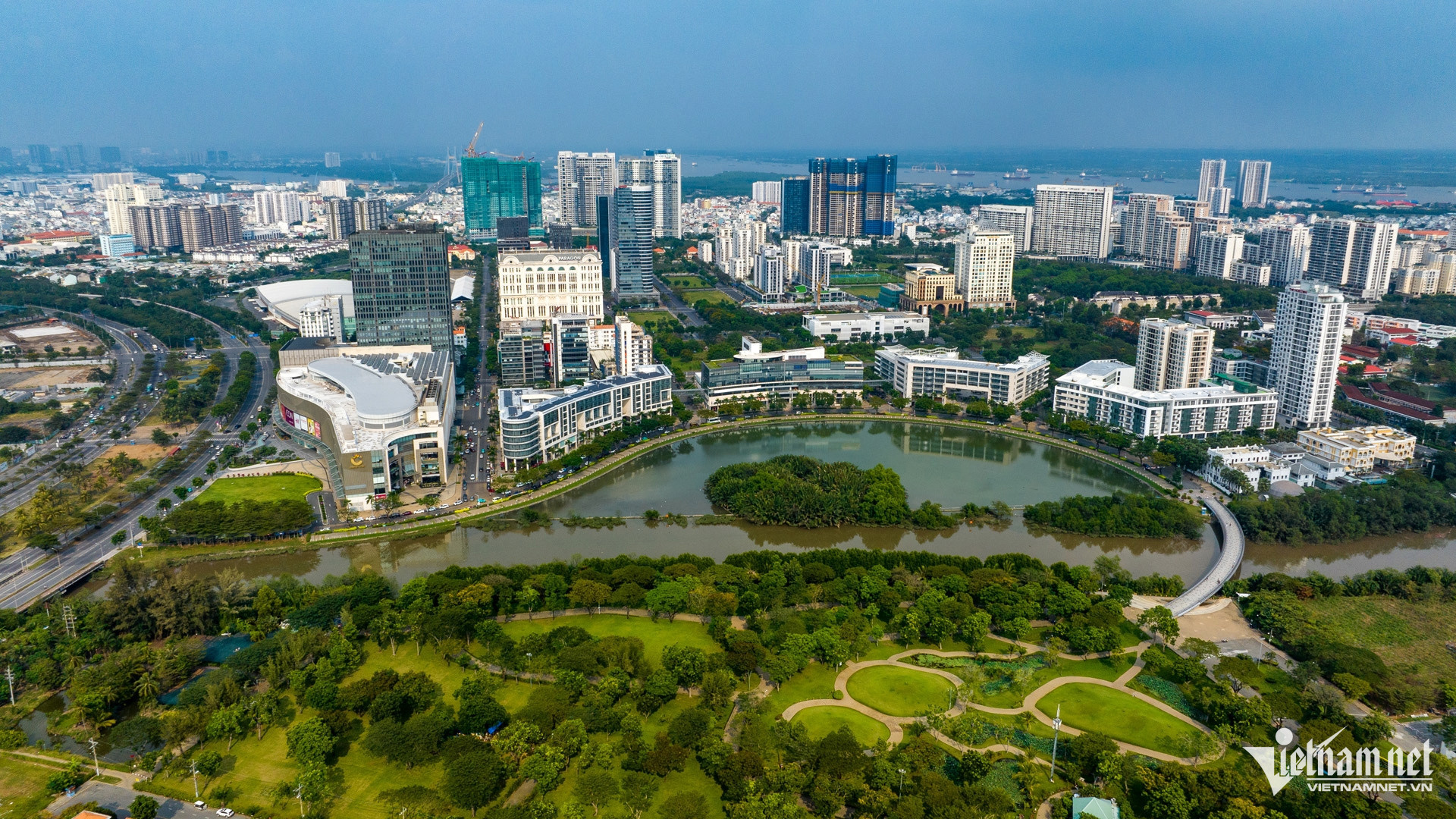
This gap has resulted in significant differences in liquidity across regions.
Beginning July 1, HCM City officially has a two-tier governance model, merging its development space with neighboring Binh Duong and Ba Ria – Vung Tau.
At the seminar “HCM City super urban real estate: Golden opportunity for Hanoi investors” on July 12, experts said this merger creates superior advantages for HCM City in infrastructure and economy. This is seen as a strong catalyst, boosting investors’ confidence and decision-making.
Can Van Luc, a member of the Prime Minister’s Policy Advisory Council, said that HCM City is poised to become a modern, multi-center super urban area with regional and international stature.
HCM City’s real estate market benefits from the merger, and the Northeastern area is deemed by experts to have significant breakout potential.
Nguyen Van Dinh, Vice Chair of the Vietnam Real Estate Association and Chair of the Vietnam Association of Real Estate Brokers, noted five key infrastructure projects driving this area.
Notably, the expansion of National Highway 13 through Northeast HCM City to 60m is expected to be completed in 2025.
By 2026, the HCM City Ring Road 3, once put into operation, will shorten travel times from the Northeast to the city center, Long Thanh Airport, and key Industrial Zones. Additionally, there’s the 100km Saigon Riverfront road and Metro Line 2 connecting HCMC with Thu Dau Mot along National Highway 13.
“The merger of Binh Duong and Ba Ria – Vung Tau with HCM City, which expands urban planning and regional restructuring, will drive population shifts from HCM City’s crowded center to Northeast projects. This area will become a new focal point, benefiting from cohesive planning and new development policies,” Dinh said.
Southward movement
Experts say HCM City’s super urban formation coincides with the Northern market peaking and showing signs of saturation. Clear regional differences have spurred major Northern brokers and investors to move to the South.
According to Dinh, apartments are predicted to dominate in the coming period. He highlighted the Northeast HCM City apartments’ appeal due to their real value and high profitability, with rental yields reaching 7.5 percent/year, a market record.
Luc believes that post-merger, HCM City’s scale is nearly double Hanoi’s, with a more diverse real estate structure. HCM City has significant demand from millions of workers and experts, which Hanoi doesn’t have.
“Home and rental prices in Hanoi continue to rise faster than in HCM City. Thus, Hanoi’s future price growth potential may lag behind HCM City, especially considering the strong growth prospects of adjacent areas like former Binh Duong and Ba Ria – Vung Tau,” Luc said.
Bui Van Doanh, Director of the Vietnam Real Estate Research Institute, emphasized two key differences between HCM City and Hanoi: price levels and sales policies.
In Hanoi, real estate prices, including apartments, have recently become excessively high. Meanwhile, in HCM City, particularly the Northeast (former Binh Duong), prices range from VND40-50 million/sq m, which is deemed reasonable.
“This price gap leads to stark liquidity differences. Lower prices mean easier access, simpler buying and selling, and thus higher market liquidity,” Doanh said.
Additionally, HCM City’s sales policies are more flexible. With an abundant supply and proactive developers, they offer incentives like capital support, free management fees, and high discounts. Short-term investors can face minimal losses if they act quickly.
What’s happening in the North?
Since late 2024, interest and investment in real estate in the Capital Region’s urban areas have surged significantly. Demand has concentrated in areas along Ring Road 4 and industrial corridors connecting Hanoi to Bac Giang, Hung Yen, and Hai Duong.
Survey results conducted by the Vietnam Real Estate Research Institute, announced by Nguyen Van Khoi, Chairman of the Vietnam Real Estate Association (VNREA), were presented at the seminar “Investment Prospects in Real Estate in the Capital Region’s Urban Areas” held in mid-May.
Assessing the real estate market post-provincial merger, Khoi said this is an opportunity to expand urban space and create substantial development potential. Real estate will be the sector benefiting the most as resources are centralized and planning becomes more cohesive.
For the Hanoi Capital Region (comprising Hanoi and nine neighboring provinces: Bac Ninh, Bac Giang, Vinh Phuc, Hung Yen, Hai Duong, Ha Nam, Hoa Binh, Phu Tho, Thai Nguyen), the merger will accelerate urbanization. As a result, the region’s real estate market promises a robust transformation.
Satellite urban areas around Hanoi are emerging as vibrant investment destinations due to increasingly improved connectivity infrastructure and abundant land resources.
Hong Khanh
.svg)
