 Vietnamnet.vn

 Podcast



With the introduction of a basic hospital fee exemption policy, Deputy Prime Minister Le Thanh Long has announced that the national health insurance fund is expected to pay approximately 140 trillion VND (around $5.6 billion), while patients would need to cover around 21.545 trillion VND (approximately $863 million).

On the morning of September 16, the Politburo and the Party Secretariat held a national conference to disseminate and implement four new resolutions, including Resolution No. 72 - which outlines breakthrough measures to enhance healthcare and protect public health.
Deputy Prime Minister Le Thanh Long presented the core contents of Resolution No. 72 and the government's action plan.
“Resolution No. 72 doesn’t replace prior policy - it is a continuation and refinement of the Party's perspective on health protection for the people,” Long emphasized. “However, it introduces some clear focal points and specific characteristics.”
He elaborated: “This resolution takes a more comprehensive approach to healthcare, encompassing physical health, nutrition, exercise, and lifestyle. These combined factors contribute to a healthier population, reducing the prevalence of illness. That’s one of the key points in Resolution 72.”
The Deputy PM noted that the resolution outlines five guiding principles, highlighting that protecting and improving public health is not just a development strategy but a top political mission and a collective responsibility shared by the political system, society, and every citizen.
Citizens are placed at the center of healthcare policy, with the highest priority given to ensuring access to equitable, comprehensive, and quality medical services. This includes physical and mental well-being, stature, life expectancy, and the number of healthy years lived.
According to Long, it is crucial to develop a high-quality healthcare workforce with strong ethics and capabilities. Special incentive policies are to be offered to healthcare workers, especially in remote and underserved areas.
The resolution calls for a shift from focusing mainly on treatment to a proactive prevention model, emphasizing the vital role of preventive medicine, grassroots health systems, and traditional medicine. The goal is to prevent illness early, enhance healthcare service quality, and ensure national health security.
Breakthrough policies and mechanisms will also be implemented to mobilize and efficiently use resources for healthcare, promoting science and technology, digital transformation in healthcare, and comprehensive reform of medical finance. These reforms aim to ensure the sustainability and effectiveness of the health insurance system.
Key goals by 2030 and beyond

Resolution 72 sets ambitious goals for the year 2030:
Increase the average height of children and adolescents (ages 1–18) by at least 1.5 cm.
Raise average life expectancy to 75.5 years, with at least 68 years lived in good health.
Starting in 2026, citizens will be eligible for free annual health checkups or screenings and will have electronic health records to monitor lifelong health, helping to reduce the financial burden of medical expenses.
By 2030:
Basic hospital fees will be fully covered under health insurance.
100% of commune-level medical centers will be equipped with the necessary infrastructure, medical equipment, and staff.
Each commune-level medical center will have at least 4–5 doctors by 2027.
The rate of patients using health insurance at the commune level will increase to over 20%.
By 2026, health insurance coverage will surpass 95% of the population and reach universal coverage by 2030, with more health insurance options introduced.
By 2045, Vietnam aims to provide a high-quality living environment, with health indicators and essential healthcare service coverage comparable to those of developed countries. Life expectancy is projected to exceed 80 years, with at least 71 healthy years, and the physical stature of Vietnamese youth will match that of peers in countries with similar development levels. The healthcare system will be modern, equitable, and prevention-oriented, capable of meeting the growing and diverse health needs of the people.
Estimated funding for periodic checkups and free hospital care
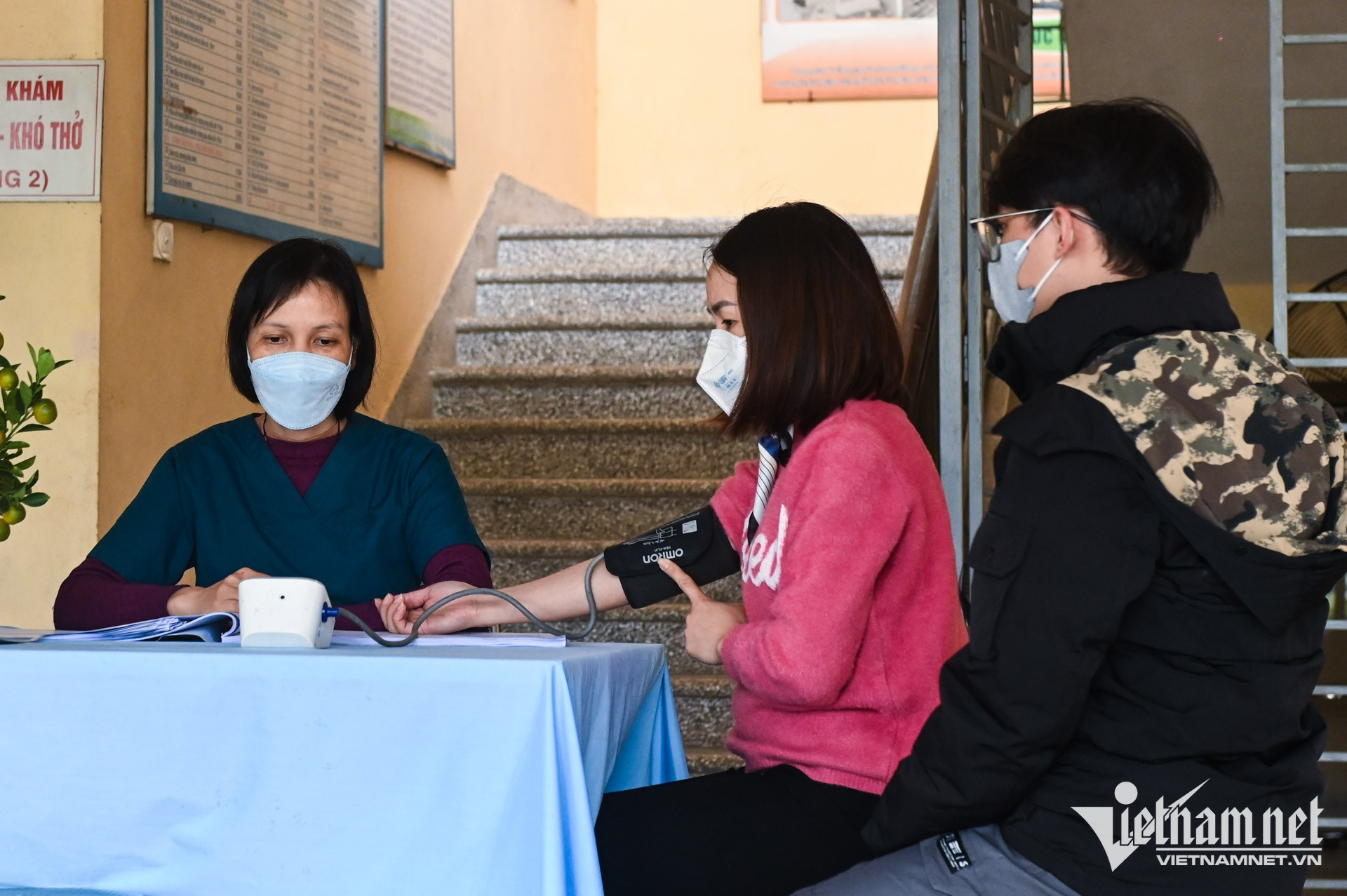
Regarding implementation, Deputy PM Le Thanh Long highlighted three issues of public concern: whether the government can afford the proposed health policies, particularly the preferential allowances, annual health checkups, and free hospital care.
For example, occupational allowances for healthcare workers - especially in remote, mountainous, and underserved areas - may reach 70% to 100% of base salaries. These are estimated to cost 4.335 trillion VND (approx. $173.5 million) per year, which Long said is feasible within current financial constraints.
Annual health checkups and screenings for 100 million people (the actual population is about 106 million) are estimated at 300,000 VND (approx. $12) per person, requiring a total of 30 trillion VND (approx. $1.2 billion) annually. However, employers would cover costs for about 16 million workers, reducing the state’s burden by 4.8 trillion VND (approx. $192 million). This leaves the government to fund around 25.2 trillion VND (approx. $1 billion).
As for free hospital care, Long noted that international approaches vary. Some countries include the cost in taxes; others support only eligible groups or tie it to health insurance contributions.
According to 2024 figures from the Ministry of Health, the health insurance fund is expected to pay 140 trillion VND ($5.6 billion) annually, while patients will still pay 21.545 trillion VND ($863 million) out-of-pocket.
“If we assume that by 2026, the government must cover that 21.545 trillion VND, then with the current health insurance fund surplus of around 49–50 trillion VND (approx. $1.96–2 billion), we can cover the first two years,” Long said. “After that, we’ll need to increase health insurance contributions to balance the system.”
He concluded by affirming that these are preliminary calculations, but the Ministry of Health and the government have thoroughly evaluated them and found the policy financially viable and realistic.
Tran Thuong
.svg)
