 Vietnamnet.vn

 Podcast



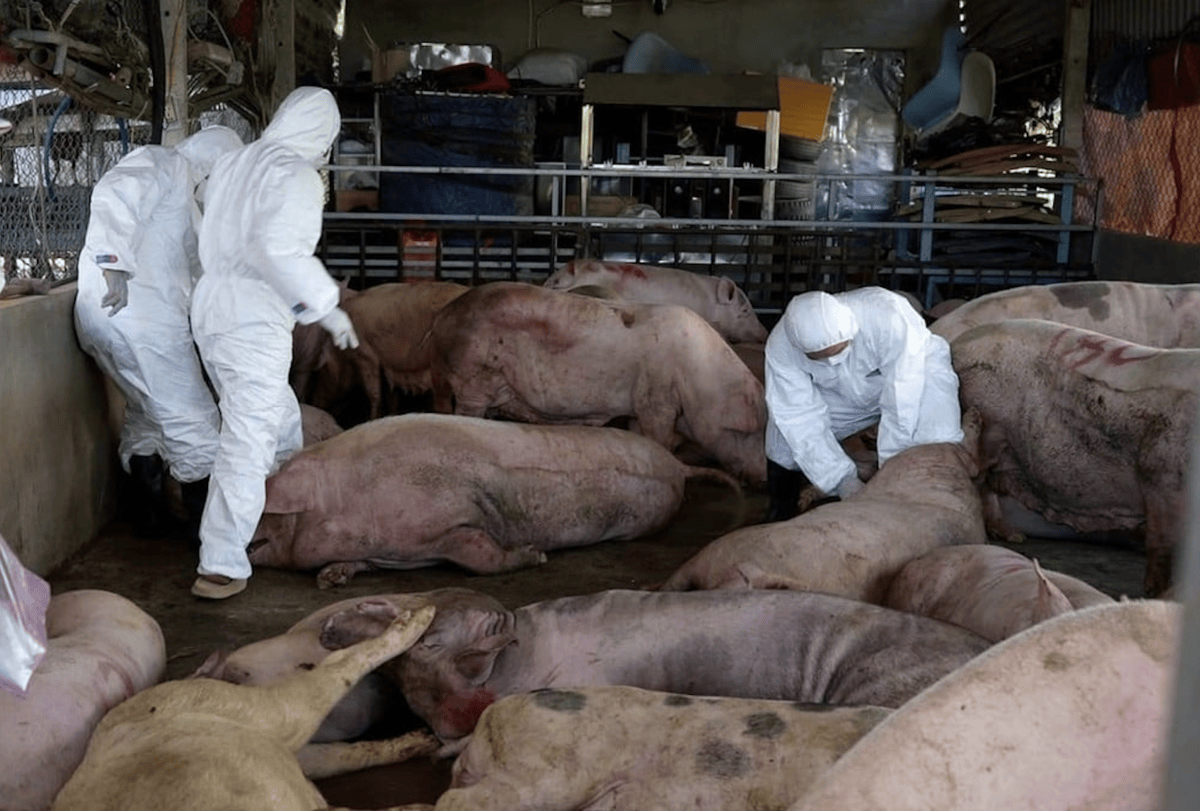
The latest report from the Department of Livestock and Animal Health under the Ministry of Agriculture and Environment (MAE) showed that live meat output in the first nine months of 2025 was estimated at 6.44 million tons, below the planned 6.49 million tons.
Poultry egg production reached 15.7 billion eggs, up 4.9 percent year-on-year. Fresh cow milk output hit 997,300 tons, an increase of 5.8 percent.
The report also noted that Vietnamese businesses spent $3.3 billion on livestock imports in the first nine months, an 18.6 percent increase compared to the same period in 2024. Of this, meat and edible meat by-products rose by 28.9 percent in value.
According to AgroMonitor, as of September 16, Vietnam had imported 217,100 tons of pork and pork by-products (up 32 percent), 146,400 tons of buffalo and beef products (down 9 percent), and 214,600 tons of poultry meat (up 7.3 percent) year-on-year.
The average import price stood at $2,688 per ton (VND68,000 per kg). Compared to domestic live pig prices of VND54,000–58,000 per kg and retail pork prices ranging from VND130,000-180,000 per kg, imported pork remains relatively cheap.
Vietnam also imported nearly 283,000 live buffalos and cows, 2.1 times higher than last year. All imports were for commercial slaughter, with Thai livestock accounting for 73 percent.
In addition, businesses spent heavily to import breeding pigs and parent breeder chickens.
A representative of Dong Nai Livestock Association said that the resurgence of ASF is one of the key reasons behind the spike in meat imports. Moreover, imported meat is often cheaper than domestic products and is preferred by many institutional catering organizations to cut input costs.
Farmers suffer, companies thrive
In the first nine months of 2025, ASF broke out in 34 provinces and cities across Vietnam, forcing the culling of nearly 1.02 million pigs.
“The disease spread mainly during July and August and was concentrated among small-scale farms lacking biosecurity,” the Department of Livestock Production and Animal Health noted.
The disease not only caused farmers to lose entire herds but also forced them to shoulder significant losses as live pig prices dropped while production costs remained high.
In stark contrast to the struggles of small farmers, Vietnam’s $35 billion livestock industry is seeing booming profits from large domestic corporations.
At a recent quarterly business review meeting, Dabaco Group JSC announced estimated post-tax profit of VND342 billion for the third quarter. Its cumulative profit for the first nine months of 2025 is expected to hit VND 1,357 billion, more than 2.5 times higher than the same period last year and 35 percent above its annual plan.
With Dabaco’s production costs at VND46,000-VND47,000 per kg, the firm views current live pig prices of VND55,000-VND56,000 per kg as favorable. With supply shortages, pig prices are expected to rise in Q4/2025.
Similarly, in the first half of the year, Hoa Phat Agriculture Development JSC recorded pre-tax profit of VND1,025 billion, up 129 percent from the same period last year, placing it second in the industry, just VND48 billion lower than Dabaco.
BAF Vietnam Agriculture JSC also reported after-tax profit of over VND342 billion in the first six months, up 122 percent from the same period in 2024, the highest half-year profit in its history.
Vietnam's livestock sector faces challenges from ASF, but domestic firms continue investing billions to expand production.
In mid-August, BAF held a groundbreaking ceremony for the high-tech Gia Han pig farm in Quang Tri province. The project, with VND2,000 billion in investment, will raise 15,000 sows and 450,000 fattening pigs, BAF's largest to date.
BAF aims for 450,000 sows and 10 million fattening pigs annually for the market.
In Q3, Dabaco also broke ground on major projects like the Ha Tinh animal feed mill, Dabaco Quang Ninh high-tech pig farm, and Dabaco Ngoc Lac farm in Thanh Hoa.
Additionally, the firm is advancing investment procedures for Dabaco Quang Tri, Dabaco Lao Cai, and Lam Son Nhu Xuan projects to break ground in Q4/2025 and early next year.
By the end of 2024, Vietnam’s pig population had increased to 32 million head, the highest in five years, according to MAE.
The number of pigs slaughtered reached 53.53 million head, equivalent to over 5.18 million tons of live pork (accounting for 62.6 percent of the country’s total meat production). Currently, the proportion of pork in Vietnam’s total meat production is higher than the global pork proportion (about 40 percent).
Tam An
.svg)
