 Vietnamnet.vn

 Podcast



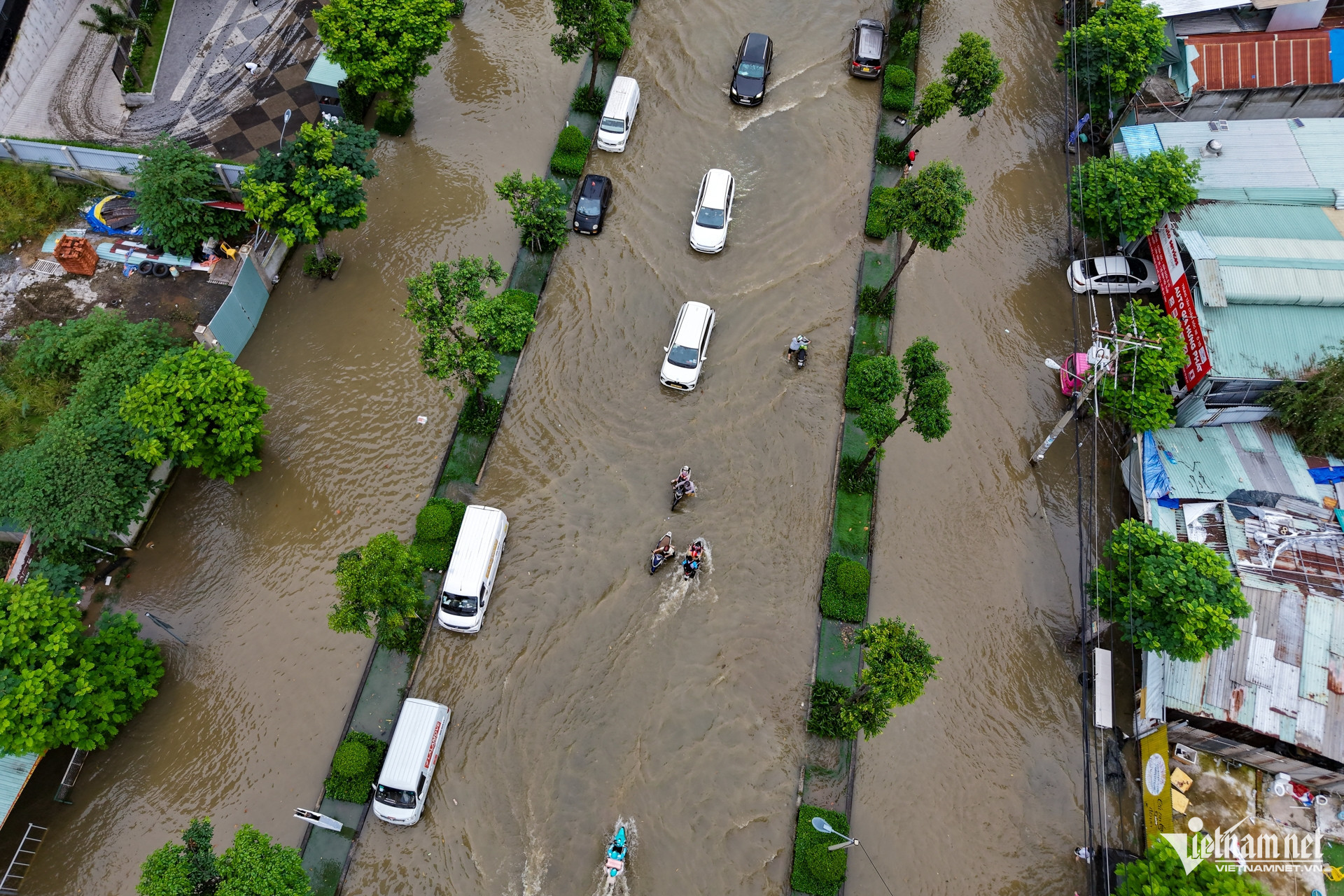
The recent high tide that occurred from November 5-8, peaking at 1.78m, and combined with sudden heavy rains, left many streets and residential areas in HCMC inundated under the water.
Images of residents wading through deep water on streets such as Nguyen Van Linh, Tran Xuan Soan, Pham Huu Lau, Huynh Tan Phat, and Nguyen Luong Bang, along with vehicles stalling en masse have become a recurring nightmare each rainy season or tidal surge in HCMC.
Pham The Bao from Pham Huu Lau Street said this year’s flooding level is much higher than previous years. “Even though I raised my house foundation level about 50–60cm above street level, it still could not stop the water from flowing in. I have never seen the water rise this high,” he said.
In low-lying areas along the Saigon River and canal systems, such as Binh Quoi - Thanh Da, Phu Dinh and Nha Be, daily life has been completely disrupted.
Huu Toan in Binh Quoi Ward said he was exhausted from staying up all night watching the rising water, sharing: “The flooding was unbearable. My family had to rent a hotel room for two days to escape the water.”
Beyond property damage and traffic disruption, flooding poses environmental hygiene and electrical safety risks. On the night of November 8, a teenager who was passing a flooded section near Alley 160 De Tham was electrocuted and died.
According to the Department of Agriculture and Environment of HCMC, the tidal level on the morning of November 6 surpassed the historic 2019 record. At the Phu An station (Saigon River), the peak tide measured at 1.78m, exceeding the previous record of 1.77m (2019).
Le Dinh Quyet, Head of Forecasting at the Southern Regional Hydrometeorological Center, said that from November until the end of 2025, the Southeast region, including HCMC, may experience around 5–6 major tidal surges.
Why is flooding in HCMC worsening?
Experts say HCMC is built on weak ground, mostly river–marine sediment. Recent studies show that the city is subsiding at an average rate of 1–2cm per year, with some places sinking 4–5cm annually.
Surveys indicate that HCMC ranks among the top 10 fastest-sinking cities in the world. Subsidence is concentrated along the Saigon River (from Saigon Bridge to Ba Son Bridge) and the southern districts, especially Binh Chanh and Binh Tan, where many residential zones and industrial parks are located.
Le Trung Chon, Director of the Institute for Sustainable Development Research (HCMC University of Natural Resources and Environment), said multiple factors contribute to urban subsidence, causing HCMC to “sink gradually.”
“First is excessive groundwater extraction over many years, which empties aquifers and causes land to collapse. Next is rapid urbanization and the heavy load of high-rise buildings and transportation infrastructure. Additionally, the concrete coverage of the city prevents rainwater from infiltrating the soil, leaving the ground dry, weak, and more prone to subsidence,” he explained.
Ho Long Phi, former Director of the Center for Water Management and Climate Change (Vietnam National University HCMC), said the root cause of persistent flooding is the imbalance between rapid urbanization and a drainage system that has not kept pace, in addition to rain, tides and subsidence.
He noted that the city’s concrete expansion and canal encroachment have eliminated natural water retention and drainage capacities, causing newly developed areas like the former Thu Duc City to experience unprecedented flooding.
He added that while HCMC has launched major transport and urban projects (expressways, metro lines, airports), its investments in flood-control infrastructure have remained minimal compared to the city’s actual needs.
He acknowledged the potential contribution of the VND10,000 billion tide-control project but expressed concern that the project has been stuck for years and remains unfinished.
Meanwhile, ongoing canal renovation projects (Ben Cat - Tham Luong, Xuyen Tam, Kenh Te) mainly focus on urban gentrification and environmental improvements.
“The drainage system is far too outdated to handle heavy rainfall. To address flooding effectively, the city needs to simultaneously upgrade and widen underground drainage pipes while rehabilitating and clearing all canals and waterways,” he said.
With real flood-control investment needs reaching $7–8 billion, HCMC should prioritize mobilizing private capital instead of relying solely on the limited state budget.
Architect Ngo Viet Nam Son suggested that HCMC must plan for green infrastructure and expand water-related spaces. “Green spaces are water-retention areas that reduce flooding and subsidence. The city should limit high-rise developments in weak-soil zones and preserve and connect existing waterways.”
Anh Phuong
.svg)
