 Vietnamnet.vn

 Podcast



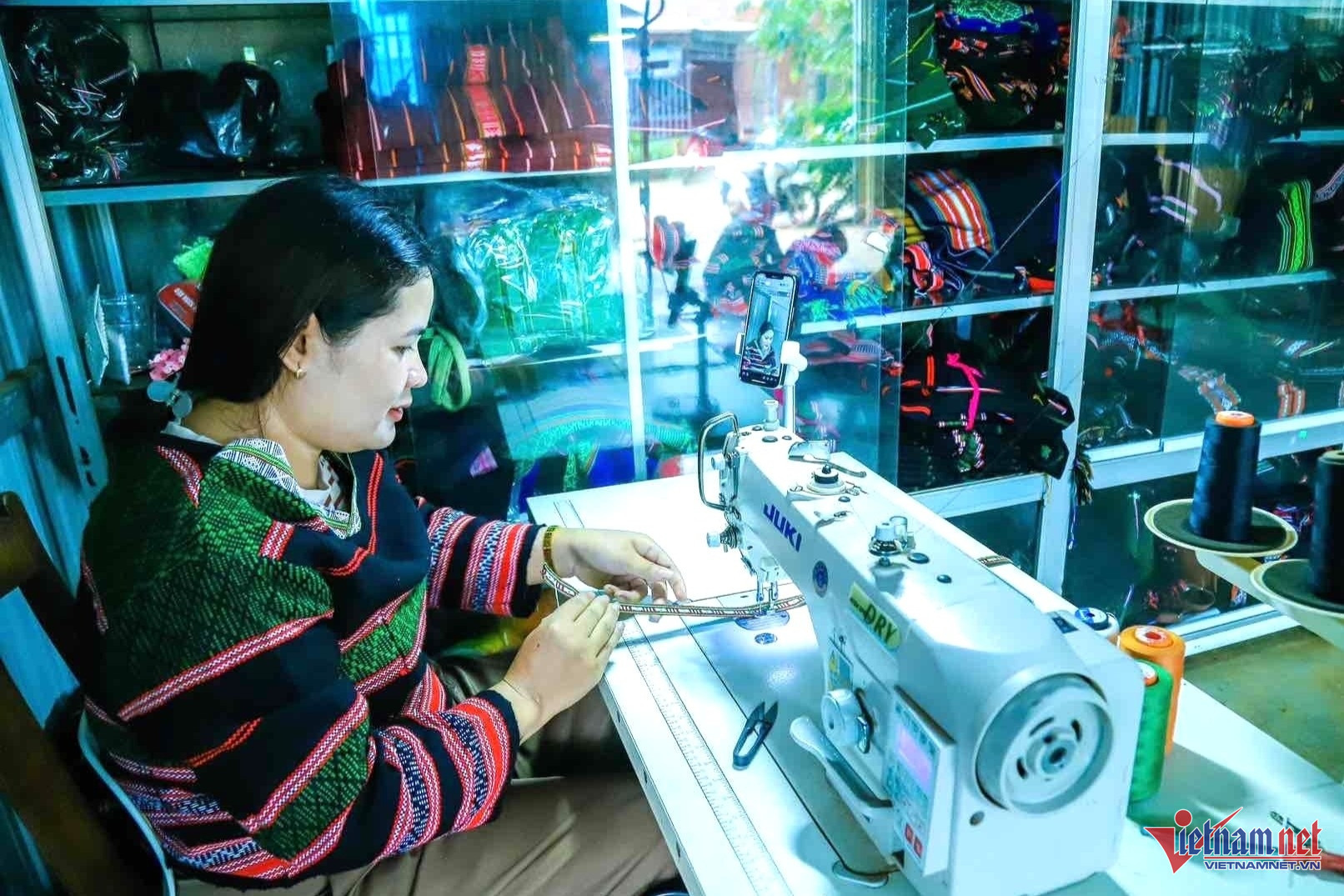
For generations, brocade weaving has been an integral part of daily life for ethnic minorities, particularly the Ma people. This cultural tradition, passed down through many generations, is more than just a craft for the Ma - it’s a way for women to showcase their skill, cultural identity, and soul through intricate patterns and designs.
In Dong Gia Nghia Ward, Lam Dong (formerly Dak Nia Commune, Gia Nghia City, Dak Nong Province), brocade weaving once declined as people shifted to modern industrial fabrics. For years, brocade appeared only during rituals, new rice celebrations, or significant village weddings.
However, since Ma’s brocade weaving was recognized as a traditional craft of Dak Nong Province, dormant looms have been reactivated. Women who had abandoned weaving for years returned to threads and fabrics to preserve the craft.
In 2018, the Dak Nia brocade weaving cooperative was established with seven members. Today, it has 12 members, all Ma people from the villages of Bu Sop, N’Jieng, and Ting Wel Dom. The cooperative brings together women skilled in traditional weaving techniques.
H’Bach, 77, from Bu Sop village, said that she began learning the craft at age 10. Despite her young age, she knew how to spin threads, gather forest leaves, dig turmeric roots, and collect tram trees for dyeing. By day, she worked in the fields; by night, she wove at the loom.
For the Ma and other indigenous groups, women and girls must know weaving. Young girls weave brocade as dowry for marriage, while married women weave clothing and blankets for their families, H’Bach explained.
As an exceptional brocade artisan, H’Bach has taught six weaving classes in Ting Wel Dom, Bu Sop, and N’Jieng villages, passing the craft to younger generations. Her students are young descendants of the village who are continuing the traditional weaving profession of the Ma.
H’Tuyet, 44, said she learned weaving as a child but only wove sporadically due to lack of market demand. Since the cooperative’s formation, she has returned to the loom. Now, after field work, she weaves, and can complete a brocade piece in about a week, earning roughly VND200,000 daily.
Though modest, this income supplements her family’s finances. H’Tuyet’s family escaped poverty nearly a decade ago, and weaving has helped support her two children’s education and upward mobility.
Offering brocade online
The traditional craft continues to thrive in Ma villages in Dong Gia Nghia Ward. The products generate income for women and also preserve ethnic culture.
Recently, the Ma ethnic brocade brand in Dak Nia has become more popular because it has been put on online. However, due to the small scale of production and being completely handmade, the products have not yet met the demand of consumers.
H’Binh, 38, the cooperative leader, said that to reach a wider audience, she and members learned online selling, attended training, and livestreamed on platforms like Facebook and TikTok to bring brocade closer to consumers.
Each member can earn an average income of VND7-8 million monthly, helping women escape poverty, stabilize their lives, and deepen their love for the traditional craft.
In the past, it took nearly one year to complete a large brocade piece. Made from 100 percent natural materials with intricate patterns, some pieces are valued as treasures, equivalent to a buffalo. Thus, the Ma cherish brocade as part of their family and ethnic identity.
“Beyond production and sales, teaching the craft to younger generations is crucial for preserving ethnic identity. Women tied to the loom learn and teach not just for livelihood but to safeguard our cultural heritage,” H’Binh said.
Thach Canh Tinh, chair of the ward’s People’s Committee, said that developing the brocade craft village preserves cultural values and creates jobs, boosting income. Commercializing products to align with market trends encourages households to develop their economy.
The local authorities will explore and offer more online sales training and connect market outlets to ensure people can confidently continue the craft, gradually increasing income and stabilizing lives, according to Tinh.
In Dong Gia Nghia Ward, brocade weaving is not just a livelihood but a cultural bridge connecting generations, fostering ethnic pride, and paving the way for sustainable development for the Ma community on this red basalt land.
In Dong Gia Nghia Ward, brocade weaving is not just a livelihood but a cultural bridge connecting generations, fostering ethnic pride, and paving the way for sustainable development for the Ma community on this red basalt land.
Hai Duong
.svg)
