 Vietnamnet.vn

 Podcast



Nestled at the foot of To Mountain, Soai So Pagoda in An Giang Province is home to a unique spiritual and cultural treasure of Southern Vietnam’s Khmer community - the ancient art of palm-leaf scripture carving.
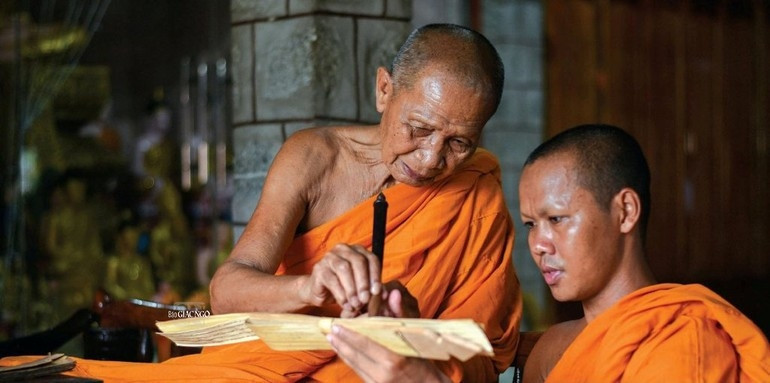
Amid the rush of modern life, 84-year-old Venerable Chau Ty quietly continues teaching young monks how to carve sacred Pali texts line by line, keeping alive the intertwining legacy of Buddhist faith and Khmer heritage.
Known as Satra, the art of palm-leaf scripture carving is more than just a craft - it is also a spiritual discipline.
The carver must maintain a tranquil mind and deep focus.
Each character is formed with reverence and unwavering faith in the Buddha.
These sacred texts carry not only religious significance but also reflect the depth of intellect, patience, and devotion of the Khmer people in Southern Vietnam.
Preserving sacred knowledge carved into leaves
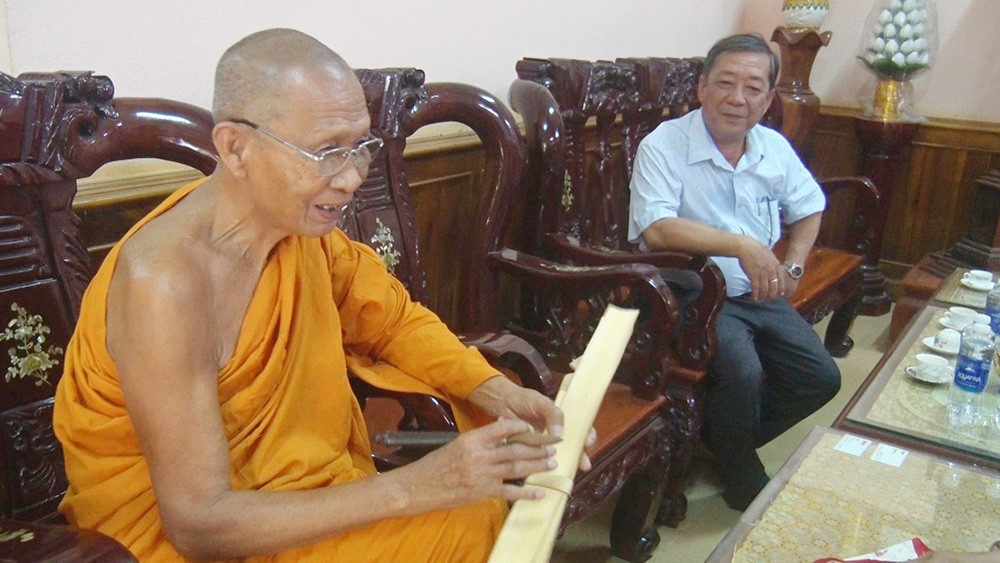
During the 2025 Sen Dolta Festival, Elder Monk Chau Ty shared the origins of Soai So Pagoda’s palm-leaf scriptures.
In 1964, at age 24, he met Chau Rieng, a local master renowned for his skill in carving scriptures on palm leaves.
Chau Ty invited him to the temple to teach the craft.
Within a few lessons, he mastered the essentials - from selecting the right leaves and lining them to making ink and carving.
He then created his first scripture, a heartfelt offering to the Buddha.
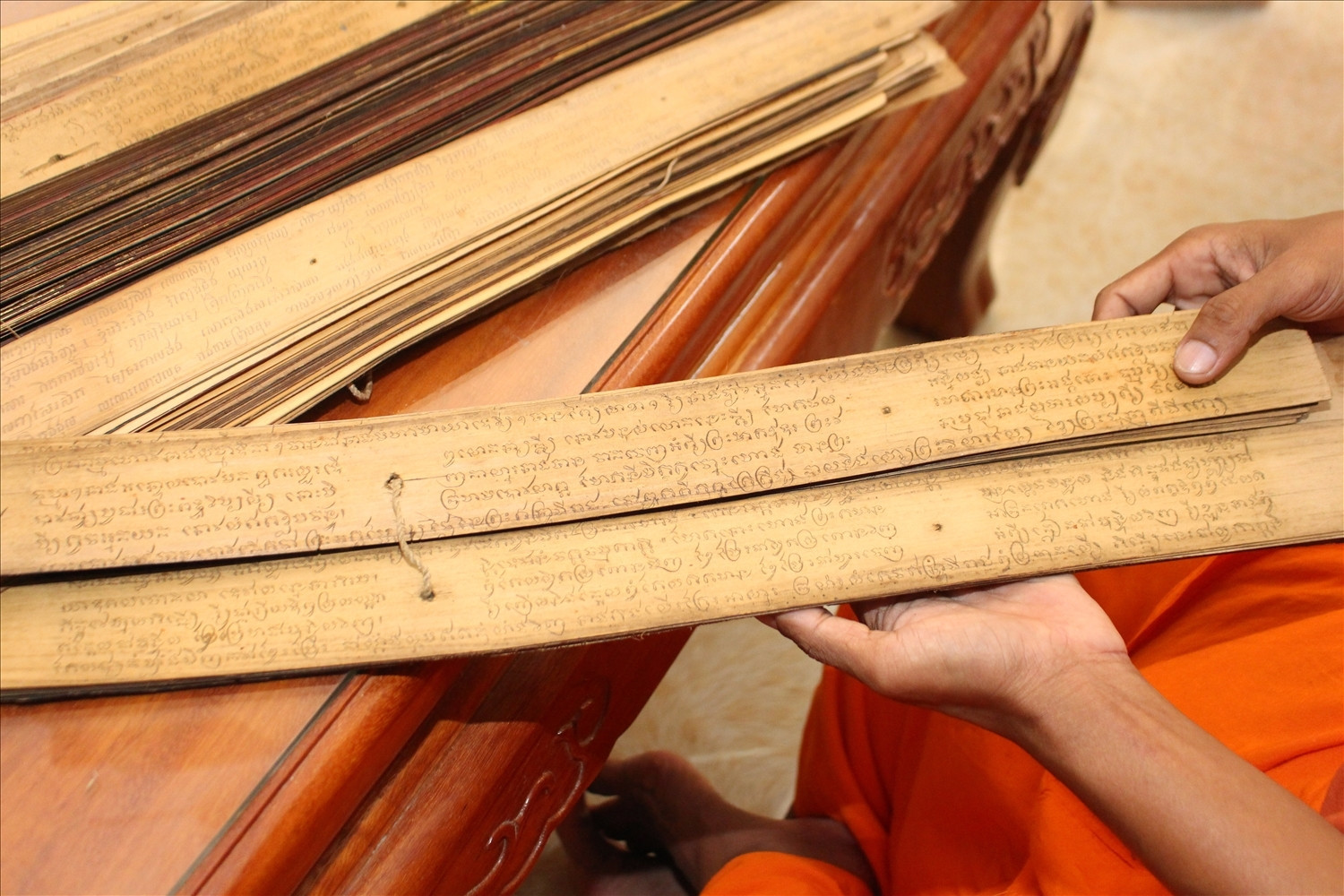
According to the monk, crafting a complete scripture involves multiple stages.
The chosen palm leaves must not be too old and must be long and wide enough to hold five lines of text.
The leaves are sun-dried, dew-treated, boiled, and pressed six to seven times for flexibility and durability.
To carve, they use a Dek-cha, a wooden stylus with a fine zinc blade.
After carving, the letters are revealed by rubbing a mixture of charcoal and kerosene onto the leaf.
The pages are then threaded together into a scripture book and carefully stored for preaching and chanting.
"Scripture carving is not just copying words; it is a journey of spiritual refinement," said Venerable Chau Ty gently. "If rushed, the letters will be wrong. If the mind is not calm, the Buddha’s words will not shine through."
A determined guardian of Khmer cultural heritage
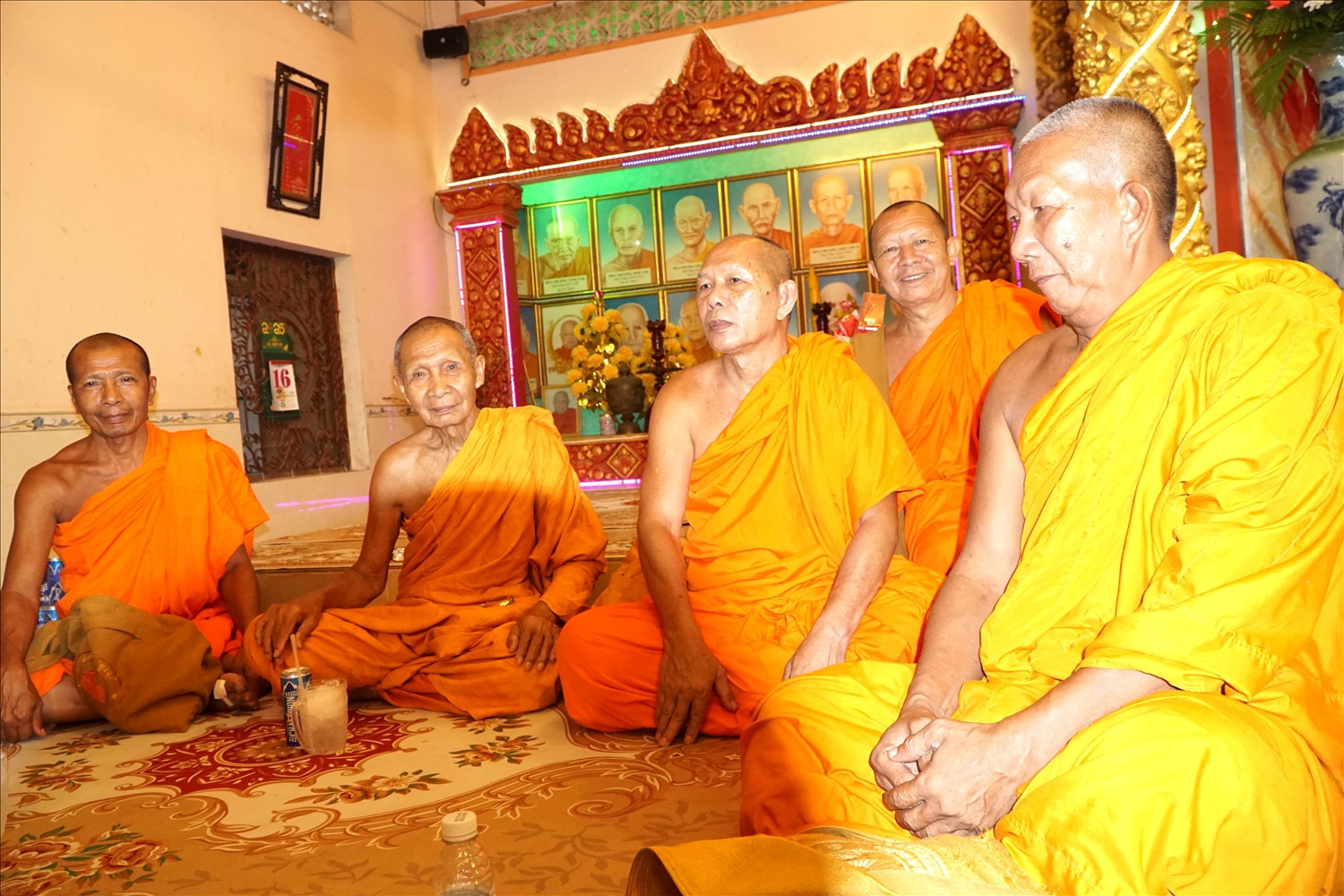
Dozens of ancient scripture sets are preserved on old wooden shelves at Soai So Pagoda.
Each represents a cultural memory of the Khmer people and symbolizes the bond between Buddhist teachings and community life.
Yet, the monk is concerned that the art is fading.
In 2013, An Giang’s Department of Culture and Information collaborated to open a class teaching palm-leaf carving to young monks.
Fourteen students joined, taught directly by Venerable Chau Ty, but only one remained committed after the course.
According to Danh Phuc, Director of the Department of Ethnic and Religious Affairs, modern youth often lack the patience for such meticulous work.
Without passion and inner peace, the art cannot survive.
“Another challenge is sourcing materials,” Phuc added.
“Palm leaves are rare because the trees die after fruiting.
Most materials now must be imported from Cambodia at high cost.
Despite testing various locations, domestic cultivation remains unsuccessful due to unsuitable soil and climate.”
Venerable Chau Ty’s greatest concern is the lack of successors.
In 2017, the knowledge and technique of Khmer palm-leaf scripture carving in An Giang were recognized as a National Intangible Cultural Heritage.
This milestone owes much to Chau Ty, seen as a vital bridge between ancient artisans and future generations.
"Carving scriptures is my path of spiritual practice - and my way of honoring my people," the monk confided.
In this modern era, the image of the elder monk, quietly crafting lines on palm leaves, continues to radiate dignity, determination, and devotion to the enduring legacy of Khmer cultural heritage.
Tran Thi Thanh Huong, Deputy Secretary of the Provincial Party Committee and Chairwoman of the Vietnam Fatherland Front Committee of An Giang Province, praised the monk’s work.
She noted that beyond his religious duties, Venerable Chau Ty is a respected figure among Khmer communities and a shining example of national solidarity and religious harmony.
As Vice Patriarch of the Central Council for Verification of the Vietnam Buddhist Sangha, he actively promotes unity between the Theravāda and Mahāyāna sects, among religions, and among the Khmer and other ethnic groups.
For years, he has served as a bridge between the Sangha, the government, and the community, helping foster cultural values, public trust, and community adherence to Party policies and State law.
Nhu Tam
.svg)
