 Vietnamnet.vn

 Podcast



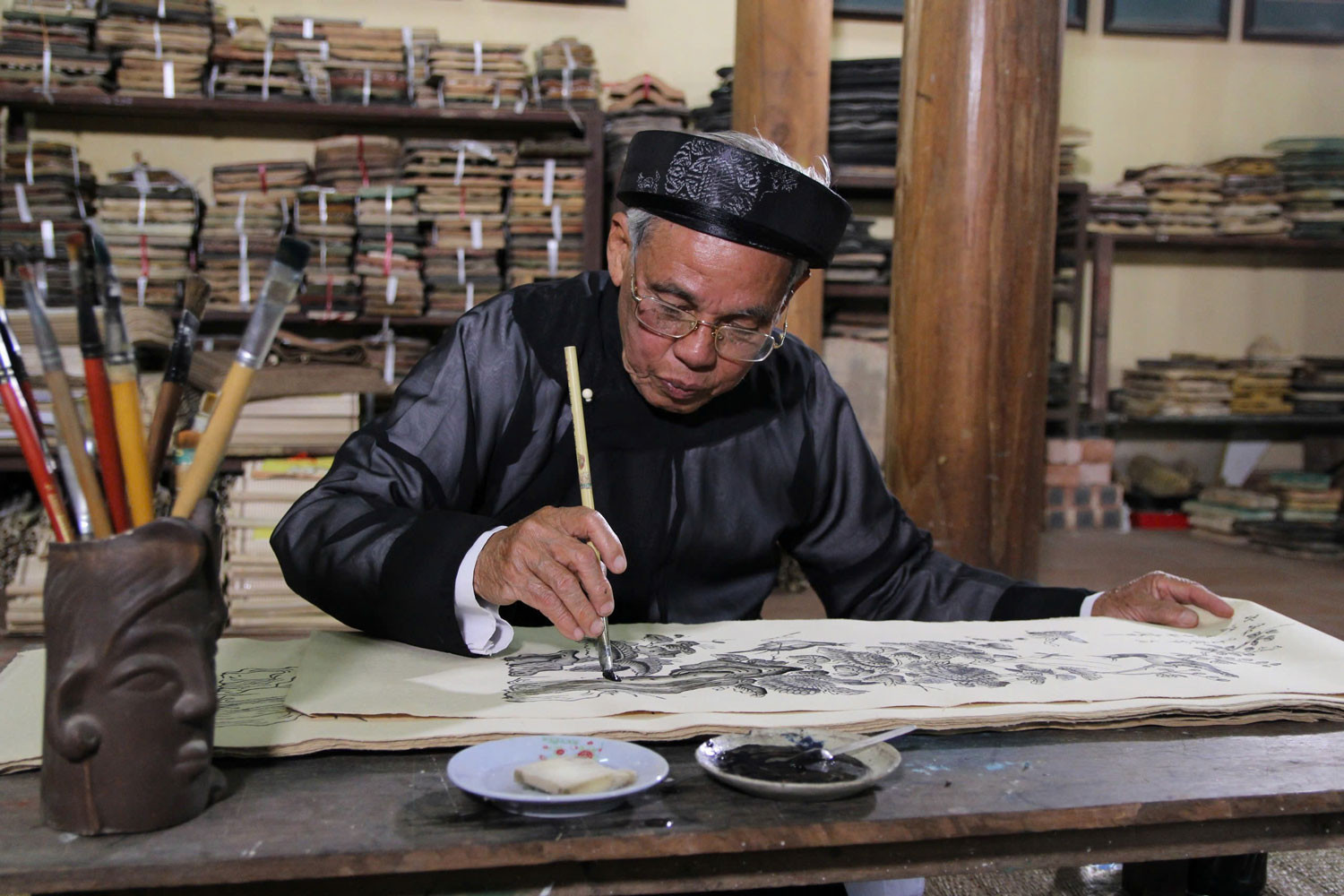
Dong Ho painting originated around five centuries ago in Dong Khe ward, Thuan Thanh town, Bac Ninh province. It is distinguished by its woodblock printing technique and its wide range of themes - from spiritual and ceremonial to historical, daily life, and landscape depictions. The paintings are typically used during Lunar New Year and for ancestor worship.
The entire production process is carried out by hand. Artists sketch initial designs with brush and natural ink on thin rice paper, then carve jackfruit wood blocks. Colors are derived from natural materials, and the prints are made on dó paper coated with điệp (powdered seashell). Colors such as red, blue, yellow, and white are applied first, with black outlines printed last to complete the composition.
UNESCO’s Intergovernmental Committee noted that Vietnam’s nomination fully met the listing criteria. The craft is deeply rooted in local traditions and belief systems, but currently only a few households continue the practice. The number of skilled artisans is declining, and product demand remains unstable. Specialized skills like woodblock carving and design require years of training and experience passed down through generations, making preservation even more difficult without successors.
Vietnam’s safeguarding plan, submitted with the nomination, outlines seven core objectives. These include training programs, heritage inventories, developing new designs, diversifying markets, improving material sourcing, and supporting artisans with better working conditions. The plan was deemed practical, sustainable, and commendably centered around community participation.
Local communities, including practicing families and artisans, actively contributed to the nomination process - from conducting heritage inventories to organizing public consultation events. Dong Ho painting is also included in Vietnam’s national heritage registry and is regularly updated.
UNESCO recommended that Vietnam continue enhancing education about this heritage, integrating it into both formal and informal education systems to encourage young people to appreciate and participate in its preservation.
This inscription not only affirms the historical and artistic significance of Dong Ho painting but also inspires artisans to carry on the tradition and helps promote Vietnamese culture to the world. It celebrates the nation's unique heritage and artistic diversity.
Currently, Vietnam has 37 heritages recognized by UNESCO, including 9 world cultural and natural heritages, 17 intangible cultural heritages, and 11 documentary heritages. Bac Ninh province itself is home to several renowned heritages, including quan ho folk songs, ca tru ceremonial singing, the Mother Goddess belief, the Huong Canh tug-of-war ritual, and the Yen Tu – Vinh Nghiem – Con Son – Kiep Bac relic complex.
During the session, Deputy Minister of Culture, Sports and Tourism Hoang Dao Cuong, who also serves as Vice Chairman of the Vietnam National Commission for UNESCO, and Mai Son, Standing Vice Chairman of the Bac Ninh People's Committee, expressed gratitude to UNESCO and committed to implementing necessary measures to preserve and promote the Dong Ho folk painting tradition.
Tinh Le
.svg)
