 Vietnamnet.vn

 Podcast



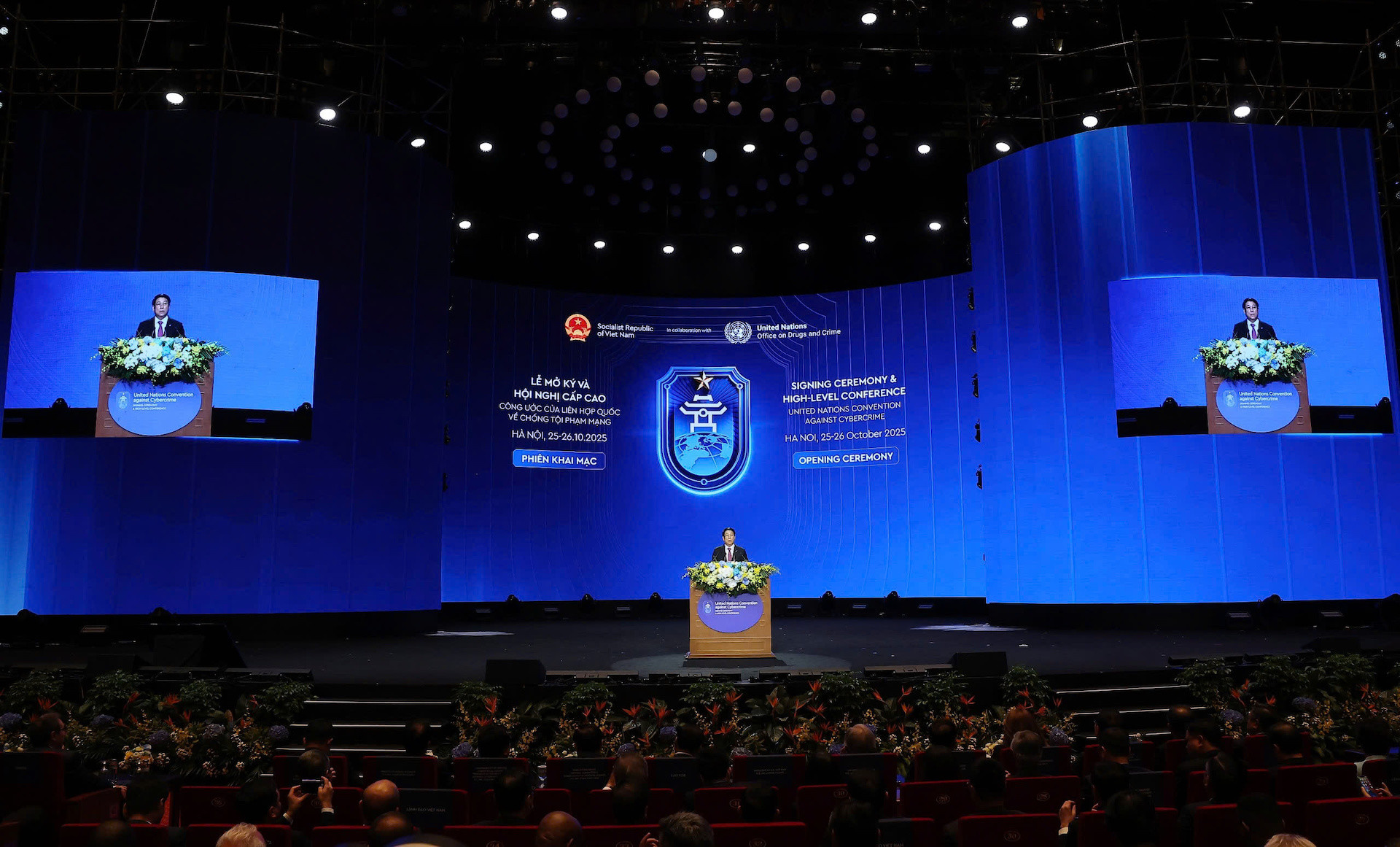
On October 25, 2025, the United Nations Convention on Cybercrime - also known as the "Hanoi Convention" - was officially signed at the National Convention Center in Hanoi, with the attendance of UN Secretary-General António Guterres and delegates from over 190 countries.
This historic event marks a significant milestone in international cooperation on cybersecurity, establishing a unified legal framework for cross-border investigations, data sharing, mutual legal assistance, and extradition in cybercrime cases.
In this context, CMC Technology Group introduced its integrated "Make in Vietnam" cybersecurity ecosystem. Designed to protect Vietnamese enterprises' data sovereignty, the ecosystem spans infrastructure, platforms, and services - all aligned with international standards and deployed within Vietnam.
CMC’s cybersecurity architecture is built on local infrastructure - CMC Cloud and CMC Data Center - seamlessly integrated with the CMC Security Operations Center (SOC), which operates 24/7 and is managed by internationally certified experts.
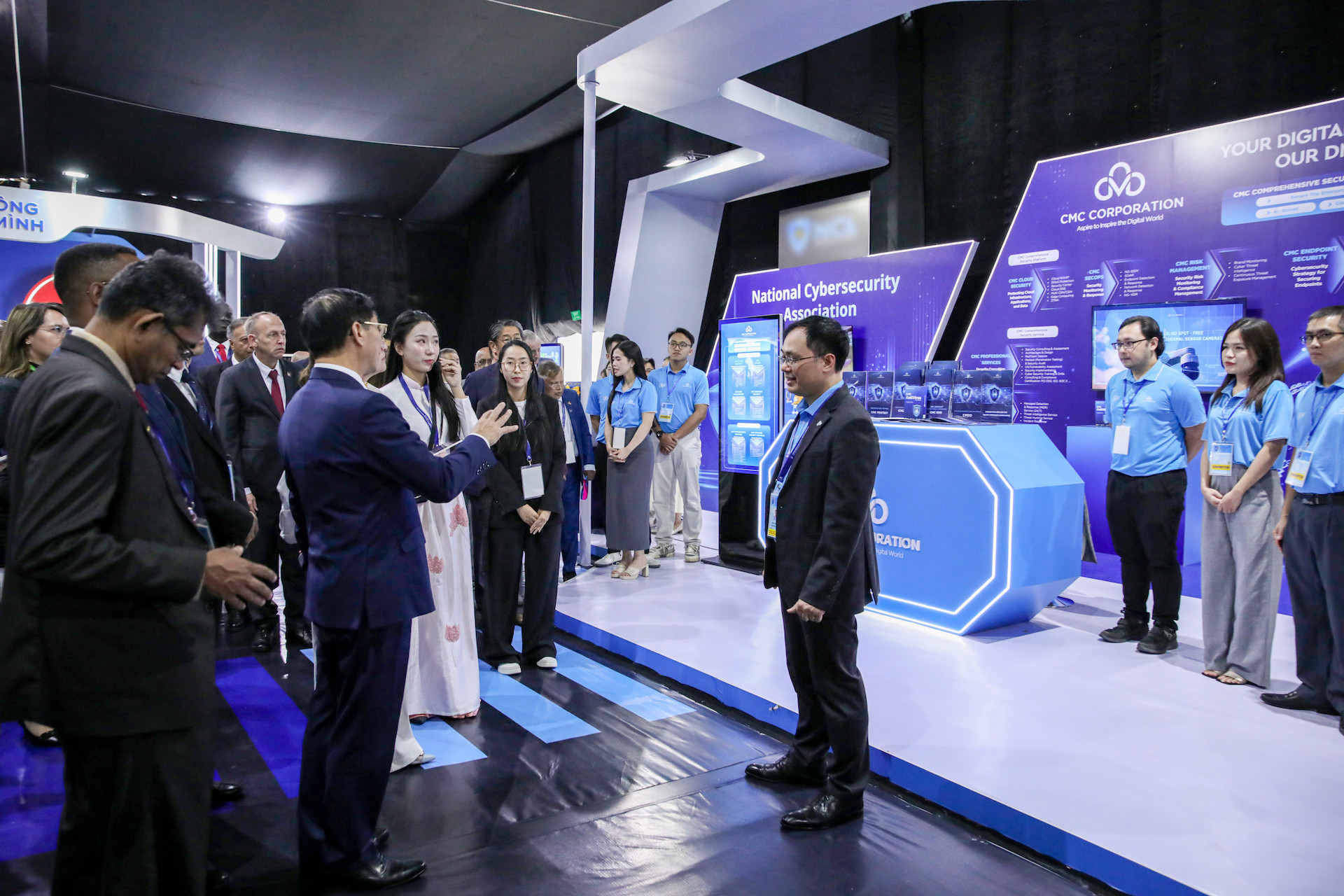
The platform layer consists of the CMC Comprehensive Security Platform (CCSP), a unified monitoring and analytics solution with real-time incident response capabilities.
This model supports an ongoing cycle of detection, response, recovery, and improvement, with clear performance indicators such as Mean Time to Acknowledge (MTTA) and Mean Time to Resolve (MTTR). It ensures compliance, auditability, and scalable deployment.
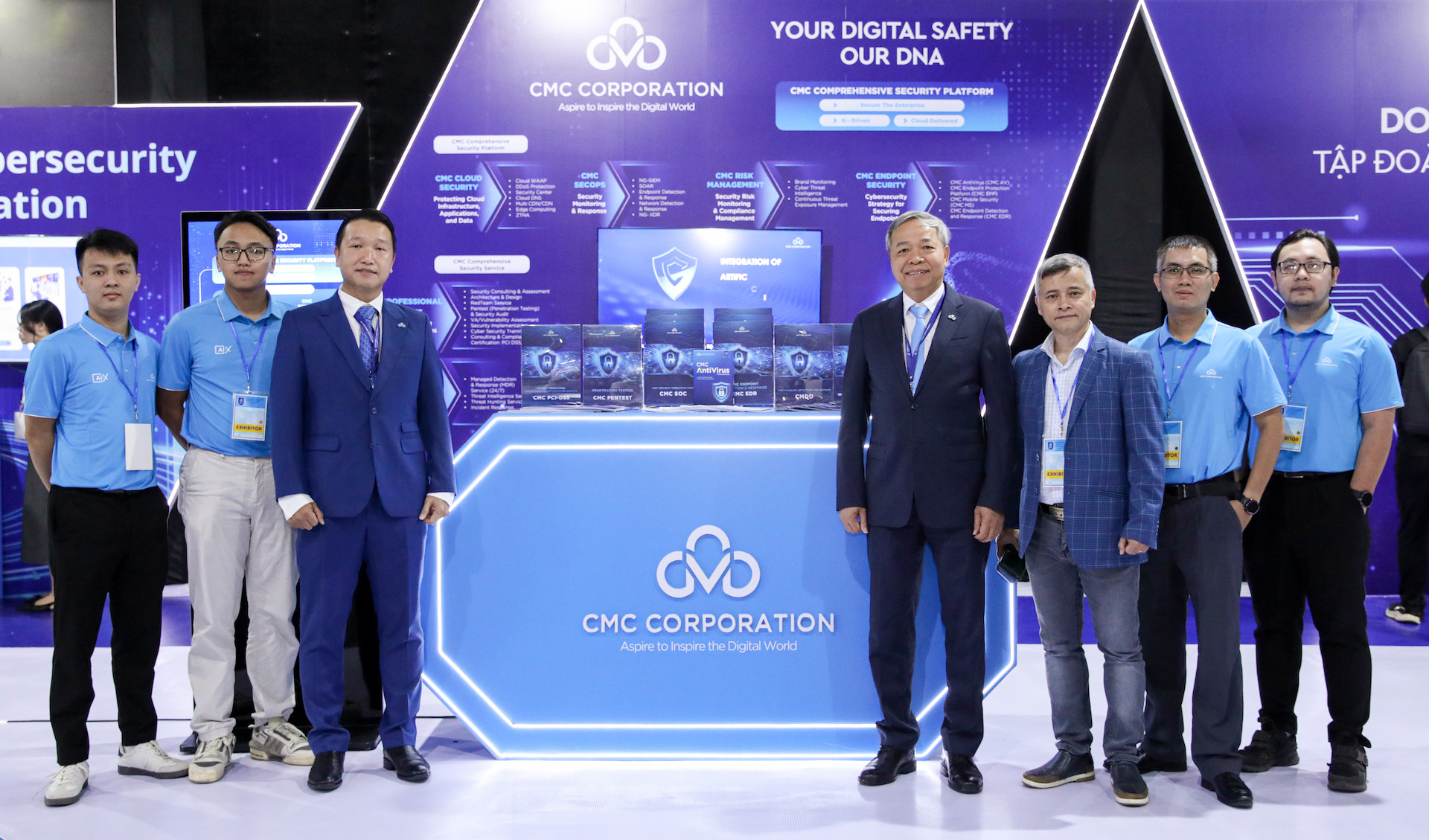
Complementing the platform, CMC offers a full lifecycle service portfolio. These include security posture assessments, compliance-by-design architecture consultation, solution deployment, table-top and purple team exercises, and penetration testing based on CREST standards.
At the endpoint level, CMC’s antivirus and endpoint detection and response (CMDD) has earned VB100 certification. Organizationally, CMC supports compliance with major global frameworks, including ISO/IEC 27001, 27701, 27017, 27018, 22301, PCI-DSS, helping clients fast-track certifications while reducing costs and ensuring secure operations.
In terms of engagement, CMC promotes a co-managed SOC model. The CMC team maintains round-the-clock security operations, while the client’s IT team oversees daytime activity, co-develops playbooks, and receives hands-on knowledge transfer.
Within the first 90 days, organizations typically see MTTA drop to mere minutes, MTTR maintained below target for routine scenarios, and significant attack surface reductions following red-team remediation sprints.
This collaborative model is especially effective for banks, fintechs, manufacturing and logistics operations (especially those requiring IT/OT network segmentation), and multinational corporations operating across multiple cloud environments.
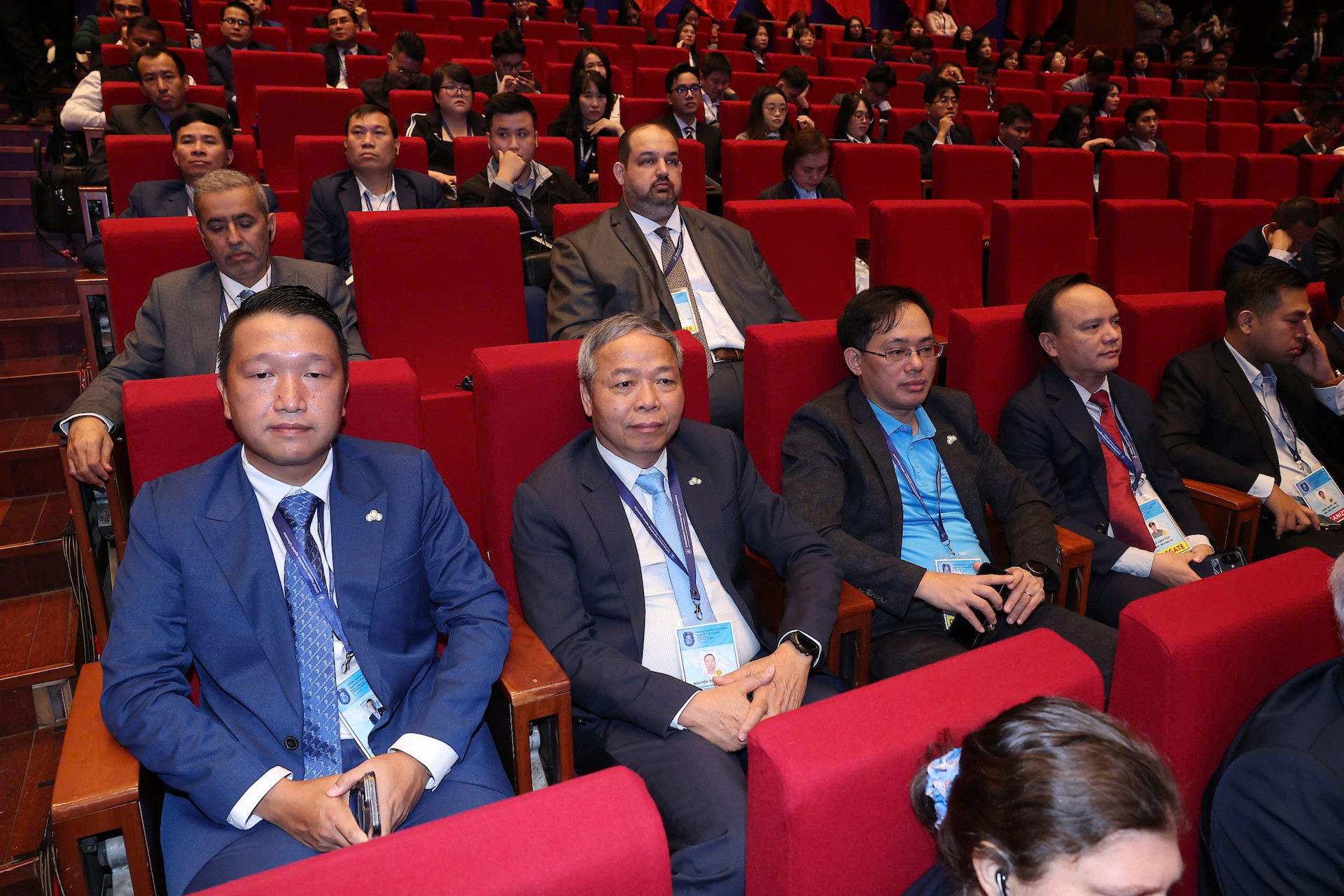
Dang Tung Son, Senior Vice Chairman and Chief Strategy Officer of CMC, remarked: “The signing and implementation of the Convention will have a direct impact on the strategies and operations of cybersecurity enterprises. Adhering to international standards for protection, investigation, and response will become essential. Businesses must proactively collaborate, share threat data, participate in early warning systems, and support cross-border investigations.”
With a portfolio serving more than 3,000 clients both domestically and internationally, and an ecosystem of over 20 global security partners (including Fortinet, NexusGuard, and Brandefense), CMC is the first Vietnamese company to achieve triple CREST certifications: CREST SOC (September 2025), CREST Penetration Testing (July 2025), and CREST Vulnerability Assessment (September 2025).
From a customer value perspective, CMC’s cybersecurity suite delivers three core advantages: reducing MTTA and MTTR through an integrated response platform and automated playbooks; lowering cost and resource demands via co-managed services and local infrastructure; and minimizing compliance risk through built-in international standards from the architecture stage.
This is particularly relevant for multi-cloud deployments, distributed operations, and sensitive OT environments, where standardized policies and resilient architectures are essential to maintaining business continuity.
Nguyen Trung Chinh, Chairman of CMC Technology Group and Vice President of the National Cybersecurity Association, emphasized: “In the wake of the Hanoi Convention, the need for cooperation, standardization, and rapid response has become universal. CMC is committed - alongside the Association and business community - to operationalizing international standards in Vietnam. Through a 24/7 co-managed SOC, automated playbooks, and compliance-by-design, our goal is to secure data, build digital trust, and contribute to the sustainable growth of Vietnam’s digital economy.”
The Hanoi Convention signifies the global community’s unified stance to eliminate safe havens for cybercriminals and foster cross-border judicial cooperation, data exchange, and investigation support.
For Vietnam, it presents an opportunity for domestic technology leaders like CMC to showcase their capabilities and reinforce national data sovereignty.
By integrating infrastructure, platforms, and security services, CMC reaffirms its commitment to collaborating with regulators and businesses to fulfill the Convention’s mandates and build a secure, resilient digital environment for Vietnam in an era of global digital transformation.
PV
.svg)
