 Vietnamnet.vn

 Podcast



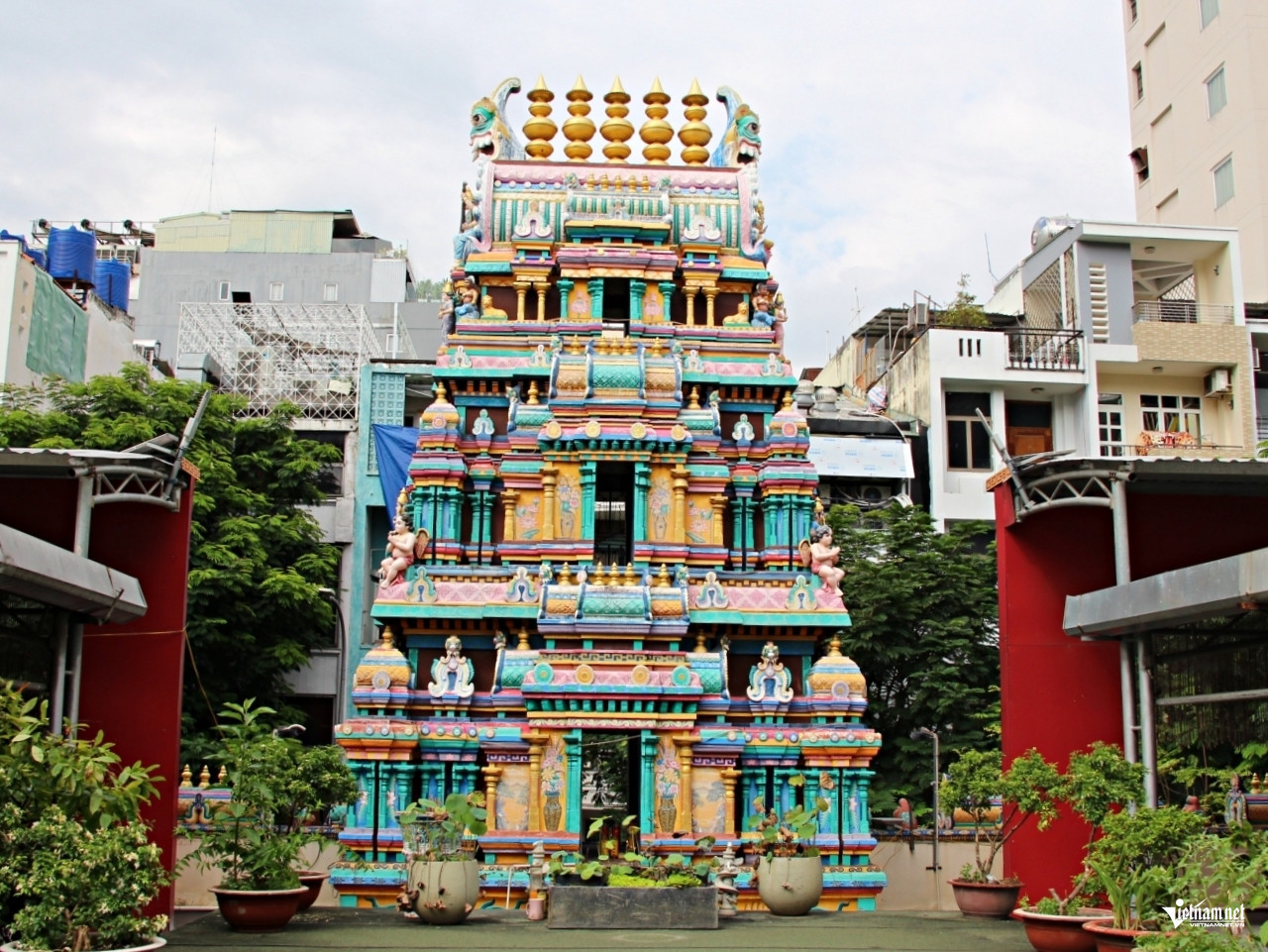
Located on Truong Dinh Street in Ben Thanh Ward, Mariamman Temple - also known as the Indian Temple - has stood for more than 100 years, featuring ornate architecture unlike any other in the city.
A colorful sanctuary amid the urban sprawl
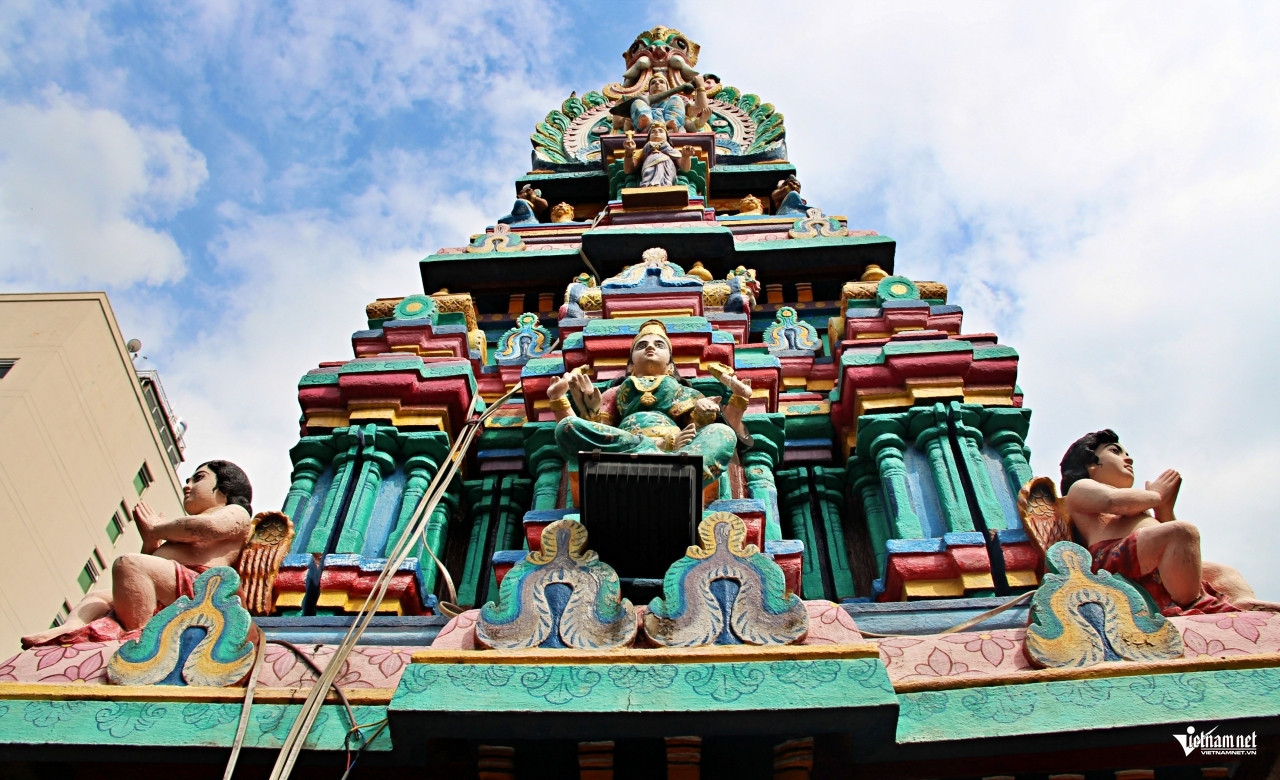
Its striking facade boasts a towering multi-tiered gate adorned with vividly painted statues of Hindu gods and mythological creatures.
The temple's perimeter walkway features 18 bas-relief statues representing guardian deities in Hindu belief.
On the rooftop are two prominent towers, richly decorated with bright-colored figures of various Hindu deities.
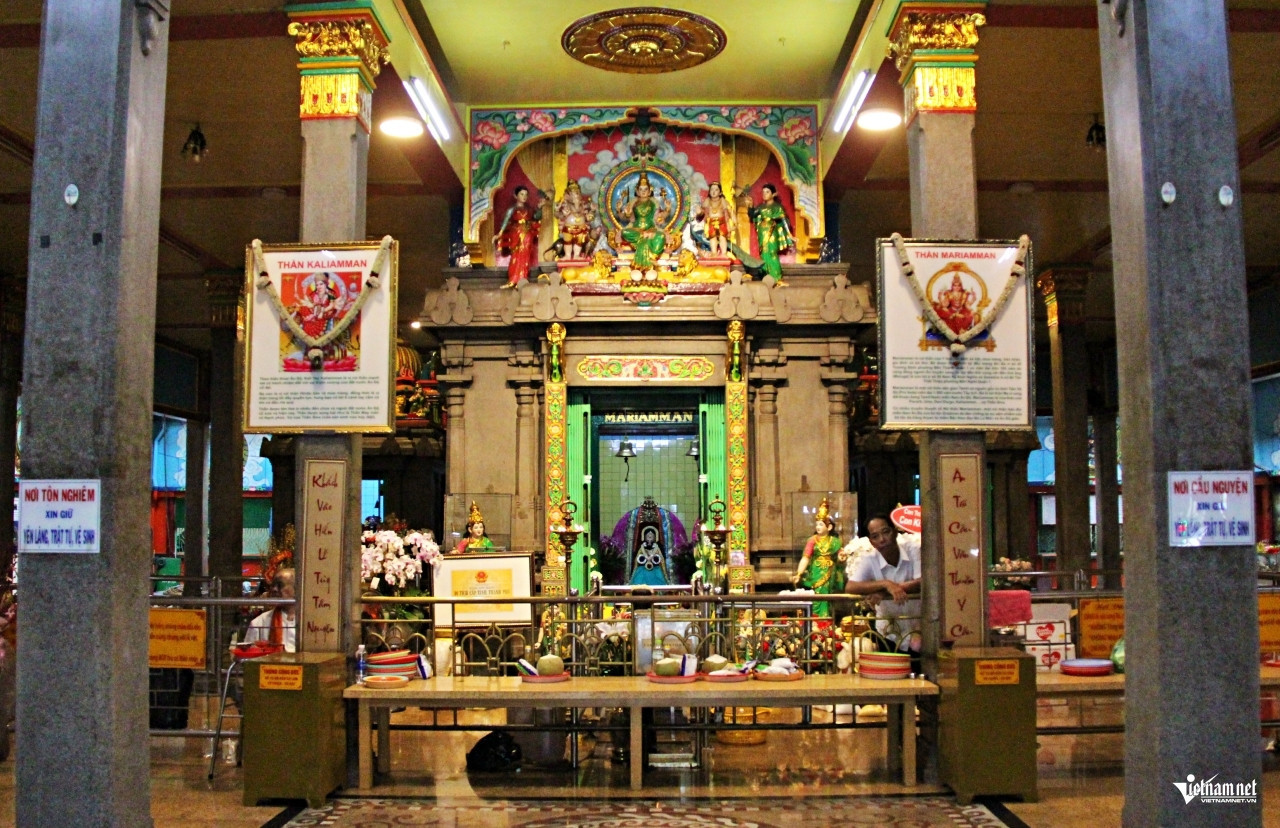
Passing through the main gate, visitors enter the central courtyard that leads to the inner sanctum, where Goddess Mariamman is worshipped. She is believed to bestow fertility, prosperity, health, and happiness.
In front of the sanctum are two lingas on a yoni pedestal, symbolizing divine energy. These sacred objects are enclosed by an iron fence, and visitors are not permitted to cross the barrier.
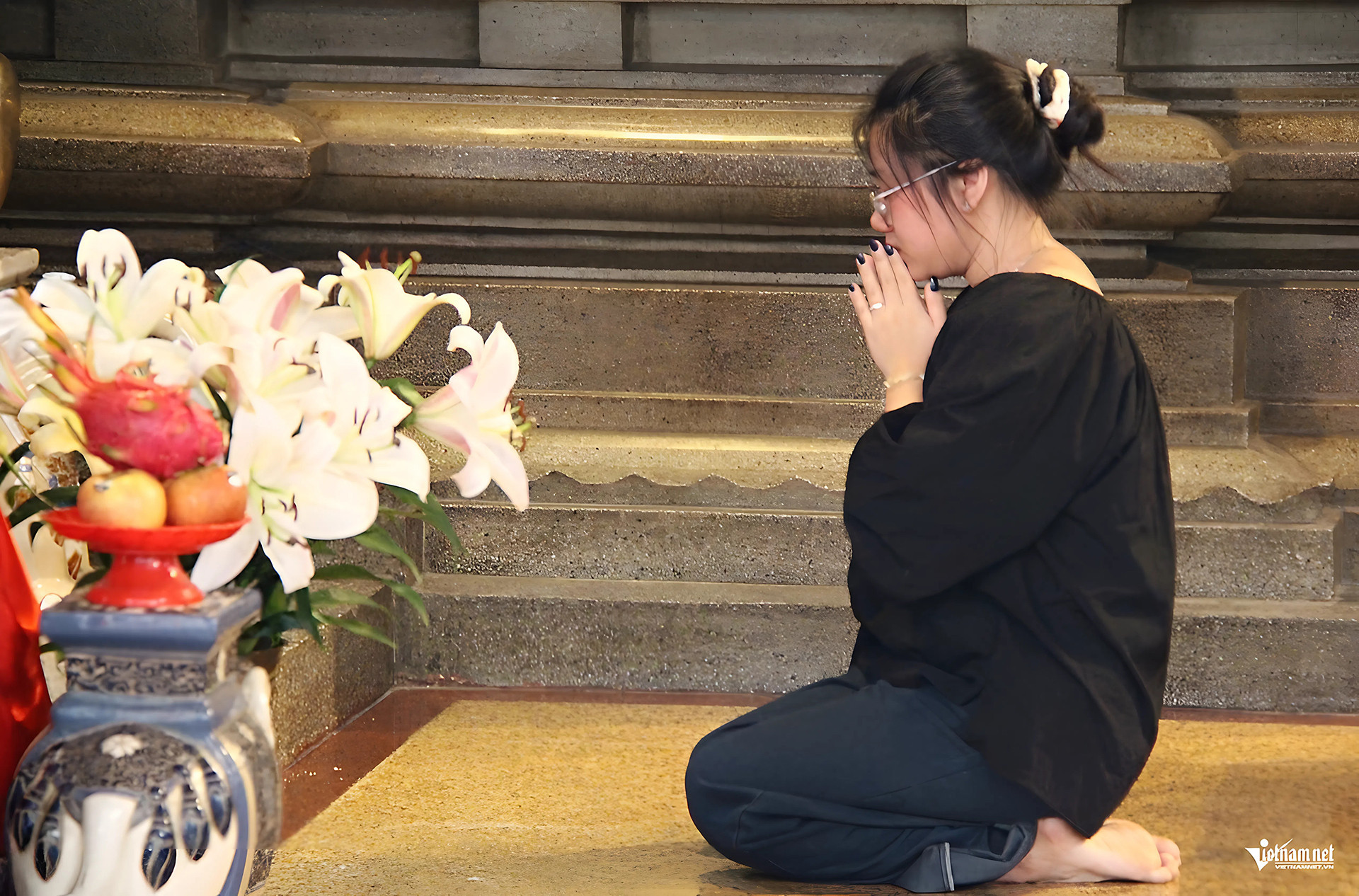
Offerings such as incense, candles, rice, and salt are placed outside the fence. Worshippers and guests make their devotions at this point.
Inside the sanctum, flanking the statue of Mariamman are figures of Maduraiveeran and Pechiamman, both protector deities of the temple.
According to an information plaque, Mariamman Temple was constructed in the late 19th or early 20th century and has undergone several renovations since.
From 1950 to 1952, Indian artisans of Tamil descent, known for their craftsmanship, rebuilt the temple based on traditional South Indian temples seen in India, Sri Lanka, Malaysia, and Singapore.
During that renovation, most building materials and decorative items were imported directly from India. Since then, the temple has maintained its current architectural style.
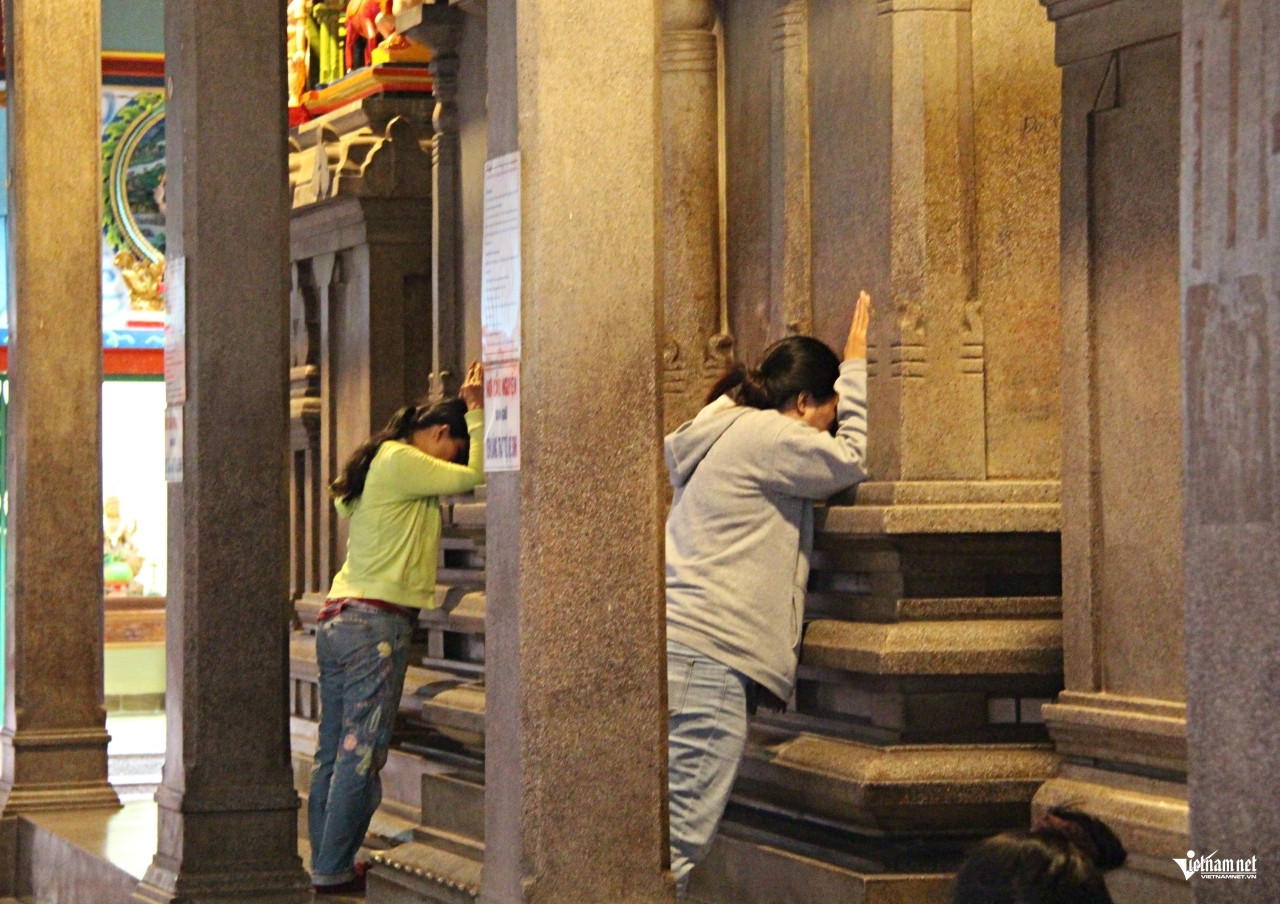
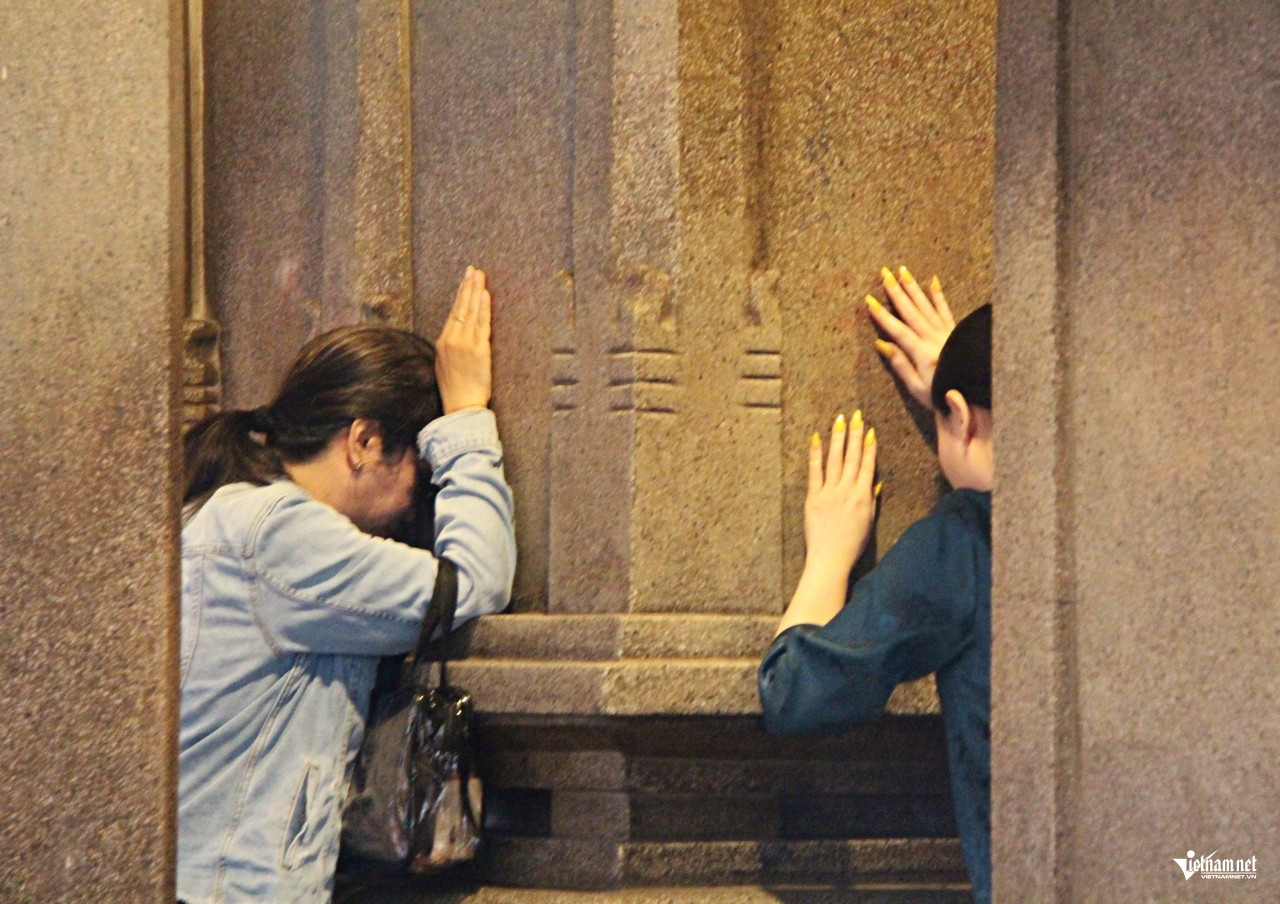
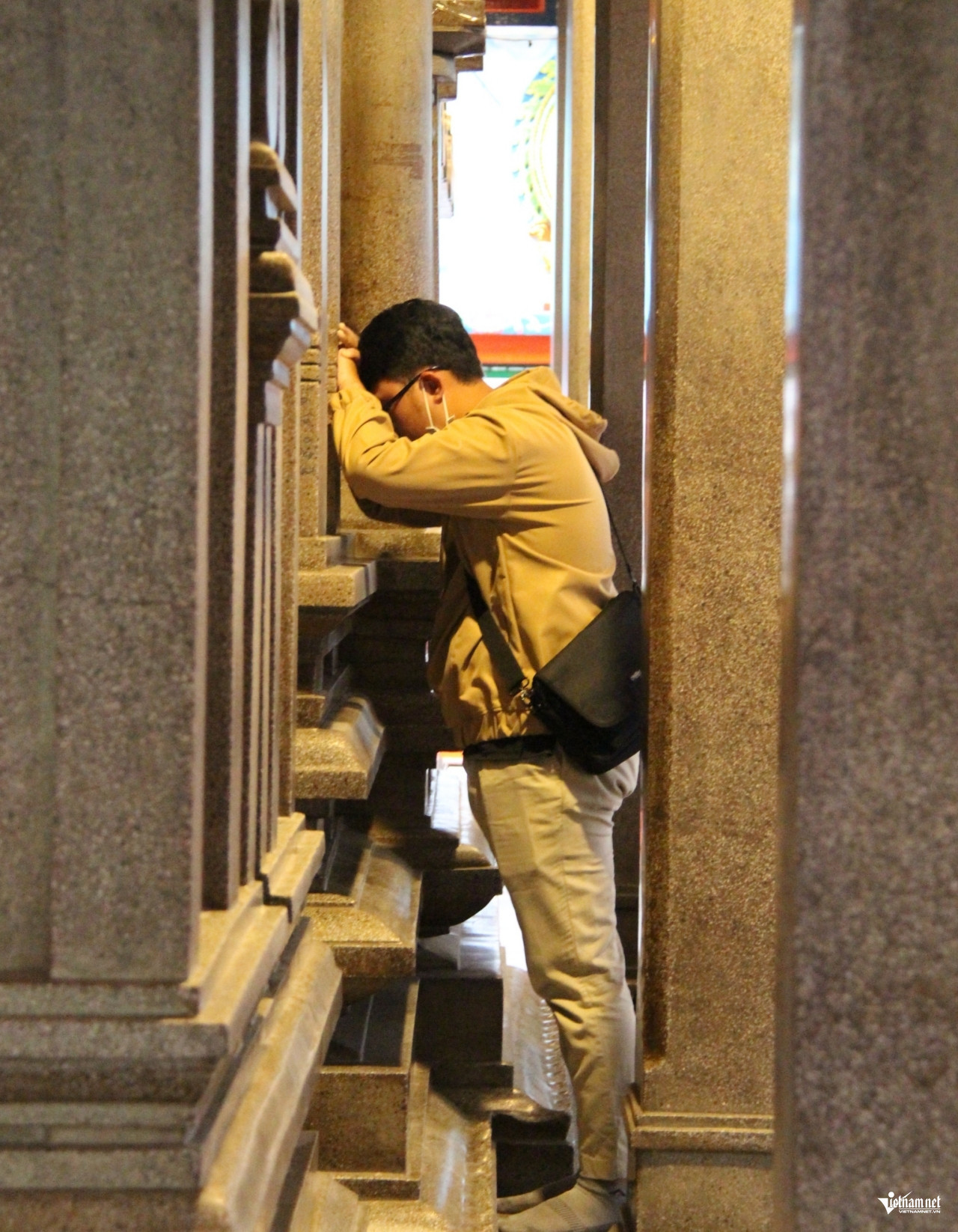
Pressing their faces to stone in prayer
Every day at 10:00 AM and 7:00 PM, the temple holds a fire offering ceremony lasting about 30 minutes. It symbolizes prayers for favorable weather and prosperity. Many believe that those attending the ritual will receive divine blessings.
The temple welcomes not only Hindu devotees but also people of all beliefs, who come to pray, observe, or seek peace of mind.
After offering incense in the main hall, visitors often circle to the back of the sanctuary for personal prayers.
There, they press their faces against ancient stone slabs imported from India, spreading both hands wide so all five fingers touch the stone. Some gently tap the wall while whispering their wishes in quiet reverence.
After praying, devotees receive small tokens known as "gifts from the goddess," which may include a flower petal wrapped in red paper or small amounts of rice and salt - symbols of prosperity and good fortune.
Khanh, 29, said he isn’t a Hindu but visits the temple regularly to pray because he believes in the sacred energy of the site.
Que Tran, 22, also visited for the first time to find spiritual peace.
“I spent hours exploring the temple,” she said. “What impressed me most was the quiet atmosphere and the absence of heavy incense smoke.”
“The architecture and colorful decorations left a strong impression. Even though it was my first visit, the place felt incredibly sacred,” she added.
“I offered incense and prayed for health and luck for myself and my family.”
 |
 |
 |
 |
 |
 |
.svg)
