 Vietnamnet.vn

 Podcast



The journey of heritage revival
The Complex of Hue Monuments (in Hue city), Hoi An Ancient Town, and My Son Sanctuary (in Da Nang city) were inscribed on the UNESCO World Cultural Heritage List in 1993 and 1999. Since then, they have experienced a remarkable transformation, regaining their splendour and significance on the global stage.

The Complex of Hue Monuments was Vietnam’s first UNESCO-listed world cultural heritage site, recognised in December 1993. Over nearly four centuries (1558–1945), Hue served successively as the capital of the nine Nguyen Lords in the South, the imperial seat of the Tay Son Dynasty, and the national capital under the 13 Nguyen emperors.
The mention of Hue evokes images of grand citadels, golden palaces, solemn temples, tranquil pagodas, and poetic landscapes shaped by both nature and history.

Constructed between the late fourth and 13th centuries under King Bhadravarman 1, My Son Sanctuary was dedicated to the Hindu god Shiva and became the most important religious and cultural centre of the ancient Champa Kingdom. The sanctuary, featuring an extensive complex of Hindu temples, was recognised as a world cultural heritage site by UNESCO in December 1999.
The temples of My Son exemplify the Champa religious architecture. Built primarily of brick using sophisticated techniques, they feature intricate carvings, decorative stone pillars, and sandstone sculptures depicting Hindu deities and legends.

Located by the Cua Dai estuary, Hoi An Ancient Town flourished from the 16th century as one of the region’s busiest trading ports. Merchants from China, Japan, the Netherlands, India, and Spain once gathered here, giving rise to a distinctive fusion of Eastern and Western influences in the town’s architecture and culture. Earning the UNESCO recognition in December 1999, Hoi An has since been the focus of extensive conservation efforts.

The revival and international acclaim of Hue, Hoi An, and My Son are closely linked to the contributions by Polish architect Kazimierz Kwiatkowski (1944–1997), commonly known as Kazik. Arriving in Vietnam in the early 1980s under a cooperation programme between the two Governments, Kazik helped restore the Cham towers in My Son. Recognising the global significance of Hue and Hoi An, he tirelessly advocated their preservation and promoted their values to the world.
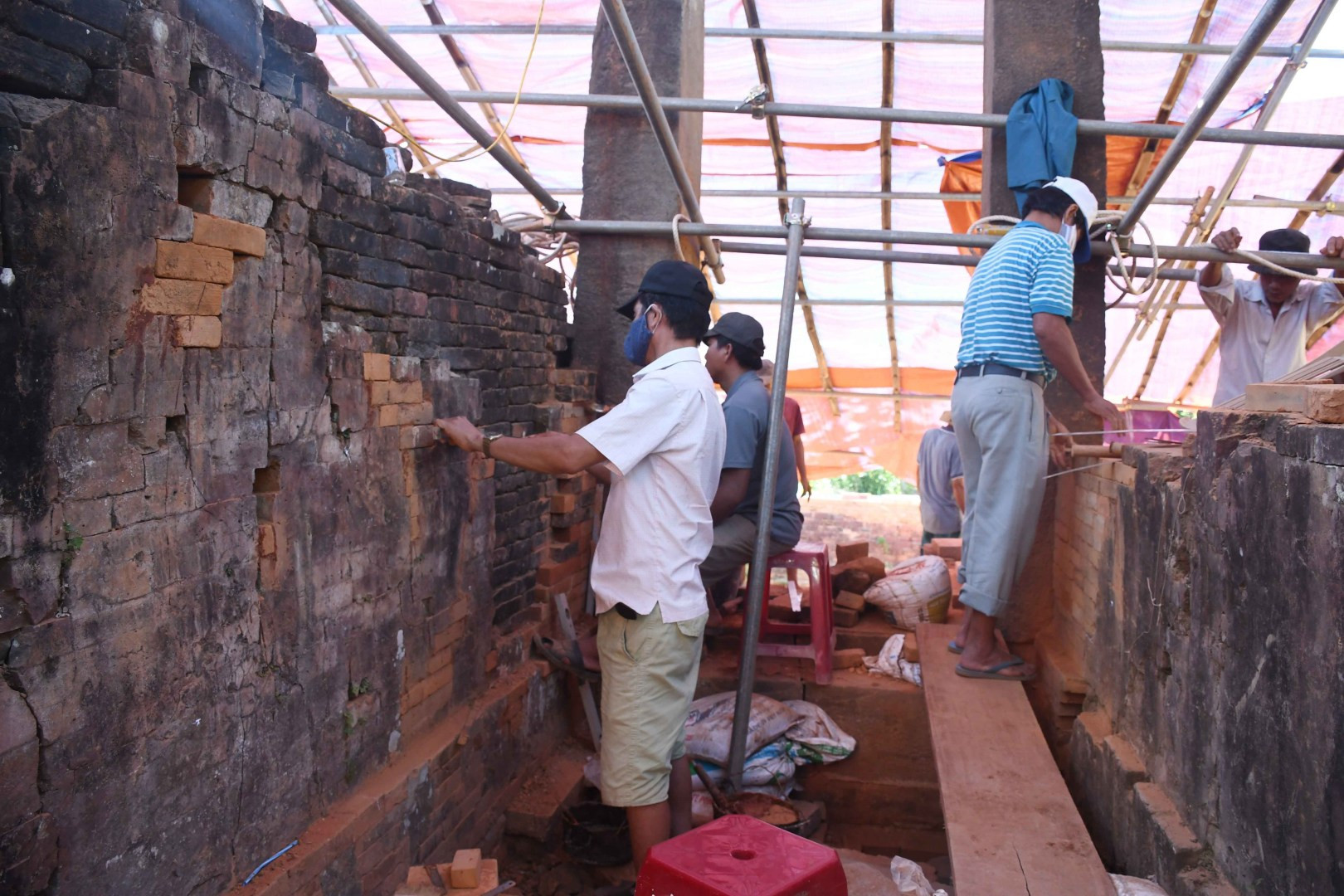
Between 1997 and 2022, My Son’s restoration made great strides through partnerships with Italy and India, focusing on the restoration of tower groups G, H, K, and A. India is currently assisting with the rehabilitation of groups E and F, carried out between 2025 and 2030.
Decades after their UNESCO recognition, the cultural jewels of central Vietnam – Hue, Hoi An, and My Son – have been revitalised through strong state investment and international collaboration. Today, they continue to move forward on a path of sustainable development.
In response to the global trend of digital transformation in tourism, the three world heritage sites have embraced technology by introducing e-ticketing systems and digitalising artefacts and monuments. These innovations aim to not only popularise their images but also provide essential tools for conservation and restoration.

The My Son World Cultural Heritage Management Board has accelerated digitalisation to build a smart tourism ecosystem. The website myson360.vn offers visitors 3D and 360-degree perspectives of the temples, while My Son Metaverse/VR 360 integrates a virtual tour guide for immersive exploration.

Recognising the importance of digital preservation, the Hue Monuments Conservation Centre has collaborated with technology firms to 3D-digitise about 11,000 artefacts. The virtual exhibition space museehue.vn allows visitors to explore and learn more about Hue’s historical relics online.

Experts note that heritage digitalisation is essential for scientifically documenting and managing restoration work across different historical periods.
In Hoi An, digital transformation has also expanded into tourism management, environmental monitoring, traffic system, and initiatives to improve residents’ quality of life.
Local authorities continue to mobilise community participation and social resources to safeguard and enhance the heritage values of these cultural landmarks.
Heritage as a gateway to the world
With their exceptional universal values, the Complex of Hue Monuments, My Son Sanctuary, and Hoi An Ancient Town serve as gateways introducing Vietnam’s traditional culture to the world, and as vital “gold mines” for the central region’s tourism industry.
Thousands of visitors flock to these sites daily, drawn by the harmonious blend of tangible and intangible heritage, where traditional culture meets modern innovation.


In Hue, the re-enactment of royal rituals as stage performances has emerged as a distinctive tourism product, vividly recreating imperial culture and historical narratives for visitors.
German visitor David Raum expressed his enthusiasm after witnessing the Changing of the Guard ceremony at Ngo Mon (Noon Gate): “Such programmes are fascinating and emotional, allowing visitors to step back in time and truly connect with the site’s history.”

The Hue Festival has become a hallmark cultural and tourism brand. Through regular and creative editions, the festival reinforces Hue’s position as Vietnam’s national and international “Festival City”, showcasing the splendour of its heritage.

In Hoi An, well-known events such as the Full Moon Night, Lantern Festival, and Hoi An – Japan Cultural Exchange Festival, alongside the daily life of residents and traditional craft villages, continue to attract millions of visitors. The town expects to welcome around five million tourists in 2025.

Hue and Da Nang are two of Vietnam’s leading tourism hubs, where heritage tourism plays a central role in driving the sustainable development of the “smokeless industry”.
With today’s convenient transport connections, visitors can easily travel between the three world heritage sites. In recent years, these destinations have recorded a rising visitor number and growing tourism revenue.
The enduring appeal of the Complex of Hue Monuments, Hoi An Ancient Town, and My Son Sanctuary demonstrates that when cultural heritage is cherished and creatively promoted, it becomes a valuable and lasting resource for sustainable tourism, contributing to Vietnam’s global image and sharing the nation’s cultural essence with the world./. VNA
.svg)
