 Vietnamnet.vn

 Podcast



Recycled water from the West Lake Wastewater Treatment Plant has helped stabilize water levels year-round and can be used to support the To Lich River when needed. But is that enough?
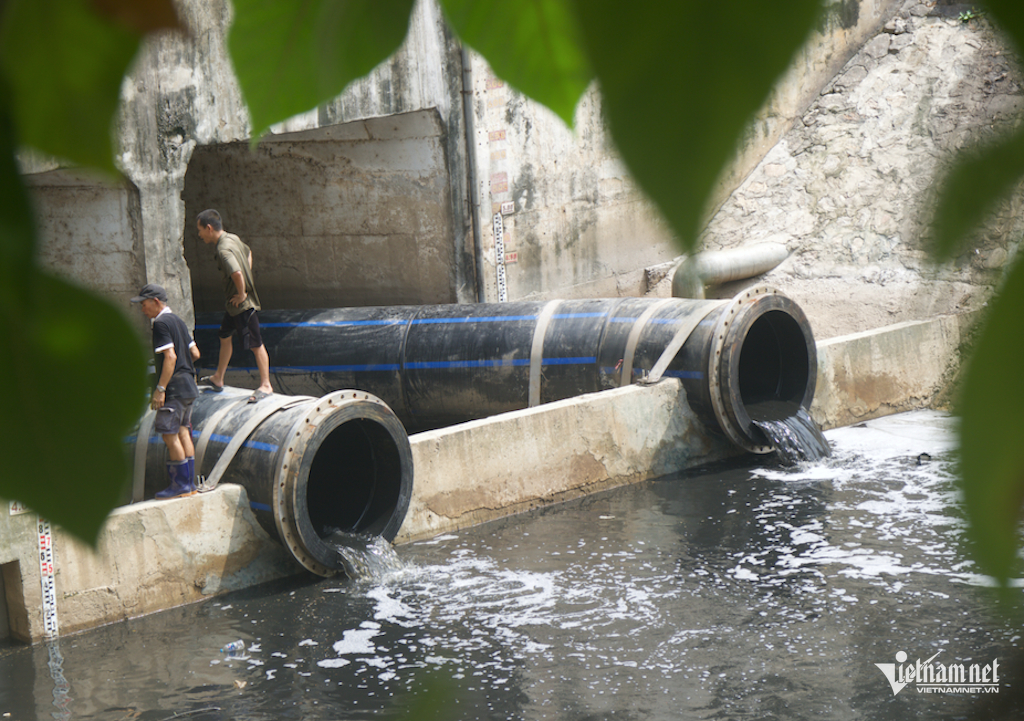
Speaking with VietNamNet, Dr. Architect Dao Ngoc Nghiem, Vice Chairman of the Vietnam Urban Planning and Development Association, emphasized the importance of regularly replenishing the To Lich River to maintain its flow.
However, Nghiem expressed concern about the long-term sustainability of this approach, especially during the dry season when water levels in West Lake tend to drop. He questioned whether West Lake could consistently provide sufficient water to the To Lich River and whether relying solely on this source would ensure a stable, continuous flow.
Others have raised concerns about the quality of West Lake’s water, which has shown signs of deterioration in recent years. Notably, during seasonal transitions, the lake often sees incidents of mass fish deaths, prompting fears that diverting its water to the To Lich River might not improve pollution and could even worsen it.
A representative of the West Lake Management Board noted that West Lake is the largest natural freshwater lake in downtown Hanoi. Currently, the West Lake Wastewater Treatment Plant processes about 13,000 cubic meters of urban wastewater per day. The treated water meets national environmental standards, as certified by authorities under Discharge Permit No. 109/GP-BTNMT issued by the Ministry of Agriculture and Environment on January 24, 2017.
Instead of discharging treated water directly into the Nhue River as in the past, Hanoi is now reusing this resource to refill West Lake. The management board considers this an essential and beneficial strategy.
In early February, Hanoi Chairman Tran Sy Thanh tasked the former Tay Ho District People’s Committee with developing a plan to use both treated water from the West Lake Wastewater Plant and water from the Red River to replenish West Lake via an intermediary reservoir, Sen Lake. From there, the water would be channeled into the To Lich River.
According to the West Lake Management Board, the Tay Ho District People’s Committee approved the investment policy for the project on February 27. By August 30, piping systems and control valves had been installed and opened to deliver treated wastewater into the vegetated filtering system at Sen Lake 1. After preliminary settling and storage, this water is available to refill West Lake when necessary.
This reuse system helps maintain a stable water level in West Lake, allowing it to supplement the To Lich River during critical periods. It not only enhances water circulation but also contributes to improving the river’s water quality.
In practice, the water being diverted from West Lake to the To Lich River has already undergone basic treatment, which helps reduce the risk of further pollution and reflects Hanoi’s commitment to sustainable urban water management.
Multiple water sources to support the To Lich River
In addition to West Lake, by September 20, the Hanoi Infrastructure and Agricultural Project Management Board will begin supplementing the To Lich River with treated water from the Yen Xa Wastewater Treatment Plant. The daily flow rate from this source will be approximately 200,000 cubic meters.
With both West Lake and Yen Xa contributing treated water, the To Lich River is expected to maintain a continuous flow with a combined volume of around 200,000 cubic meters per day, keeping the water level steady at approximately 3.5 meters.
Moreover, on July 30, the Hanoi People's Committee issued Decision No. 4010/QD-UBND, assigning the Department of Construction to coordinate with a private company to prepare an investment proposal for an additional water replenishment project for the To Lich River. This proposal includes the option of drawing water from the Red River through the Lien Mac sluice gate.
These steps are seen as critical parts of Hanoi’s broader strategy to improve the water quality of urban rivers, particularly the To Lich River, which has long been plagued by dark, foul-smelling, polluted water.
N. Huyen
.svg)
