 Vietnamnet.vn

 Podcast



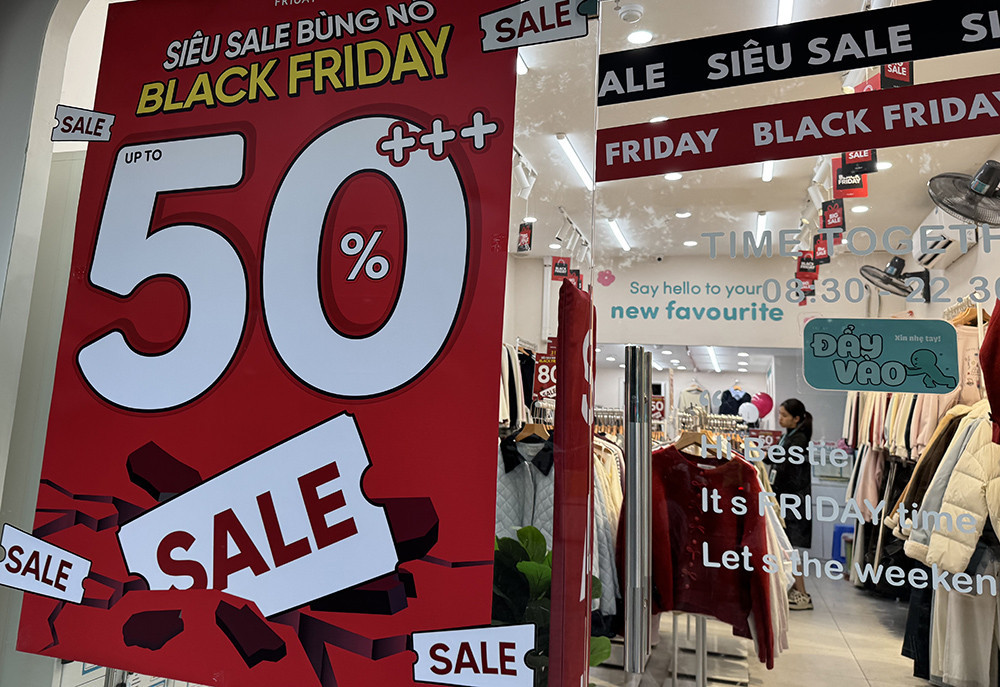
With nearly one week left until Black Friday (November 28, right after Thanksgiving on November 27), a survey of several fashion streets in Hanoi shows that both small and large stores have already put up promotion signs with “shock” discounts of up to 70-80 percent and buy-one-get-one-more deals. The promotion period runs from mid-November until the end of December.
However, contrary to expectations, customer numbers on fashion streets remain sparse. Sales staff say this year’s discount programs started early to stimulate demand, but customer traffic has barely increased.
“The store started Black Friday promotions early this week with discounts up to 80 percent, but very few customers come in. Consumers don’t seem excited about year-end shopping,” a staff member on Chua Boc Street said.
A similar situation is reported in the Linh Dam area. Hoang (manager of a men’s fashion shop) said: “We hoped this period would attract shoppers, but it’s still very quiet. Customers may be tightening their spending.”
Many customers say they are no longer excited about aggressive promotions because “fake discounts” are too common. Product prices are inflated beforehand and then reduced, making deep discounts unreliable. Some have previously bought low-quality, outdated, or leftover items during these sales, leading them to shop more cautiously.
The trend of cutting back on spending also makes shoppers more selective. They prioritize essential items and strictly control personal expenses rather than shopping for excitement. Additionally, the shift to online shopping is making it harder for traditional stores to attract customers.
Minh Anh (28, Linh Dam) said: “The 80 percent discount is just what’s written on the sign. The listed prices are usually inflated beforehand, so the real discount is only around 30-40 percent. Most items are leftover stock from previous seasons, and the quality isn’t good.” She now mainly shops online, which is cheaper and easier to compare prices.
According to Thu Hang (32, Ha Dong), these promotions are no different from regular sales throughout the year, so they no longer feel special. Although the sign says 80 percent off, when she looked inside, most items were old designs, leftover stock, and difficult-to-match colors.
Today, shoppers prefer buying online because it’s easier to compare prices and check reviews. Shopping in-store takes time, yet the prices are not necessarily better. Online platforms also offer discount codes and free shipping.
Stores are still hoping sales will rise in the coming weeks as the year-end shopping season approaches. In addition to in-store promotions, many brands are expanding online sales, increasing livestream sessions, and collaborating with e-commerce platforms to reach customers more effectively.
Duy Anh
.svg)
