 Vietnamnet.vn

 Podcast



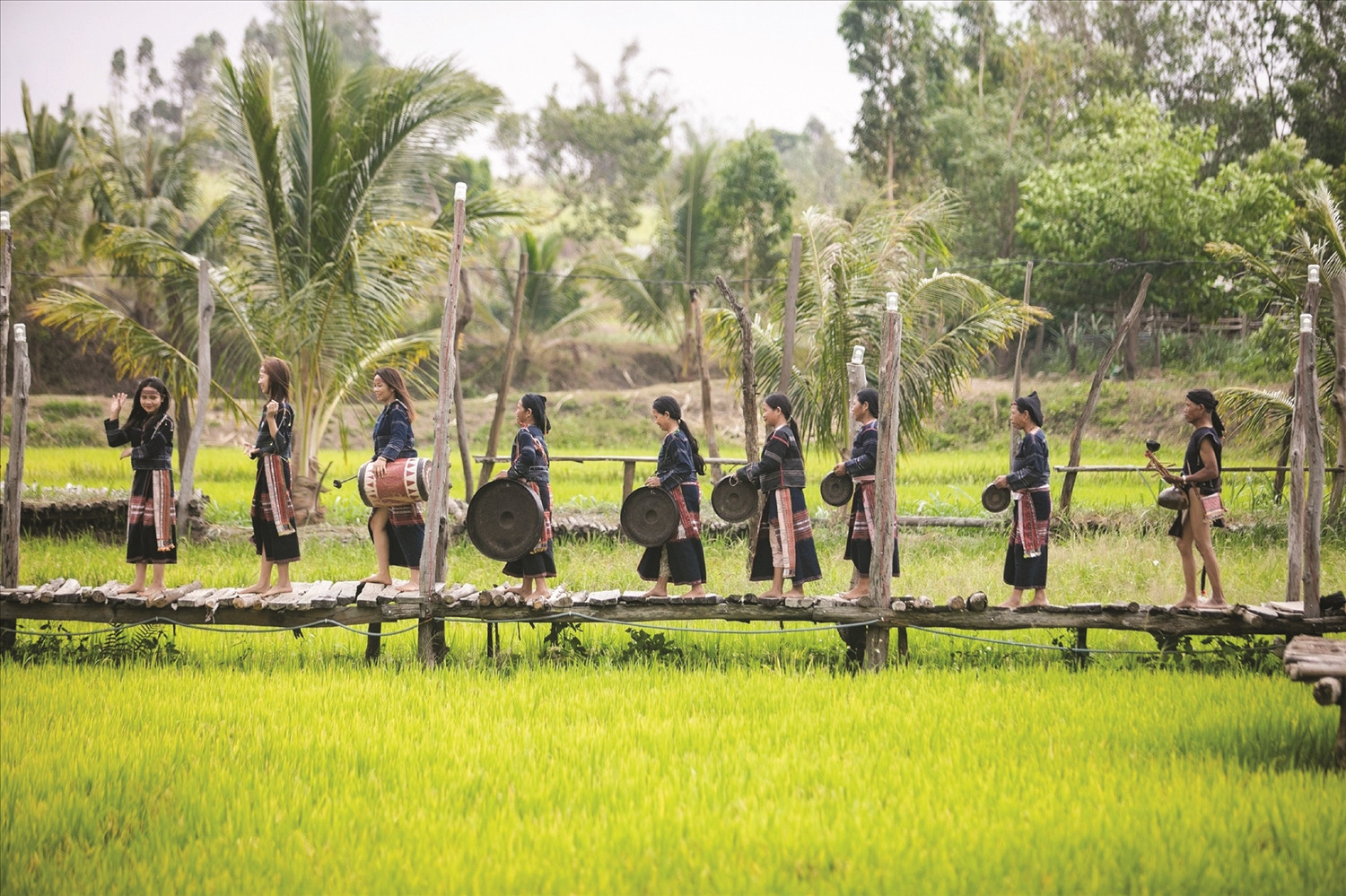
Under the canopy of the Eastern Truong Son mountains
To Tung Commune, once home to the legendary resistance village of Stor and Bok Nup, immortalized in Nguyen Ngoc’s novel The Rising Country, is a land rich in Central Highlands heritage.
Located along the Eastern Truong Son route, the commune is now a merger of the former To Tung and Kong Long Khong communes, a region deeply rooted in Ba Na ethnic traditions. Today, the Ba Na people here are striving to preserve their ancestral heritage, with gong culture considered a sacred treasure.
To Tung is home to numerous gong ensembles of all ages. In Mo Hra Dap village alone, there are five gong teams with over 60 members, including two children's groups. The K'giang village team has 45 players, Stor’s has over 40, and Leng village’s has nearly 60.
What sets To Tung apart is the emergence of all-female gong teams. These women have banded together, breaking through cultural taboos that for generations barred them from playing gongs - once a role strictly reserved for strong men in the village.
Resonance from resilience
Traditionally, Ba Na customs prohibited women from playing gongs. But in recent years, female participation has been embraced and even expanded. While their playing style may not have the same force as male players, it offers a uniquely graceful and captivating rhythm.
From their hands come melodies that are both powerful and tender - echoing the delicate steps of deer by a stream, the rushing force of a mountain waterfall, or the quiet whispers of a woman bidding farewell to her love as he sets off to protect the village.
Across villages like Stor, Leng, K’giang, and Mo Hra Dap, village elders are now the ones teaching women how to carry, play, and coordinate gong rhythms. A typical Ba Na gong set consists of 6 to 12 instruments, each producing a distinct tone. When played together in harmony, they create a rich, resonant tapestry that demands rigorous group practice.
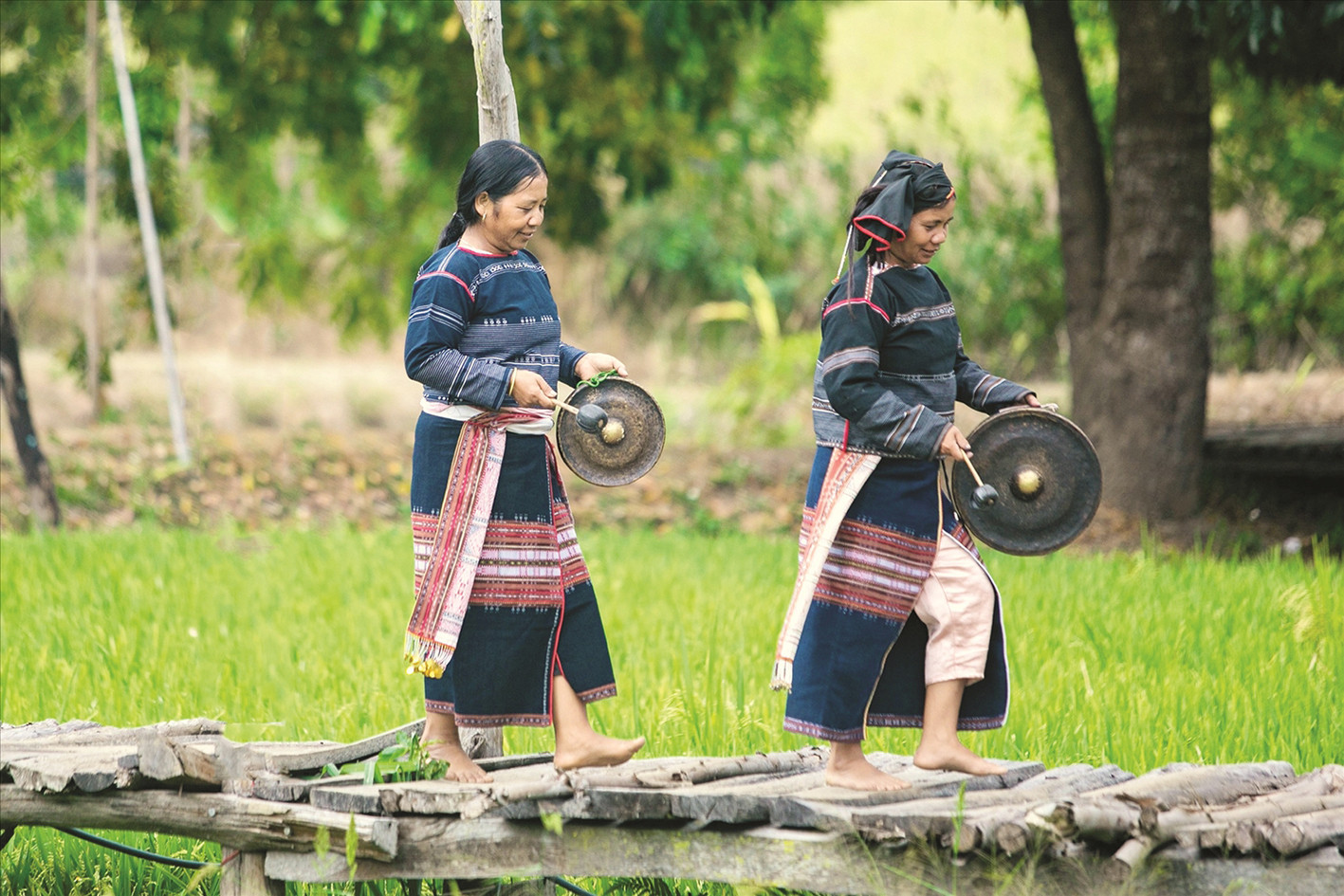
Village elder Dinh Munh of Mo Hra Dap shared that he regularly gathers women at the communal house in the evenings or on weekends to teach them gong and traditional xoang dances. These women have been learning under his guidance for many years.
Gong music is a vital part of ceremonies like the new rice festival, water blessing, weddings, and ancestral rites. Each occasion calls for different gong arrangements, symbolizing reverence for the gods, nature, or prayers for peace and prosperity.
After days working in the fields, the women reconvene to rehearse. Some teams even feature three generations of performers. In K’giang village, Meritorious Artisan Dinh Thi Hien and her daughters - Dinh Thi Hai, Dinh Thi Hang, and Dinh Thi Bem - are all skilled players.
New life and new colors for gong heritage
Female participation has breathed new life into the ancient art of gong music, playing a critical role in its preservation and revitalization across the Central Highlands. In Gia Lai alone, over 40 all-women gong teams have formed, with thousands of Ba Na and Gia Rai women taking part.
These ensembles not only enrich local festivals but also elevate the profile of ethnic cultural identity. Many have boldly stepped onto larger stages, from urban “Weekend Gong” showcases to the Central Highlands Gong Festival and national cultural events. Thanks to their involvement, cultural preservation efforts have gained renewed momentum.
To Tung has also introduced gong performances into community tourism. This has become an important livelihood source, supporting both preservation and sustainable development.
Le Thanh Son, Chairman of the To Tung People’s Committee, noted that local community-based tourism villages - such as the former resistance village of Stor, Mo Hra Dap village, and the eco-tourism model in K’giang - have all leveraged gong culture to generate income for performers.
Gong music now plays a growing role in local economic and social development, creating jobs and enriching the spiritual and material lives of residents. It embodies the philosophy of “heritage nurturing heritage.”
To safeguard this legacy, Gia Lai Province launched the 2023–2025 Project on Preserving and Promoting the Cultural Space of Central Highlands Gong Heritage. The project aims to protect the unique identities of the Ba Na and Gia Rai people in Gia Lai and, more broadly, the cultural diversity of ethnic communities across Vietnam.
Minh Ngoc
.svg)
