 Vietnamnet.vn

 Podcast



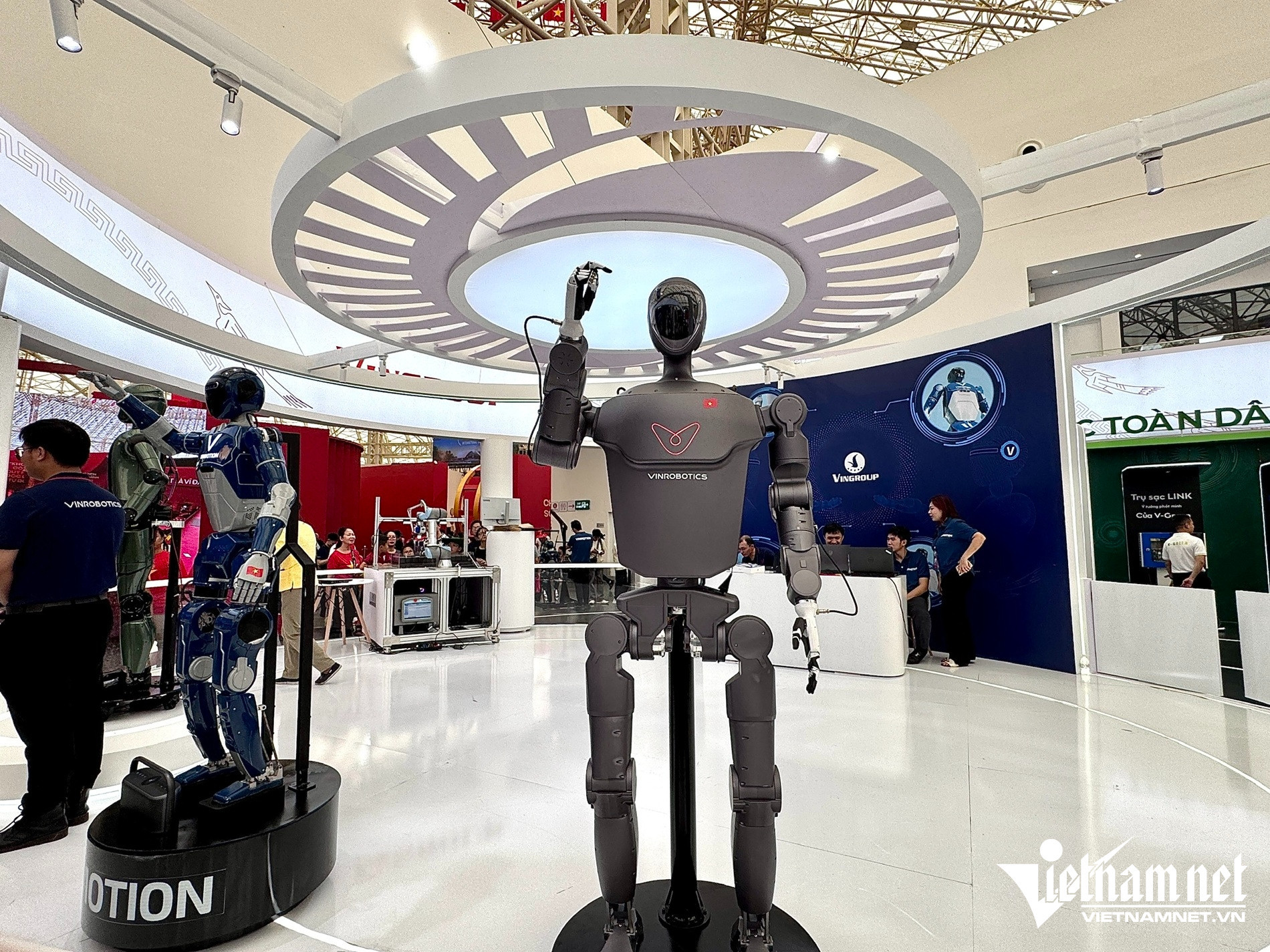
According to Thang, Vietnam is taking bold strategic steps in institutional frameworks, computing infrastructure, financial resources, and human capital to realize its ambition.
“Vietnam cannot remain a follower, merely using technologies developed by others. Our aspiration is to become a leader, gradually achieving mastery, autonomy, and digital sovereignty in AI,” he stressed.
Regarding legislation, if passed during this parliamentary session, Vietnam will become one of the first countries in the world - alongside the EU, South Korea, and Japan - to enact a dedicated law on artificial intelligence.
According to Thang, the core spirit of Vietnam’s AI law is not to impose restrictions but to create an open, safe legal corridor based on risk management that fosters innovation.
On computing infrastructure, the State is leading efforts to build high-performance computing (HPC) centers on a far larger scale than current capabilities. The goal is self-reliance in computing power, eliminating dependence on any single enterprise or foreign country in strategic situations.
“We need Make in Vietnam chips, and we need Vietnamese-led solutions in design, packaging, and testing to build these supercomputers. AI infrastructure development is a massive opportunity for the domestic semiconductor industry,” said Thang. He emphasized that self-sufficiency in infrastructure is the biggest opportunity for Vietnamese chipmakers.
On funding, in addition to existing funds such as NAFOSTED and NATIF, Vietnam is developing a National AI Development Fund and an “AI Voucher” scheme to directly support businesses applying AI, creating strong demand in the market.
On human resources, Thang referred to the new generation of "dual-skilled" talent - those who deeply understand both semiconductor hardware and advanced AI algorithms - as Vietnam’s “most valuable asset” for long-term technological sovereignty.
Earlier, in his opening remarks, Hoang Trung Hieu, Deputy Director of the National Innovation Center under the Ministry of Finance, affirmed AI’s decisive role in transforming Vietnam from a traditional manufacturing economy into a knowledge-based, innovation-driven ecosystem.
The government has designated AI as a top national strategic priority to boost the country’s position in the global value chain.
AI is rapidly reshaping how high-tech manufacturing processes are designed, managed, and optimized. According to the Organisation for Economic Co-operation and Development (OECD), AI is projected to contribute over $15 trillion to the global economy by 2030.
In the semiconductor sector, AI enhances productivity, precision, and supply chain resilience while supporting the shift toward automated, intelligent factories.
In recent years, the Vietnamese government has issued numerous policies to promote AI development and application. Innovation and AI have been identified as core national strategic priorities through 2030, with a long-term vision extending to 2045.
Vietnam has also released a list of Strategic Technologies and Products, with AI receiving the highest priority, reaffirming the country’s commitment to making artificial intelligence a driving force for high-tech growth.
“AI and semiconductors are two sides of the same coin - the twin wings of Vietnam’s economic takeoff,” said Thang.
Accordingly, the State pledges to cultivate a vibrant, innovative, and autonomous AI ecosystem. The government will act as the “conductor” connecting the three pillars: government, academia, and industry.
Moreover, the State will also be the largest client, proposing grand, challenging problems to attract businesses, universities, and research institutions to co-create solutions.
Du Lam
.svg)
