 Vietnamnet.vn

 Podcast



Tran Tuyen
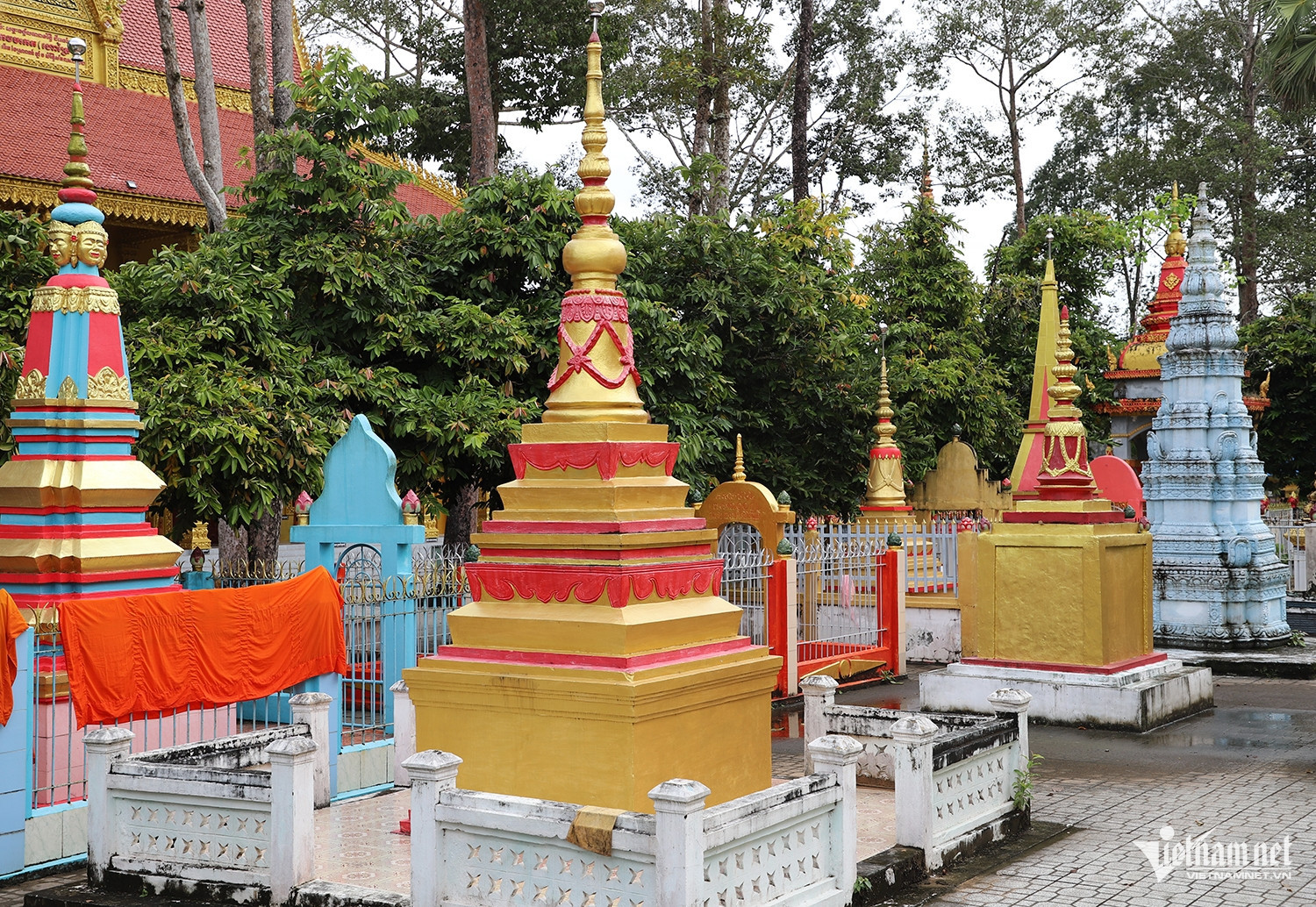
According to records kept at the temple, the structure - spanning 6.5 hectares - dates back almost 500 years. It was officially recognized as a provincial-level architectural heritage site in 2017.
The temple complex features a central hall, the Mach Cha Ling pond, a Tripitaka tower, sala (ceremonial pavilion), crematorium, monks’ residences, and a guest house.
A sacred discovery rooted in legend
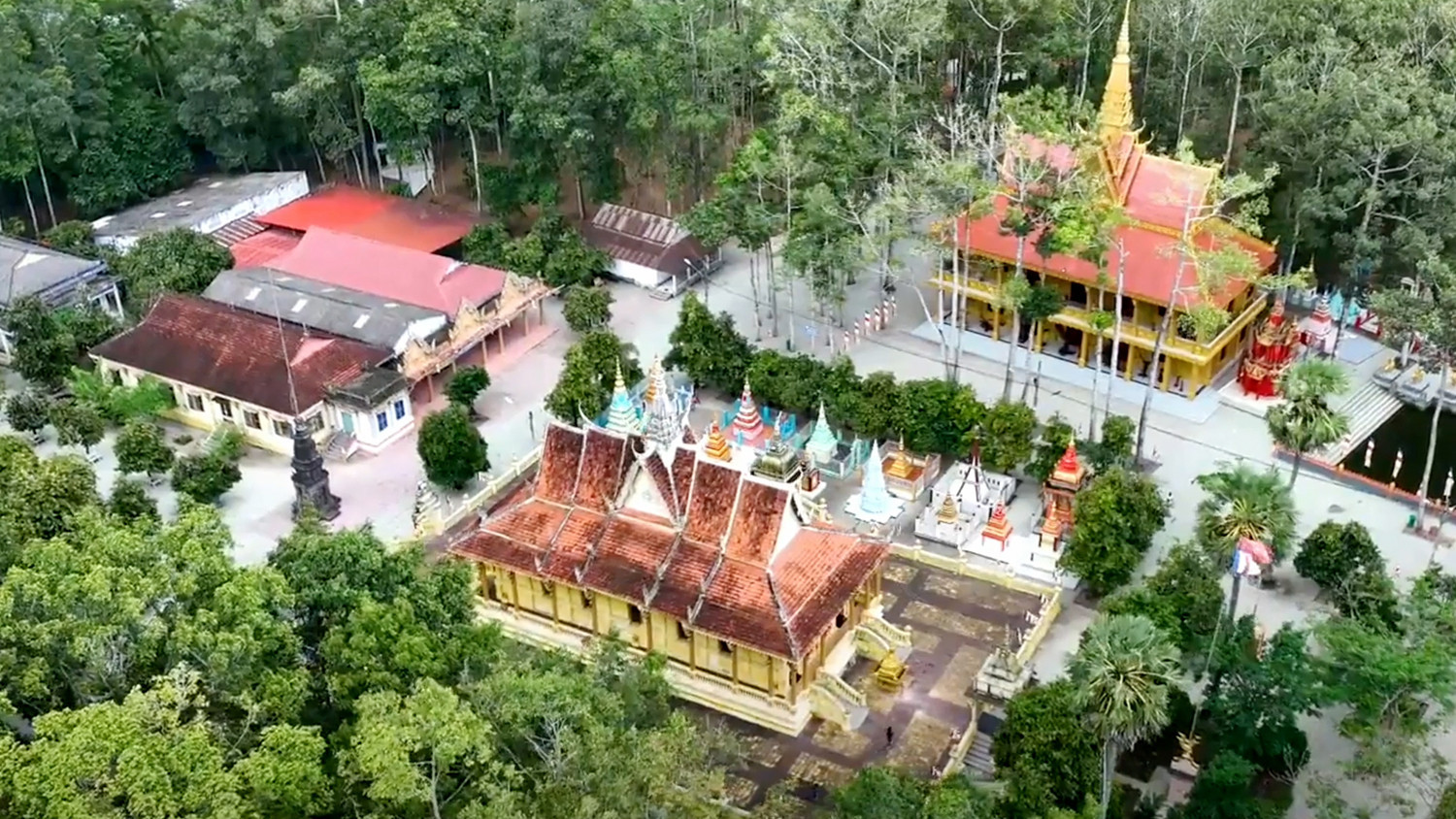
According to local legend, in the early 16th century, Khmer settlers clearing virgin land for farming stumbled upon a four-faced stone Buddha statue, each face looking in a different direction.
Interpreting this as a divine omen, villagers came together in 1537 to build a temple and enshrine the sacred statue. The original structure was a modest hut made of bamboo, earth, stone, and wood.
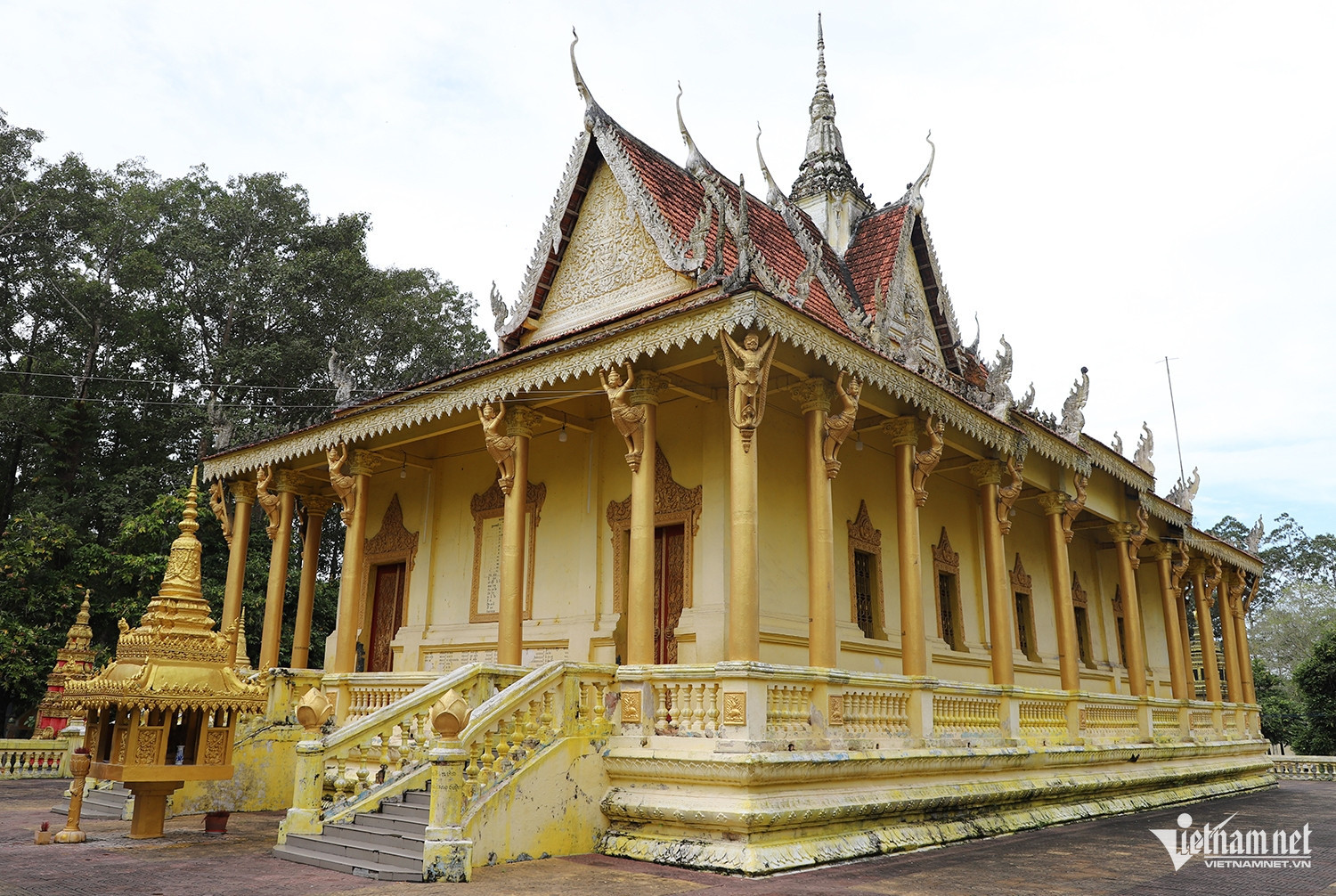
Over the centuries, the temple underwent three major renovations and has since evolved into one of the Mekong Delta’s most remarkable examples of traditional Khmer architecture.
The roof edges are carved in the shape of mythical Naga serpents, while its lower sections are decorated with images of the goddess Kâyno, whose serene, benevolent face is meticulously sculpted.
Guarding the junction between roof and columns stands Krud, the Garuda bird of Hindu-Buddhist mythology, symbolizing the strength that upholds the hall.
A spiritual landscape steeped in culture
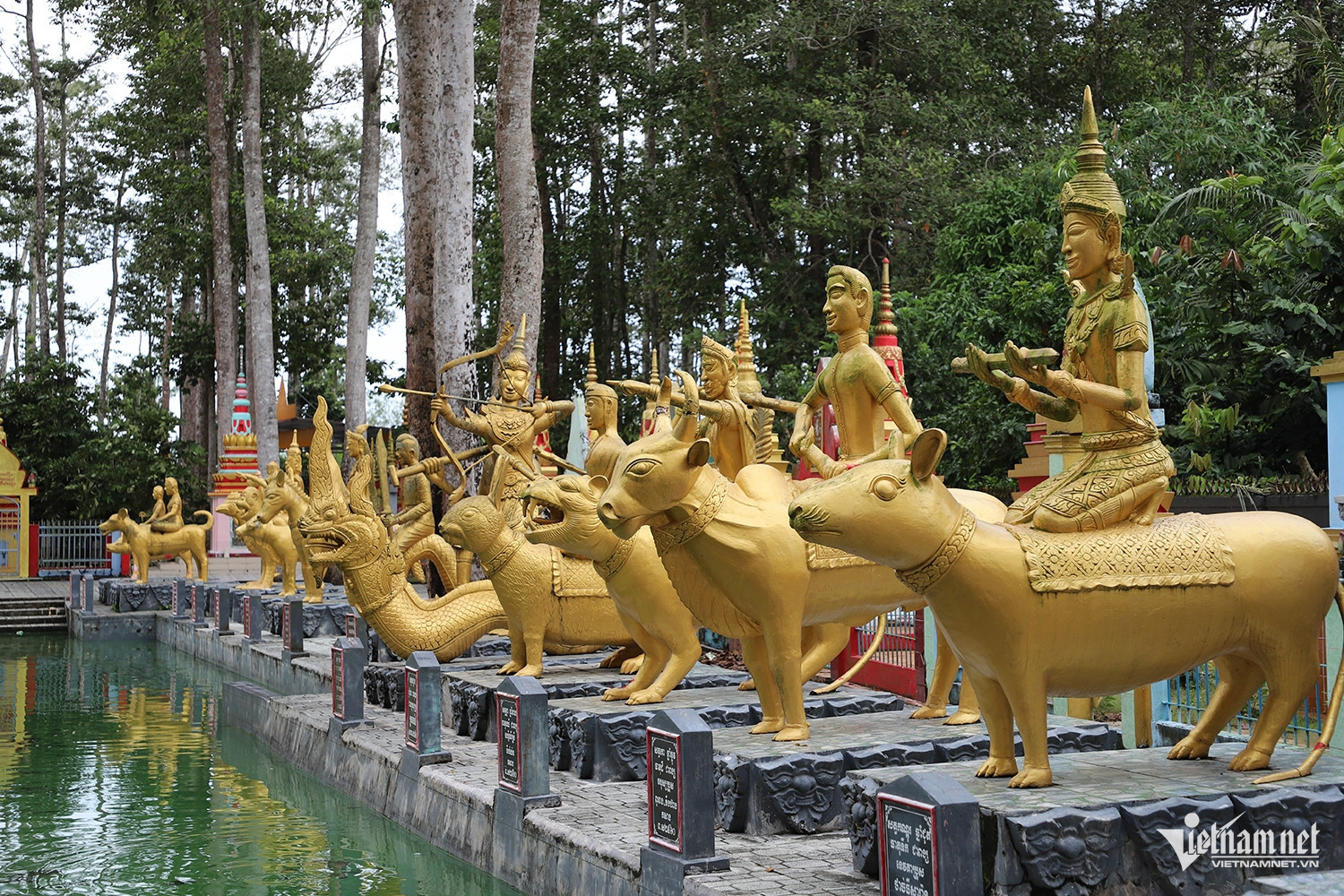
One of the temple’s architectural highlights is the Mach Cha Ling Pond, adorned with a 20-meter tower. Inside sits a statue of Buddha resting upon a seven-headed Naga serpent - a powerful spiritual symbol.
Encircling the pond are statues of the twelve zodiac animals, blending spiritual symbolism with cultural tradition.
Flourishing with age: Living treasures in bloom
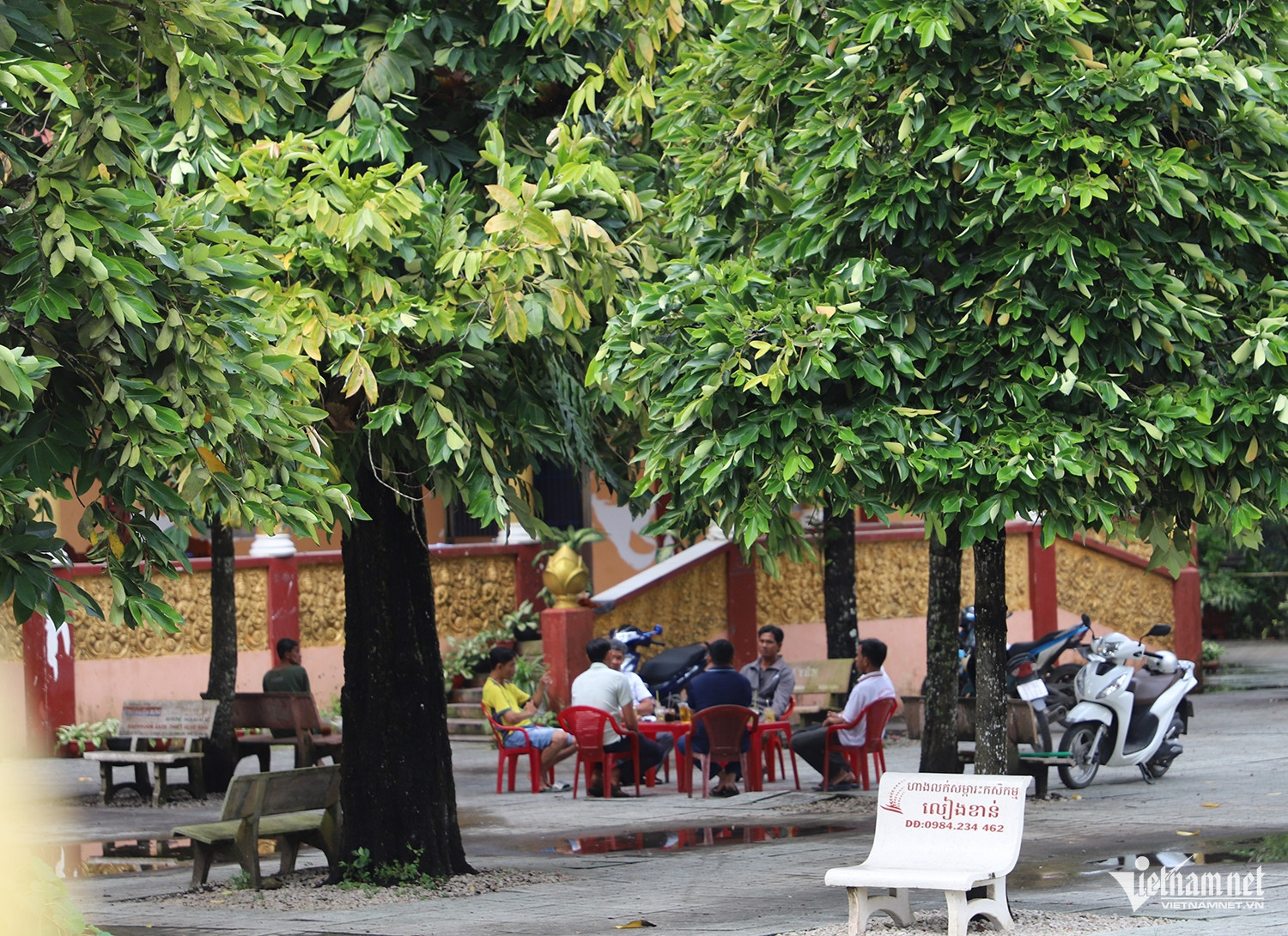
Adding to the pagoda’s unique charm are ancient Damask rose trees, scattered across the temple grounds. Some of these rose trees are hundreds of years old, regarded as botanical treasures that have drawn curious visitors and heritage enthusiasts from near and far.
For the local Khmer community and visitors alike, the temple is more than a place of worship - it is a sacred guardian of culture, memory, and belief passed down through generations.
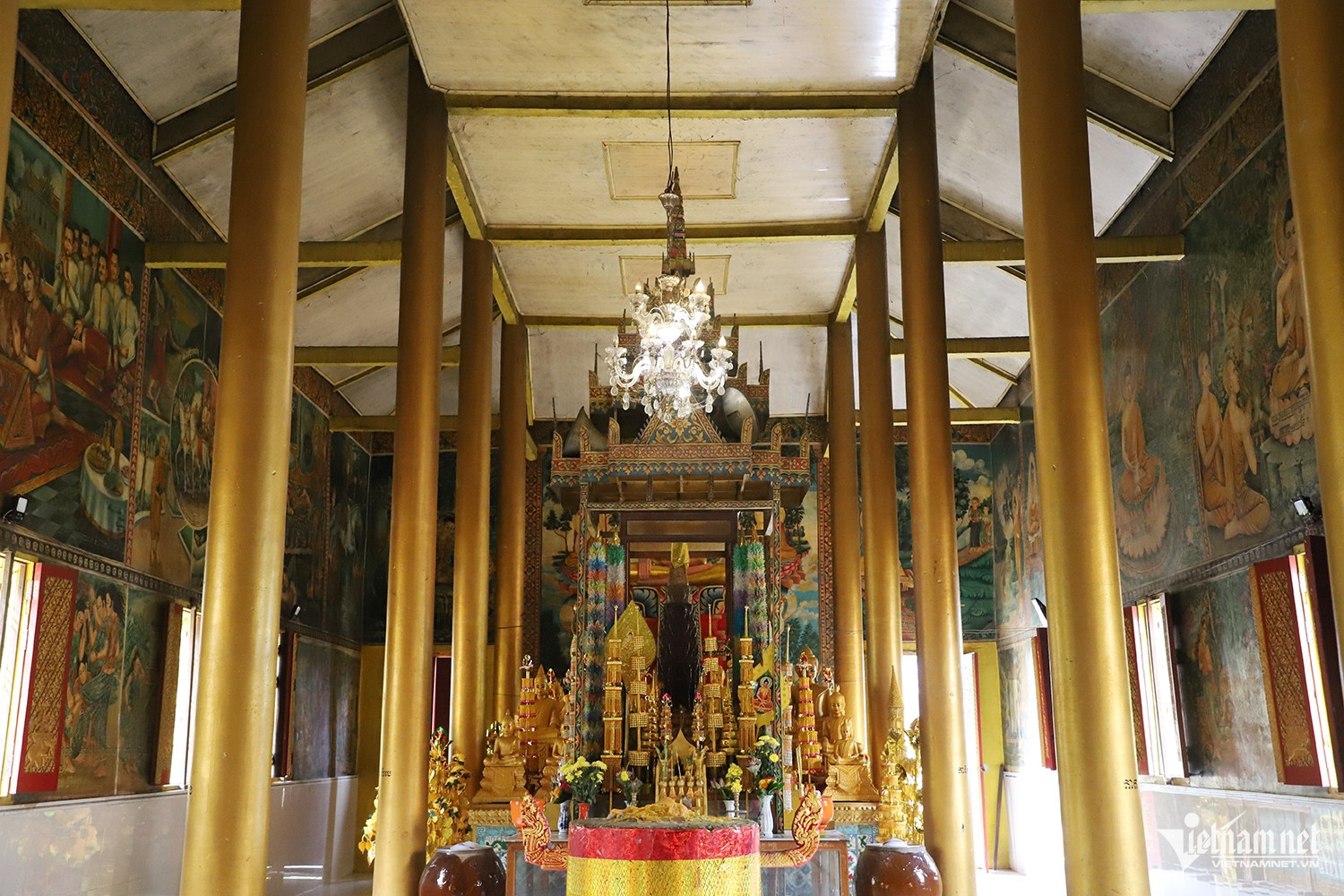
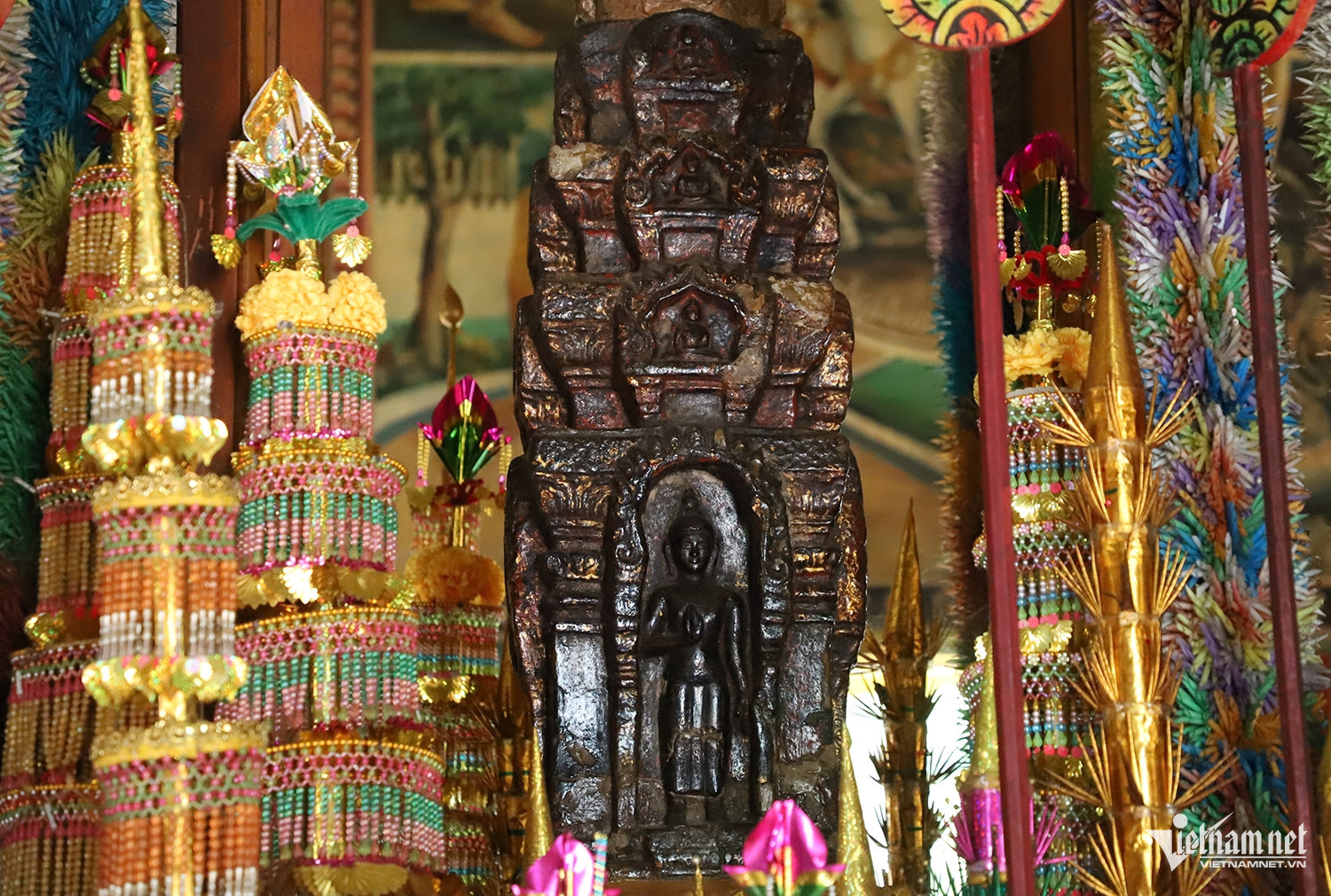
Inside the main hall, the ancient Four-Faced Buddha statue remains intact after nearly half a millennium. At the center stands a 2-meter-tall seated statue of Shakyamuni Buddha atop a 3-meter pedestal, creating a majestic spiritual atmosphere.
.svg)
