 Vietnamnet.vn

 Podcast



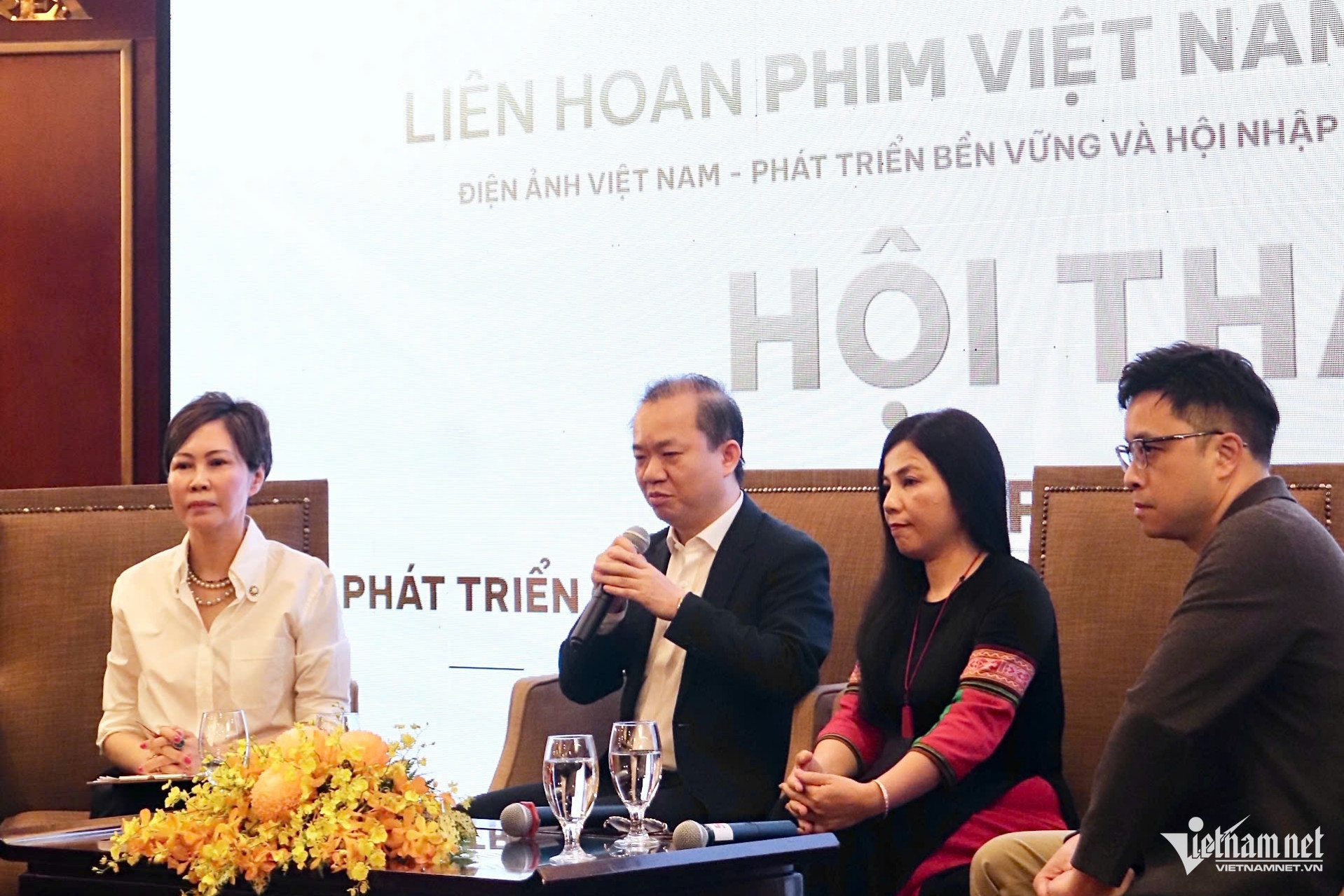
A seminar on the film industry in the new era, part of the 24th Vietnam Film Festival, took place in HCMC recently. The discussion had two sessions, with session one featuring guests including Doctor Tran Thi Phuong Lan, Associate Professor Bui Hoai Son, and director Victor Vu.
Opening the event, Dinh Thanh Huong, Vice Chair of Galaxy Group, shared optimistic figures about the domestic film industry. Vietnam’s market growth reached more than 20 percent compared to 2019. Malaysia, South Korea and Japan have only recovered to about 60 percent of 2019 levels.
Vietnamese films accounted for 42 percent of national market share last year, while this year’s figure climbed to 62 percent, a remarkable success for the local film industry.
Over the past year, Galaxy had several notable releases such as Mua do (Red Rain), Dia dao (Underground: The Sun in the Dark), Tu chien tren khong (Air Deathmatch), and Tham tu Kien (Detective Kien: The Headless Horror).
Collectively, these works earned thousands of billions of VND in box-office revenue and were highly rated for content quality.
Associate Prof Bui Hoai Son, Standing Member of the National Assembly’s Committee for Culture & Society, said that for Vietnamese cinema to grow sustainably, it needs a diverse ecosystem.
Cinema doesn’t just mean a single film, but it includes writers, directors, producers, theaters, and studios.
He noted that the film industry faces many obstacles related to the Land Law, Public-Private Partnership Law, and taxes. To promote the development of the industry, these bottlenecks must be removed.
He emphasized that the Film Law should support economic development, especially the cultural industry.
Although public-private partnerships in the cultural sector are encouraged, there has been no circular or clear guidance on the implementation, thus leading to significant difficulties.
Film investment is risky and long-term, unlike infrastructure projects such as bridges or residential buildings where timelines for profitability can be calculated.
“Tax policies must be more favorable to attract private investors. There is already a legal framework for cultural-sector PPPs, but without guiding circulars, the process remains stalled,” Son said.
He also stressed that people are the core of the film industry, yet human resources are currently its weakest link.
“Although there have been improvements, the workforce issue remains and requires fundamental solutions,” he noted.
Scandals affecting films
During the seminar, speakers also expressed concern about dealing with films that have production completed and content approved, but then later face issues such as actors’ personal scandals or public boycotts. These problems can lead to heavy losses and affect hundreds of crew members.
In recent years, many films have suffered because actors became entangled in legal trouble or personal controversies.
Tran Thi Phuong Lan, Head of the Culture and Arts Department under the Central Propaganda Commission, said this is a pressing issue. So far, film evaluation processes have followed laws, decrees, and circulars. However, such incidents raise questions about updating and revising legal documents.
Lan emphasized the Code of Conduct issued by the Ministry of Culture for people working in the arts.
“But when incidents fall outside the code, everything depends on the audience’s reception. Most people tend to boycott, and sometimes we must accept that.”
She expressed sympathy for filmmakers, whose work is risky because even with significant investment of time and money, an unforeseen issue involving a single individual can severely impact the entire project.
Lan said relevant agencies are researching the matter, but noted that it is complicated and “cannot be solved overnight” because each case differs in nature.
From a filmmaker’s perspective, director Victor Vu said that to maintain his momentum and status, each person must constantly evolve and learn. Audience tastes change rapidly, and falling behind means losing connection with the market.
This requires continuous updating, not only in themes and storytelling but also in techniques and creative approaches.
He emphasized the “core essence” of each film. Globally popular themes such as love, family relationships and tragedies continue to resonate.
Presenting these themes through an international cinematic language can help Vietnamese films reach wider audiences and create opportunities in both domestic and international markets.
Tuan Chieu
.svg)
