 Vietnamnet.vn

 Podcast



August 2, 2025 marks the 70th anniversary of the establishment of the Government Committee for Religious Affairs and the tradition of state management in religious affairs. Today, Vietnam embraces a vibrant and diverse religious life, with over 95% of the population practicing a religion or belief. Forty-three organizations representing 16 religions have been officially recognized and registered, encompassing more than 27.7 million followers.
Throughout history, religious communities have remained united, engaged, and have actively contributed to national construction and defense. Over the years, Vietnam has made substantial progress in ensuring freedom of belief and religion.

On September 3, 1945, just one day after President Ho Chi Minh declared independence at Ba Dinh Square, he addressed the Provisional Government of the Democratic Republic of Vietnam, raising six urgent matters. The sixth issue addressed religious division: “Colonialists and feudalists implement policies to divide religious and non-religious citizens to facilitate control. I propose our government declare freedom of belief and solidarity between religious and non-religious citizens.” The 1946 Constitution was the first to enshrine citizens’ right to freedom of religion.
Many bishops, priests, and laypeople took on key responsibilities in the early people's government. Notably, Bishop Le Huu Tu and Bishop Ho Ngoc Can served as government advisors; Nguyen Manh Ha was Minister of Economy; Vu Dinh Tung was Director of the Northern Health Bureau and later Minister of War Invalids and Veterans. Father Pham Ba Truc was elected Vice Chairman of the Standing Committee of the First National Assembly.

Soon after the country's founding, President Ho Chi Minh invited many religious dignitaries to serve as government advisors. The August Revolution ignited a patriotic fervor among religious communities. Several bishops, as early as 1945, wrote to the Vatican and the global Catholic community seeking support for Ho Chi Minh's government. In response to the “Golden Week” campaign, bishops and religious entrepreneurs donated money and gold to support the revolution. When the French returned to invade, many priests paused their religious duties to join the resistance.
As author Nguyen Van Thanh wrote in the Communist Review: “Many Catholic churches, Buddhist pagodas, and Cao Dai temples became shelters for cadres and soldiers. Numerous clergy and believers sacrificed themselves for the nation’s survival.”
During the resistance against the French, many monks and Buddhists engaged in revolutionary activities. With a spirit of fearlessness, some monks “shed their robes for battle gear” and joined liberation forces. Temples became classrooms, and monks became teachers in the nationwide movements to eliminate hunger and illiteracy.
Among revolutionary cadres regrouping in the North, some were Catholic priests from the southern resistance. The first National Catholic Conference, held March 8–11, 1955 in Hanoi, brought together 191 official delegates and 150 observers. It resulted in the formation of the Liaison Committee of Patriotic and Peace-Loving Catholics.

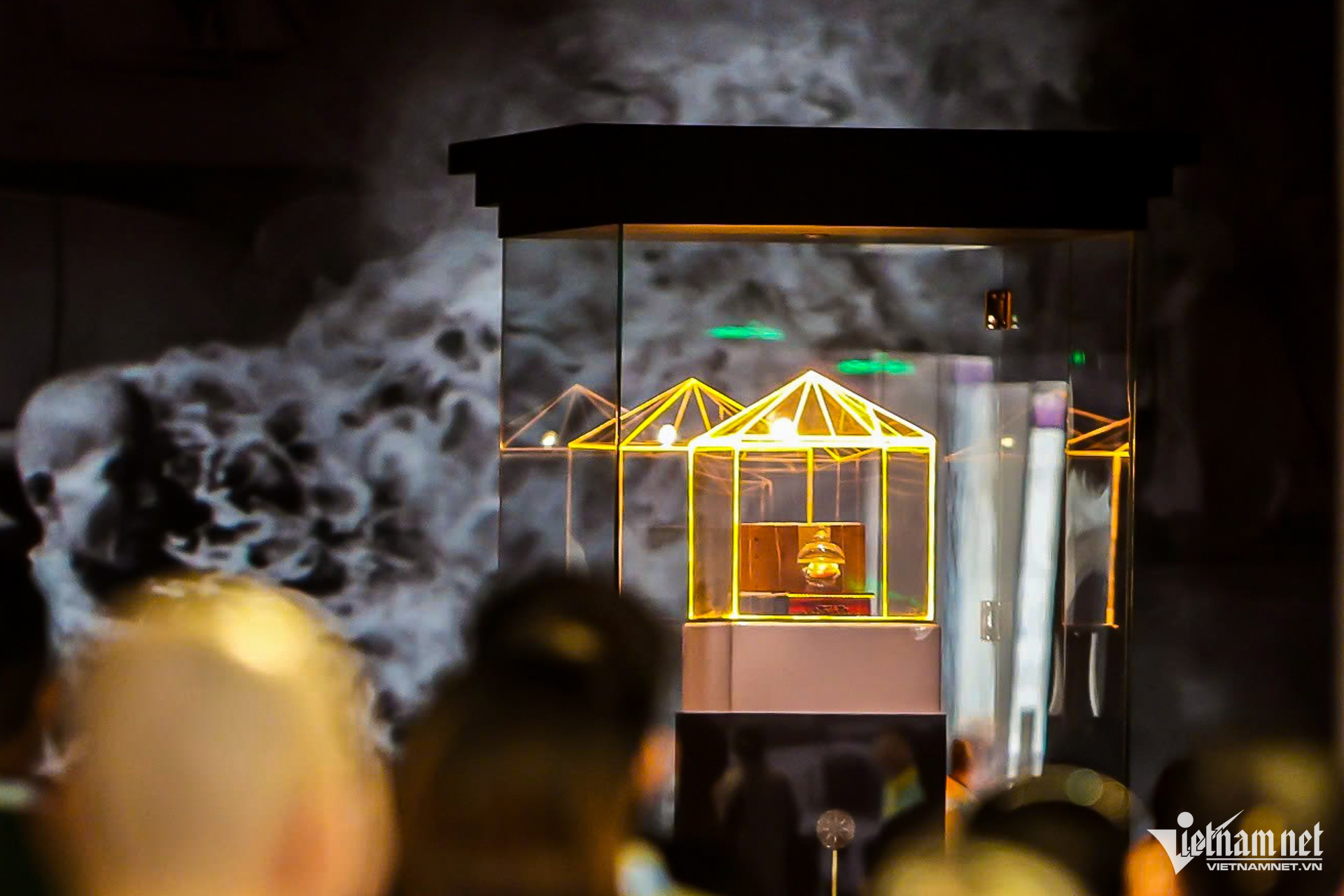
At the same time, nearly one million Catholics from the North migrated to the South.
After 1954, U.S. forces and the Ngo Dinh Diem regime oppressed southern religious communities. Movements advocating peace, democracy, and civil rights grew, drawing millions, including followers of Buddhism, Cao Dai, Hoa Hao, Catholicism, and ethnic minorities.
On August 2, 1955, the Prime Minister issued Decree No. 566-TTg establishing the Religious Affairs Department, part of the Government's Internal Affairs Committee and directly under the Prime Minister’s Office. This was the forerunner of today’s Government Committee for Religious Affairs. Provincial-level Religious Affairs Departments were also established, laying the foundation for the current state religion management system.
1955–1975: Resilience in war and faith
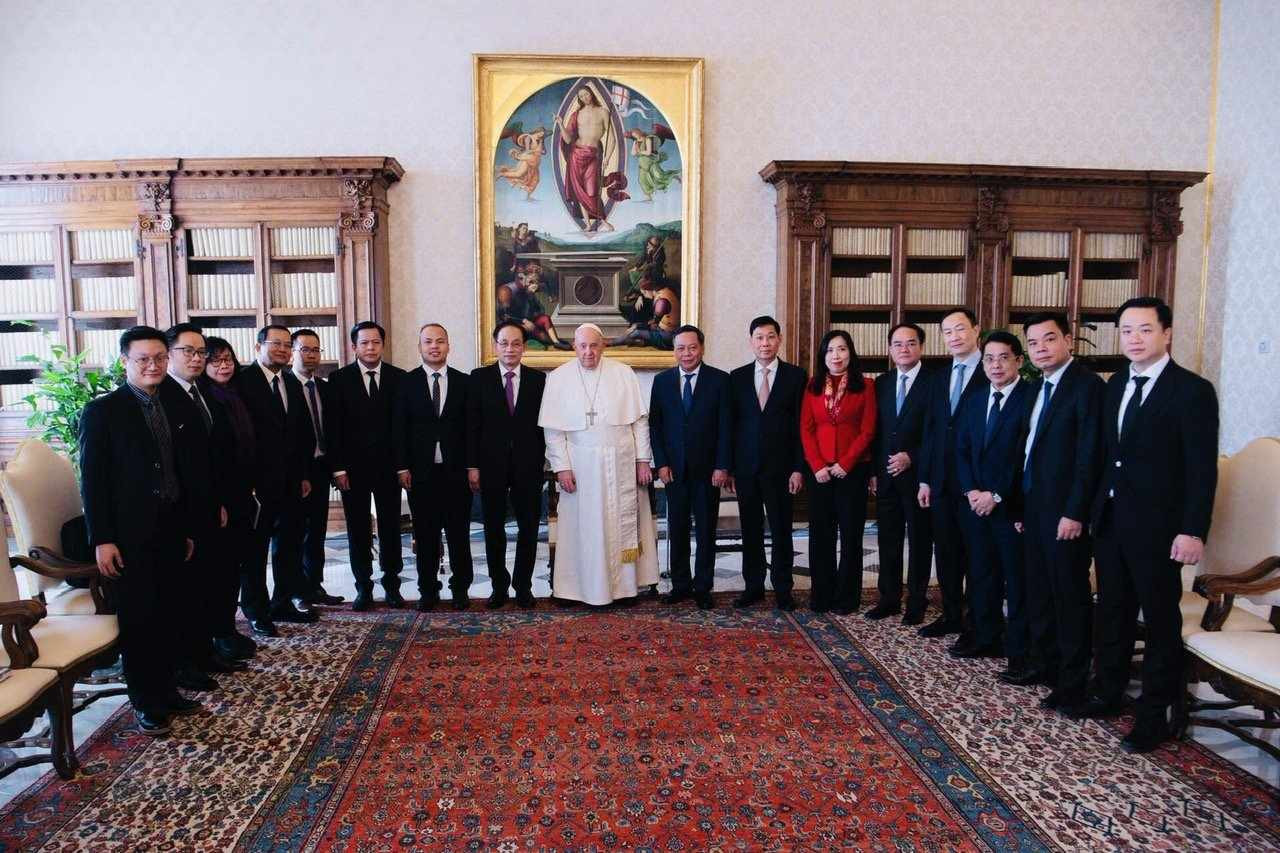
During the resistance against the United States and the building of socialism, the Religious Affairs Committee assisted the Party and State in developing religious policies, issuing legal documents, and coordinating with other central agencies to guide and supervise local implementation. Efforts were also made to discourage migration, while religious organizations in the North established national bodies, such as the General Association of the Evangelical Church of Vietnam (1955), the Committee for Patriotic and Peace-Loving Catholics, the Cao Dai Unification Committee, and the Unified Buddhist Church of Vietnam (1958).
According to Dr. Bui Huu Duoc, former head of the Buddhist Affairs Department at the Government Committee for Religious Affairs, during the war against the U.S., southern Buddhists upheld the spirit of “protecting the nation, ensuring the people.” Many temples served as hubs for secret communication and shelter for youths avoiding conscription. Monks and laypeople became soldiers, couriers, and propagandists.
A defining moment was the self-immolation of Venerable Thich Quang Duc on June 11, 1963, at a busy intersection in Ho Chi Minh City (formerly Saigon), in protest against religious oppression by the South Vietnamese government. His sacrifice shocked the world and sparked international condemnation of U.S. aggression in Vietnam.
The National Catholic Liaison Committee reported that during the war, over 60,000 Catholic youths enlisted. Many families had multiple children in the military. Some communities saw 50% to 70% of households with members at the frontlines. Several Catholic militia units, such as those in Ba Lang (Thanh Hoa), Van Ly (Bui Chu), and Thuong Kiem (Phat Diem), were recognized as Hero Units.
1975–1985: Rebuilding and unification

Following national reunification in 1975, the Religious Affairs Committee helped the government implement unified religious policies nationwide, notably Decree 297/CP. Despite challenges from the centrally planned economy, the religious administration was maintained and strengthened.
In May 1980, the Vietnamese Bishops’ Conference issued a pastoral letter emphasizing the direction: “Living the Gospel in the heart of the nation.” This marked a new phase in patriotic Catholic movements. The first National Congress of Patriotic Catholics was held in 1983.
On November 7, 1981, the First National Buddhist Congress unified nine Buddhist sects into the Vietnam Buddhist Sangha, with the guiding principles of “Buddhism - Nation - Socialism.”
On March 27, 1985, the Council of Ministers issued Decree No. 85-HDBT establishing the Government Committee for Religious Affairs, a significant step in formalizing religious administration.
From 1986 to present: A renewed religious landscape
The Doi Moi (Renewal) reforms initiated in 1986 brought a more open approach to religion. The Party and State worked to improve the legal framework and organizational structures. In 1990, the Politburo issued Resolution 24-NQ/TW, outlining three key principles:
Religious faith is a genuine need of a segment of the population
Religion will continue to exist long-term
Religious ethics align with the goals of building a new society
On May 27, 2005, the government designated August 2 as the “Traditional Day of State Management in Religious Affairs.”
In 2003, the agency was renamed the Government Committee for Religious Affairs, affirming its cabinet-level status. In 2007, it was placed under the Ministry of Home Affairs to ensure cohesive internal administration.
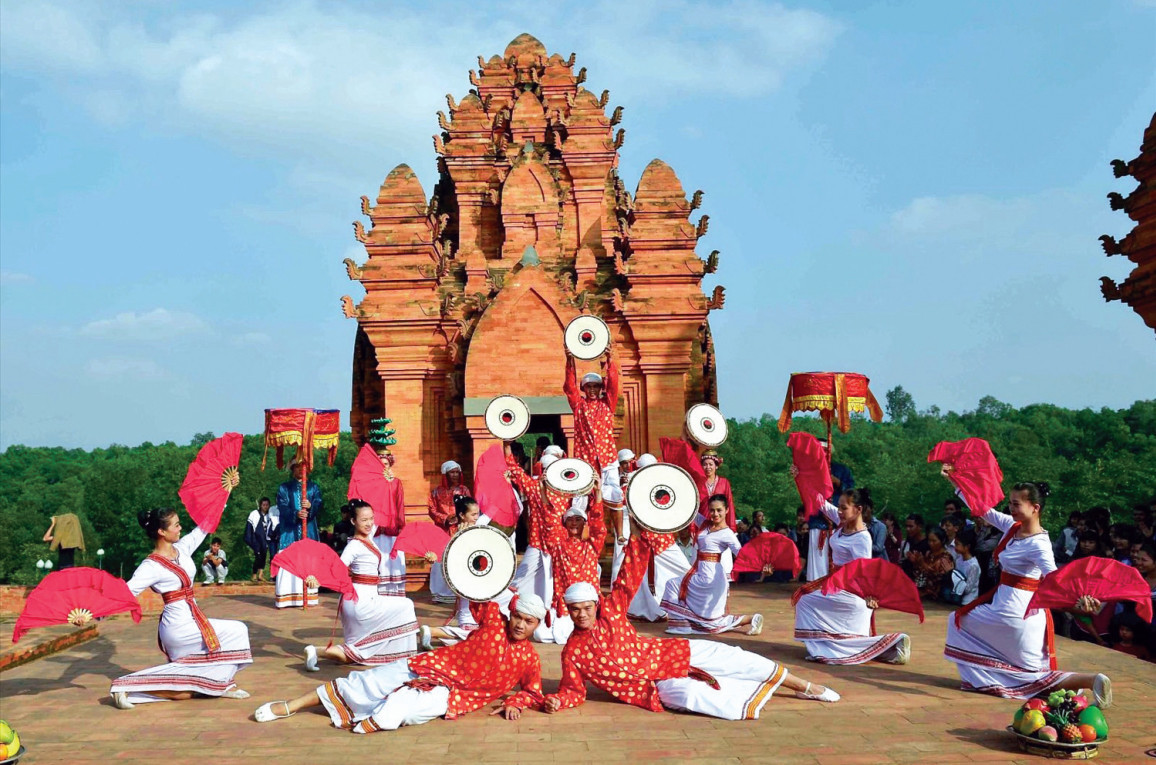
From 1990 onward, religious life in Vietnam flourished. Followers and clergy numbers rose. Worship places and religious training schools increased. Large-scale festivals attracted hundreds of thousands. International religious exchanges expanded. Religious publications and ritual items were readily available.
Between 2003 and 2023, religious followers increased by over 10 million. The number of recognized religious organizations grew from 16 to 43. Clergy rose from 34,200 to over 54,500; religious assistants from nearly 79,000 to nearly 145,000; places of worship from over 20,900 to 29,890.
The 2013 Constitution, effective January 1, 2014, marked a milestone in enshrining freedom of religion. Article 24 affirms that everyone has the right to follow or not follow a religion; all religions are equal before the law; and no one may infringe upon or misuse religion to violate the law.
On November 18, 2016, the National Assembly passed the Law on Belief and Religion, effective January 1, 2018, reinforcing Vietnam’s legal system on religious freedom. In 2018, the Government Committee for Religious Affairs was assigned additional responsibilities for managing belief practices.
On March 1, 2025, the committee was reorganized under the newly established Ministry of Ethnic and Religious Affairs. This strategic move aims to integrate ethnic and religious management into a single, more effective administrative body.
The Government Committee for Religious Affairs continues to play a key role in policy planning, legal enforcement, and fostering state-religion relations. It promotes religious values in cultural and moral development while maintaining national security and social stability.
Vietnam on the global religious stage
Vietnam has successfully hosted major international religious events, including the Federation of Asian Bishops' Conferences (2012), the General Chapter of the Dominican Order (2019), and the United Nations Day of Vesak (2019, 2025).
A pivotal aspect of Vietnam's religious policy since Doi Moi is the recognition of religious organizations. In 2004, the State recognized 16 organizations representing six religions. By the end of 2023, this had grown to 43 organizations representing 16 religions.
Vietnam now has 66 religious training institutions with approximately 10,000 students. Religious organizations continue to develop doctrines aligned with national interests, such as Catholicism’s “Living the Gospel in the heart of the nation,” Buddhism’s “Buddhism - Nation - Socialism,” Protestantism’s “Serve God, Serve the Nation,” Cao Dai’s “Glorious Nation, Enlightened Religion,” and Hoa Hao Buddhism’s “For Dharma, for the Nation.”
Religions in Vietnam preserve and enrich traditional cultural values, embodying humanity, ethics, and making a positive impact on society.
Religious communities and social development
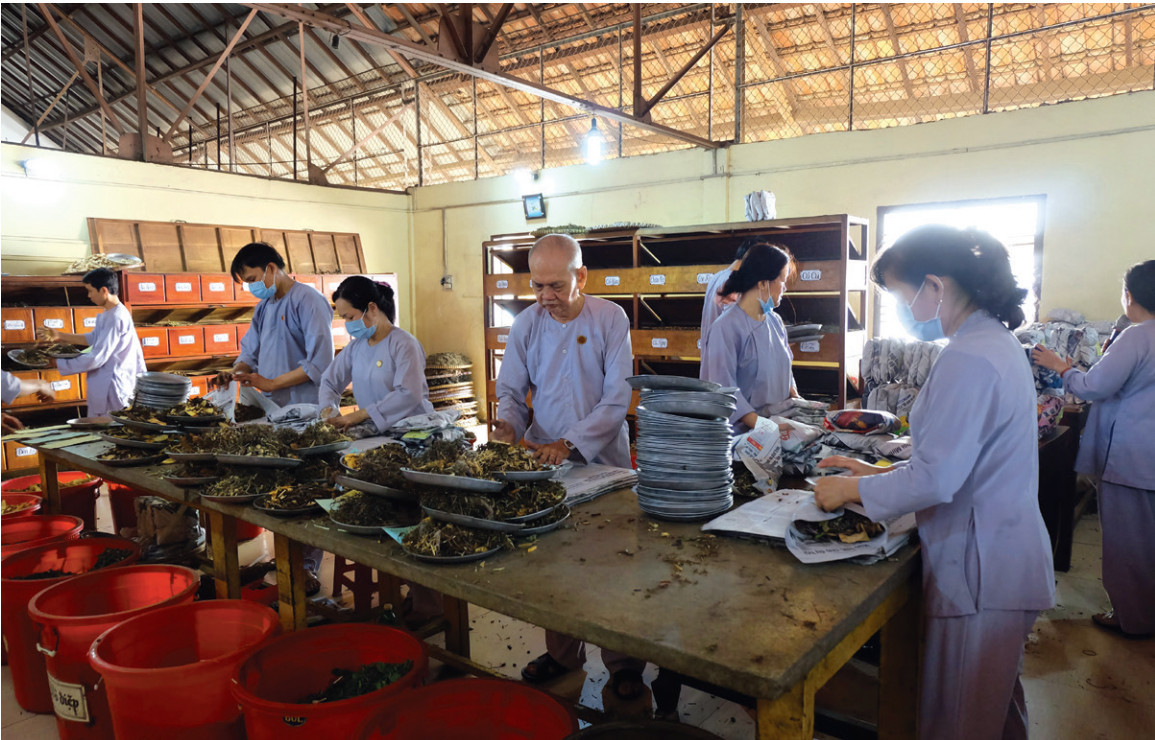
Religious groups operate approximately 300 preschools, 2,000 kindergartens, and 12 vocational centers (including colleges and training centers), along with many informal schools. Over 500 religious-run medical clinics provide charitable healthcare. There are 125 licensed social support centers caring for over 11,800 vulnerable individuals.
During the COVID-19 pandemic, religious organizations mobilized clergy and followers to support frontline workers, donate supplies, and launch creative, effective initiatives in partnership with local governments.
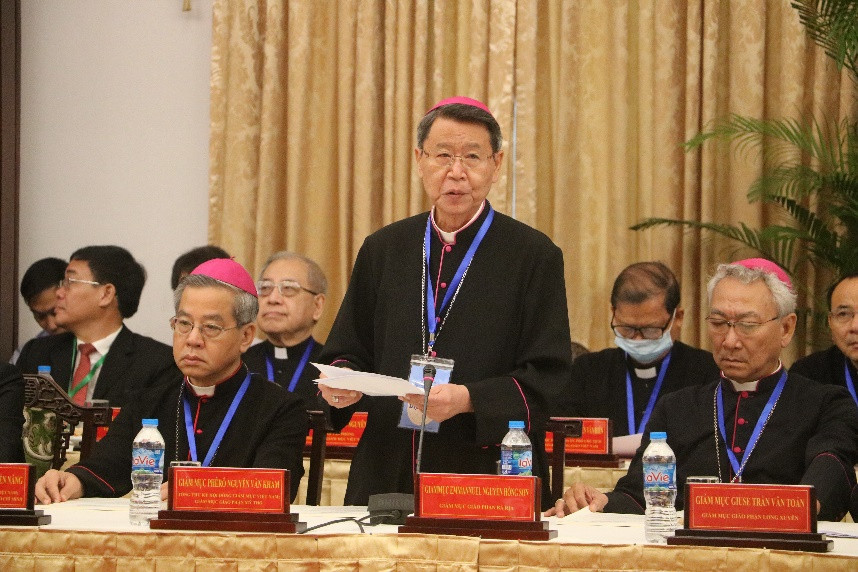


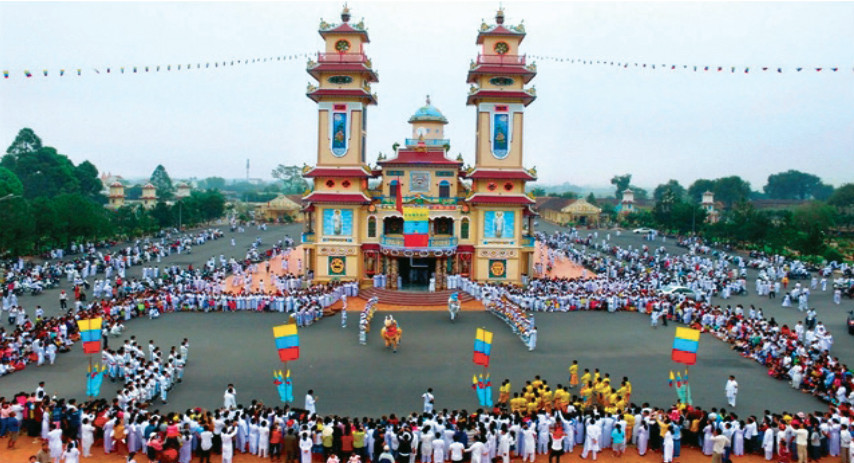

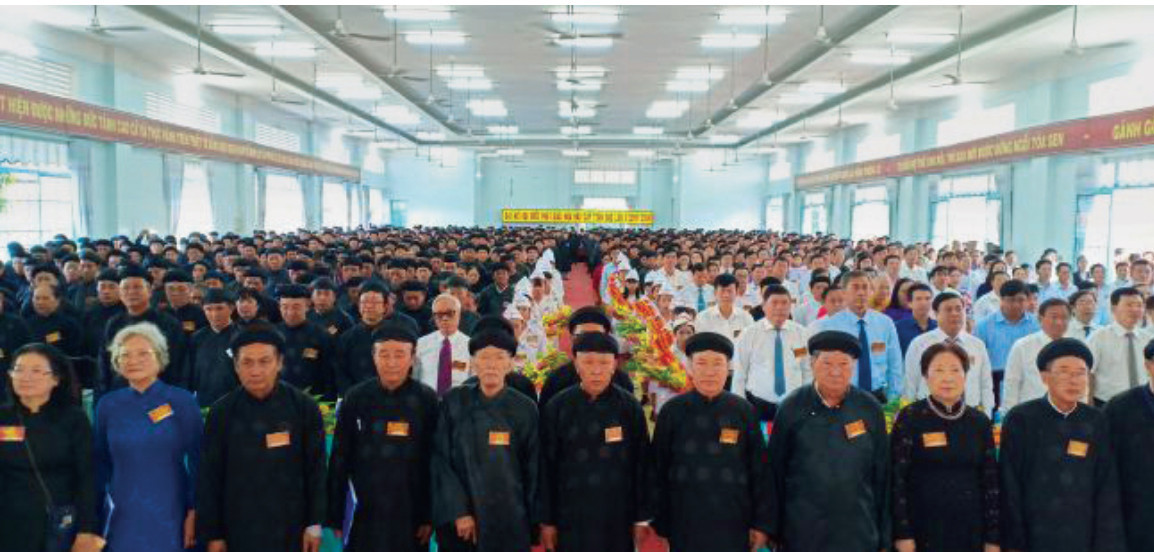

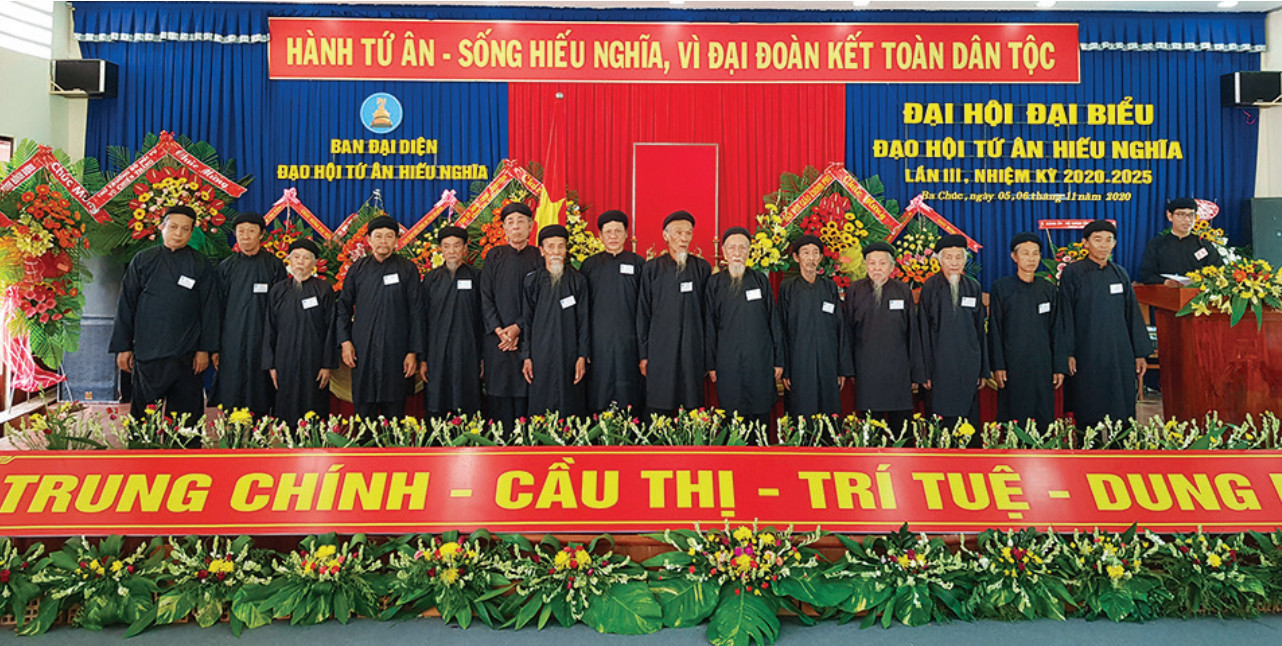
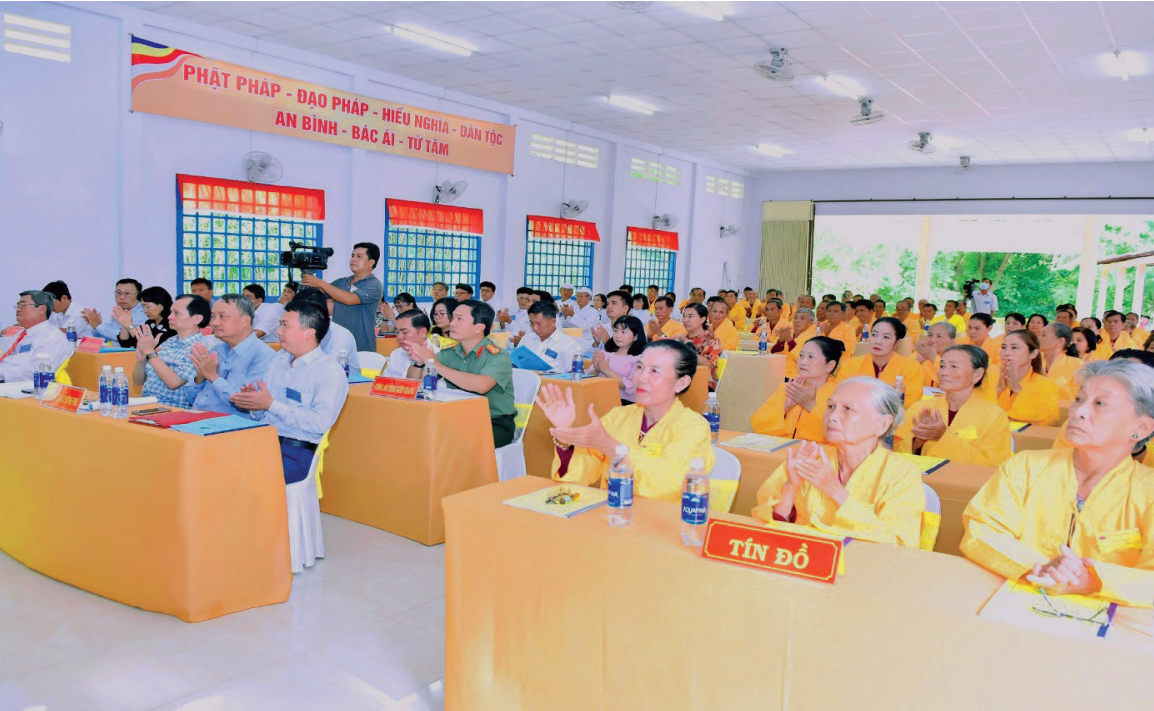


The President expressed confidence that religious organizations, dignitaries, and religious followers will continue to uphold the moral values of their faiths and further contribute to the cause of building and defending the socialist Fatherland.
Photo credit: VNA
Ha Anh
Photo sources: Government Committee for Religious Affairs / White Book on Religion 2023 – Religion Publishing House / Vietnam Committee for Catholic Solidarity / Can Tho Newspaper
.svg)
